Team
How Obsidax is edited
Obsidax is maintained through a small editorial workflow led by site editor Mara Vale. The work is centered on practical obsidian questions: how a piece looks, which variety name may fit, how it should be handled, what care choices are reasonable, and where symbolic meaning should stay clearly framed as interpretation.
Topic selection
Pages are chosen from recurring collector questions about obsidian varieties, visual identification, safe handling, storage, cleaning, naming confusion, and common meaning claims.
Guide organization
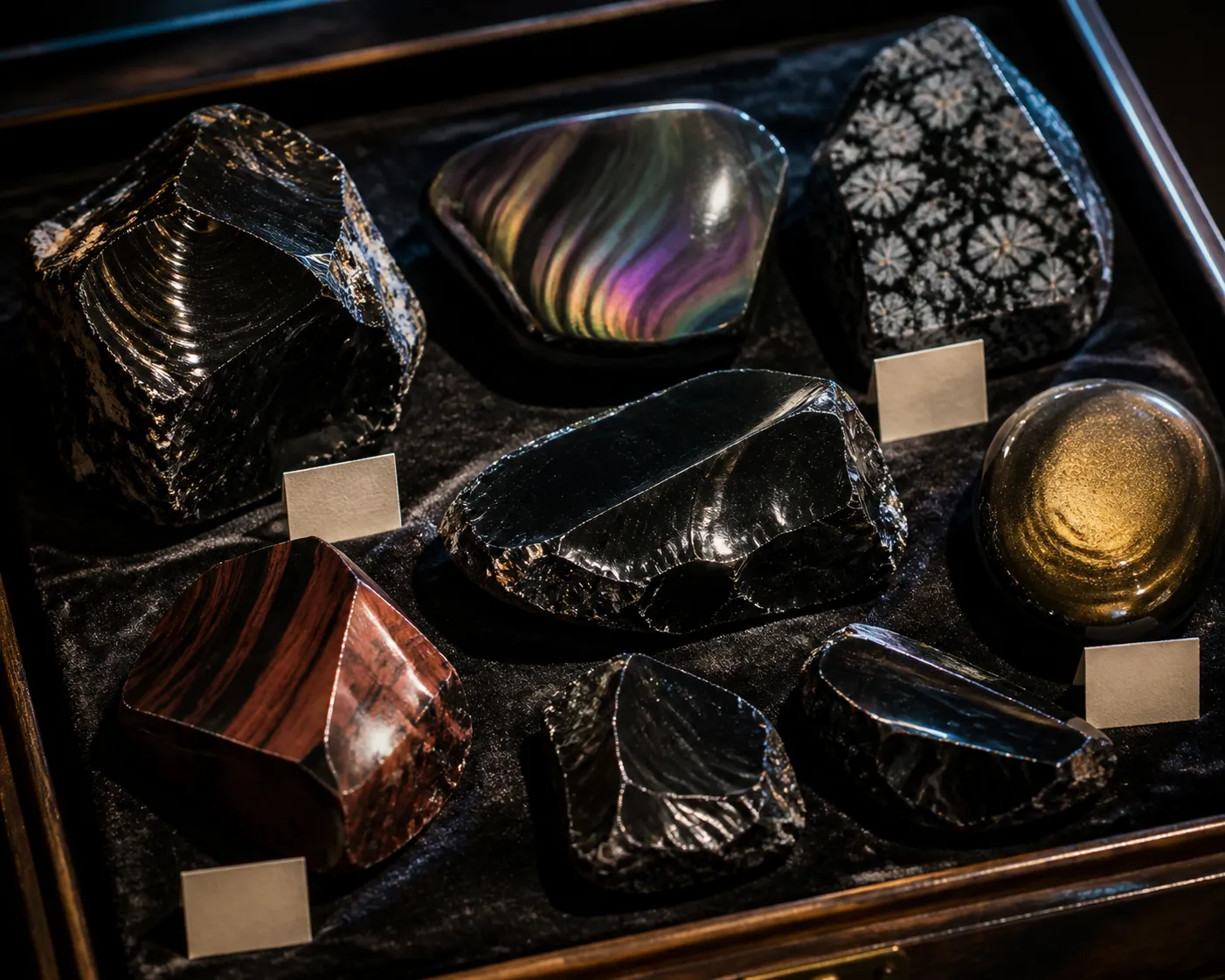
Drafts are arranged around observable details first: glassy luster, fracture edges, sheen, inclusions, polish, color bands, and the practical decisions those details affect.
Boundary checks
Before publication, wording is checked for overclaiming. Obsidax does not present obsidian as a medical tool, a guaranteed spiritual result, a safety substitute, or a certified appraisal conclusion.
Revision habits
Older pages are revisited when terminology needs tightening, a care note needs clearer limits, or a variety explanation would be more useful with stronger visual cues.
What this means for readers
The goal is not to turn every stone into a certainty. It is to help readers notice the right features, understand common labels, care for pieces more carefully, and separate collector observations from personal or cultural interpretations.