
Surface care
How to Clean Obsidian Without Damaging the Surface
A glossy black obsidian surface shows fingerprints, dust trails, and cloudy smears quickly. The first answer is simple: remove loose grit before wiping, use only as much mild water-based cleaning as the mark needs, avoid abrasion and harsh cleaners, then dry the piece completely with a soft cloth. Obsidian is volcanic glass, so cleaning should protect the glassy luster, thin fracture edges, polish, sheen, and any setting or glue around the stone.
There is no one method for every specimen. A solid polished tumble, a rainbow obsidian sphere, a raw edge, a pendant, and a carved piece with tiny chips all ask for different handling.
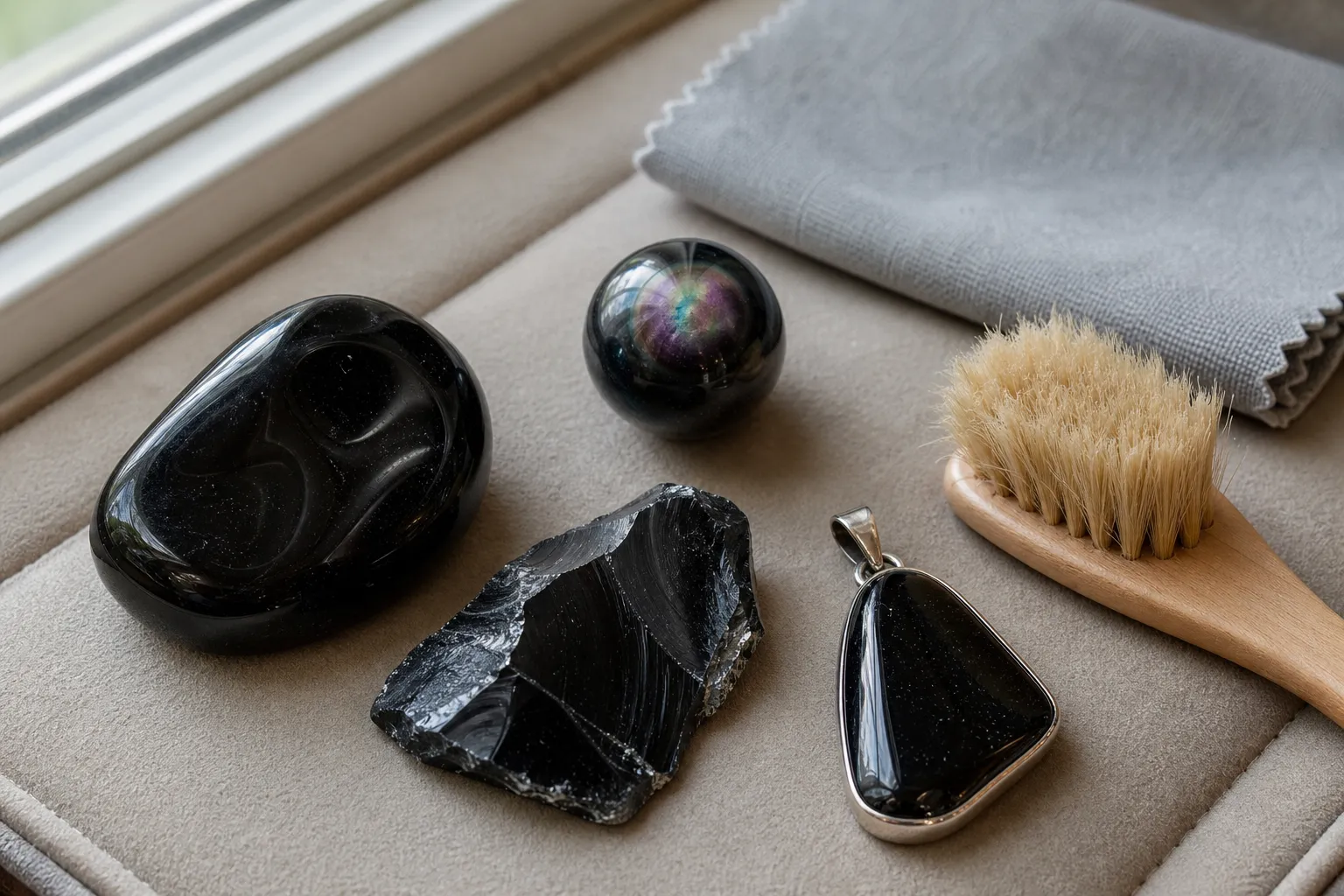
upward
Start with the broader guide
Use the broader guide first if you need the full scope before this page.
Inspect the Piece Before Water Touches It
Cleaning obsidian without scratching starts under steady light, not at the sink. Look for open cracks, sharp chips, loose flakes, glue lines, metal settings, surface coatings, sticker residue, powdery dirt, cloudy film, or grit trapped in grooves.
A polished piece with no visible damage can usually tolerate a brief gentle wipe better than a fractured or glued object. A raw specimen may have thin edges that chip if scrubbed. Jewelry can include metal, cord, adhesive, or drilled holes that react differently from the stone. A carving may hold dirt in narrow cuts while also having weak points.
Loose dust only
Dry dusting may be enough.
Fingerprints or skin oil
Try a barely damp microfiber cloth before soap.
Dirt in grooves or rough edges
Use a soft brush lightly; avoid force at points and chips.
Cloudy film after washing
Check for soap residue, hard-water spotting, or surface wear.
Rainbow, gold, silver, or sheen obsidian
Protect the polished viewing face; avoid aggressive rubbing.
Glue, coating, label, cord, or setting
Do not soak; clean only the exposed surface.
Open crack or unstable chip
Keep water and pressure minimal.
The evidence supports conservative care boundaries rather than a universal obsidian cleaning protocol. Geologic and mineral references identify obsidian as volcanic glass, but that does not prove every household cleaner, tool, or soaking method is harmless on every polished, carved, glued, coated, or set piece.
How to Clean Dust Off Obsidian Without Scratching
Dust looks harmless, but on a glossy surface it can behave like grit when dragged across the polish. For display obsidian, dry cleaning should be slow and light.
Use clean hands or gloves if the piece is highly polished. Lift it from below rather than pinching a thin edge. Move loose dust with a clean air bulb, a very soft brush, or a dry microfiber cloth. If you use a brush, let the bristles do the work; pressing into the polish adds risk without cleaning better.
Choose the tool by surface shape. A cloth suits broad polished faces, spheres, palm stones, and slabs. A soft brush suits carved grooves, rough pockets, display bases, and dust gathered along edges. If you can see grit, brush or blow it away before wiping. Do not grind dust into the glassy finish.
For display pieces, clean when buildup affects viewing rather than on a rigid schedule. Less friction means fewer chances for fine scratches.
Washing Polished Obsidian with Soap and Water
Can you wash polished obsidian with soap and water? For many intact polished pieces, a brief wipe with clean water and a small amount of mild soap is a reasonable next step when dry dusting does not remove fingerprints or grime. Keep it restrained.
- Place a folded towel on the work surface so the piece cannot roll or hit a hard sink.
- Remove loose dust first with a soft brush or microfiber cloth.
- Dampen a clean microfiber cloth with lukewarm water.
- Wipe gently, turning the cloth as it picks up oil or dirt.
- If needed, add a tiny amount of mild soap to the damp cloth, not directly to the stone.
- Wipe again with plain water to remove residue.
- Dry immediately and completely with a clean soft cloth.
Do not make soaking the default. A plain solid piece may not behave like a porous mineral, but soaking creates avoidable problems for collectible objects: water can enter cracks, soften some adhesives, sit beneath metal fittings, affect labels, or leave mineral spots as it dries.
For black obsidian, fingerprints are often the main issue. Try a barely damp microfiber cloth first. If the mark remains, use the mild soap method and follow with a plain-water wipe. The final dry wipe matters; leftover soap can look like dull haze.
Cleaning Raw, Chipped, or Textured Obsidian
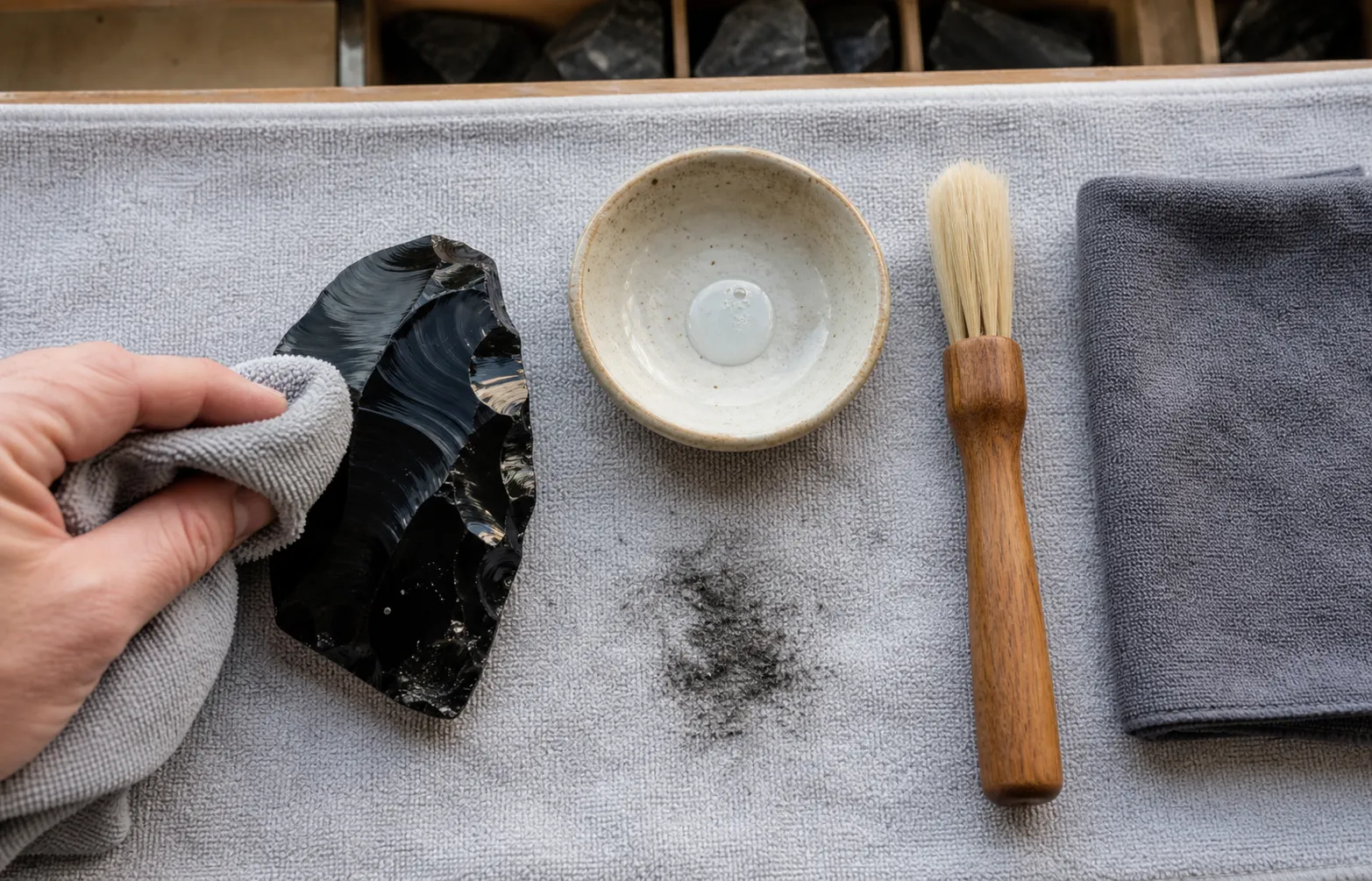
Raw obsidian is not automatically tougher than polished obsidian. It may have sharp fracture edges, thin flakes, or small chips that break under pressure. Cleaning dirt from raw obsidian should be slower than cleaning a smooth palm stone.
If the dirt is dry, begin with a soft brush. Brush away from sharp edges, not into them. Avoid stiff bristles, metal picks, abrasive pads, and scraping. If a little water is needed, dampen the brush or cloth rather than running water forcefully over the specimen. Pat dry carefully around pockets and cracks.
Do not try to make a raw surface look polished by cleaning harder. Dirt, natural texture, conchoidal fracture marks, and weathered patches can be visually confusing, but scrubbing is not a reliable way to resolve the label. If a cloudy or rough patch does not lift with gentle cleaning, treat it as a surface condition to inspect, not a stain to attack.
A sharp chip is also a handling issue. Obsidian can form very keen edges, so avoid sliding fingers along fracture lines and set damaged pieces on a padded surface while cleaning.
Cleaners and Tools to Avoid on Obsidian
The easiest way to protect obsidian surface care is to avoid methods that add abrasion, heat, vibration, or unnecessary chemical exposure. General glass-object care and gemstone-care principles both point toward matching cleaning to material and condition, not using one routine for every object.
Avoid these unless the exact piece has been assessed for that method:
- Abrasive powders, scouring pads, rough cloths, and melamine-style scrubbers.
- Bleach, acids, ammonia-heavy cleaners, and strong household solvents.
- Steam cleaning, boiling water, and sudden temperature changes.
- Ultrasonic cleaners, especially for jewelry, fractured pieces, glued parts, coated surfaces, or unknown settings.
- Long soaking for pendants, carvings, glued bases, labels, and cracked specimens.
- Metal picks, knives, stiff brushes, and scraping tools.
- Polishing compounds outside a proper lapidary context.
Can alcohol wipes damage obsidian? The material is glass-like, but the safer collector answer is cautious: do not make alcohol wipes a routine method. Alcohol may affect adhesives, coatings, dyed or treated components, labels, cords, display materials, or metal finishes around the stone. For a plain intact polished specimen, a damp microfiber cloth is usually the lower-risk first choice.
Be equally careful with commercial “crystal cleaning” products. Marketing language does not prove surface compatibility. If a product does not clearly match the material, finish, and construction of your exact piece, do not use the specimen as the test surface.
How to Clean Rainbow or Sheen Obsidian Without Dulling the Flash
Rainbow obsidian, gold sheen obsidian, silver sheen obsidian, and similar variety names are valued for optical effects seen through polish, lighting angle, and internal structure. Cleaning should protect the viewing face rather than chase the flash with pressure.
Use the same gentle sequence: remove grit, wipe lightly with a damp microfiber cloth, use minimal mild soap only if needed, remove soap with plain water, and dry fully. Avoid circular scrubbing over one spot. If the flash looks weaker after washing, check three simpler causes first: soap residue, water spots, or a different light angle.
Sheen can be subtle. A dull patch may be a smear on the surface, but it may also be polish wear, fine scratching, coating damage, or simply the angle at which the piece is being viewed. Hold the stone under steady light and tilt it slowly. If the effect returns at another angle, the cleaning did not remove the sheen; the viewing geometry changed.
Do not use polishing chemicals to “bring back” rainbow or sheen effects. Without lapidary context, polishing compounds can create more visible surface problems than they solve.
Dry Obsidian Without Water Spots or Cloudy Film
Drying is part of the cleaning method. Water left on glossy black obsidian can dry into spots, especially if it contains dissolved minerals. Soap left behind can create a cloudy film. Hard rubbing during drying can turn a simple wipe into a scratch risk.
To dry obsidian without water spots, use a clean microfiber cloth immediately after wiping. Blot first, then lightly buff with a dry section of cloth. For carved grooves, use a cloth corner or a soft brush wrapped in cloth to lift moisture without poking fragile details. Let the piece air-dry on a towel only after most surface water has been removed.
If you see cloudy film on obsidian after cleaning, ask:
- Did the film appear only after soap was used?
- Does it change or disappear with a plain-water wipe?
- Is it visible from every angle, or only under certain light?
If plain water and careful drying remove it, the issue was likely residue or spotting. If the cloudy area remains unchanged, it may be surface wear, fine scratching, coating damage, a dull patch in the polish, or natural-looking texture. Stop escalating the cleaner at that point.
Special Cases: Jewelry, Glue, Coatings, and Display Pieces
A loose polished stone is easier to clean than an object made from several materials. Obsidian jewelry may include metal settings, cord, thread, bead stringing, adhesive, backing, or surface treatments. Those parts may be more sensitive than the stone, and water can travel into places you cannot dry well.
For pendants and rings, wipe the obsidian face with a damp cloth rather than soaking the whole item. Keep soap away from glue lines and porous cords. Dry around prongs, bezels, and drilled holes with extra care. If a stone feels loose in its setting, do not clean it under running water.
Coated or treated pieces need more restraint. Some collector pieces have enhanced surfaces, labels, display bases, wax, oil, or unknown finishes. If you cannot tell whether the shine is natural polish or a treatment, avoid solvents and strong rubbing. Clean only the dust or smudge you can remove gently.
For display obsidian, cleaning frequency depends on exposure. A closed cabinet piece may need only occasional dusting. An open-shelf sphere handled often may need fingerprint removal more often. Clean when the surface condition affects viewing, not because the calendar says it is time.
Physical Cleaning Is Not the Same as Ritual Cleansing
Some readers use “cleansing” for personal or symbolic practices. That is separate from cleaning dirt, oil, dust, soap residue, or water spots off a surface.
Physical cleaning changes what is on the object: fingerprints, grit, residue, moisture, and debris. Ritual or symbolic cleansing belongs to belief, tradition, or personal meaning. It should not replace removing abrasive dust, drying water from cracks, or avoiding chemicals on a polished surface.
If symbolic practice is part of your collecting routine, keep it separate from surface care. Salt, smoke residue, oils, sprays, prolonged water exposure, and outdoor placement can still affect polish, glue, metal, labels, coatings, and sharp edges. The visible surface sets the limit.
A Practical Cleaning Path for Most Collectors
Use the least aggressive method that solves the visible problem.
For loose dust, use air, a soft brush, or a dry microfiber cloth. For fingerprints, use a slightly damp microfiber cloth. For oily smears, add a tiny amount of mild soap to the cloth, remove soap with plain water, and dry immediately. For dirt in raw texture, use a soft brush and minimal moisture. For jewelry, glued pieces, coated surfaces, cracked specimens, or unstable chips, keep the cleaning local and avoid soaking.
The main boundary is simple: do not keep escalating when a mark does not respond to gentle care. A remaining haze, dull area, scratch, or cloudy patch may not be dirt. It may be polish wear, surface damage, residue trapped in texture, or a feature that needs closer inspection rather than a stronger cleaner.
Clean the surface you can see, protect the edges you can feel, and stop before a cosmetic mark becomes permanent damage.