Material classification
Is Obsidian a Crystal or Volcanic Glass
If you are asking is obsidian a crystal because you keep seeing phrases like “black obsidian crystal,” “obsidian crystal tower,” or “obsidian crystal bracelet,” the clear geological answer is: obsidian is volcanic glass, not a true crystal in the strict mineralogical sense.
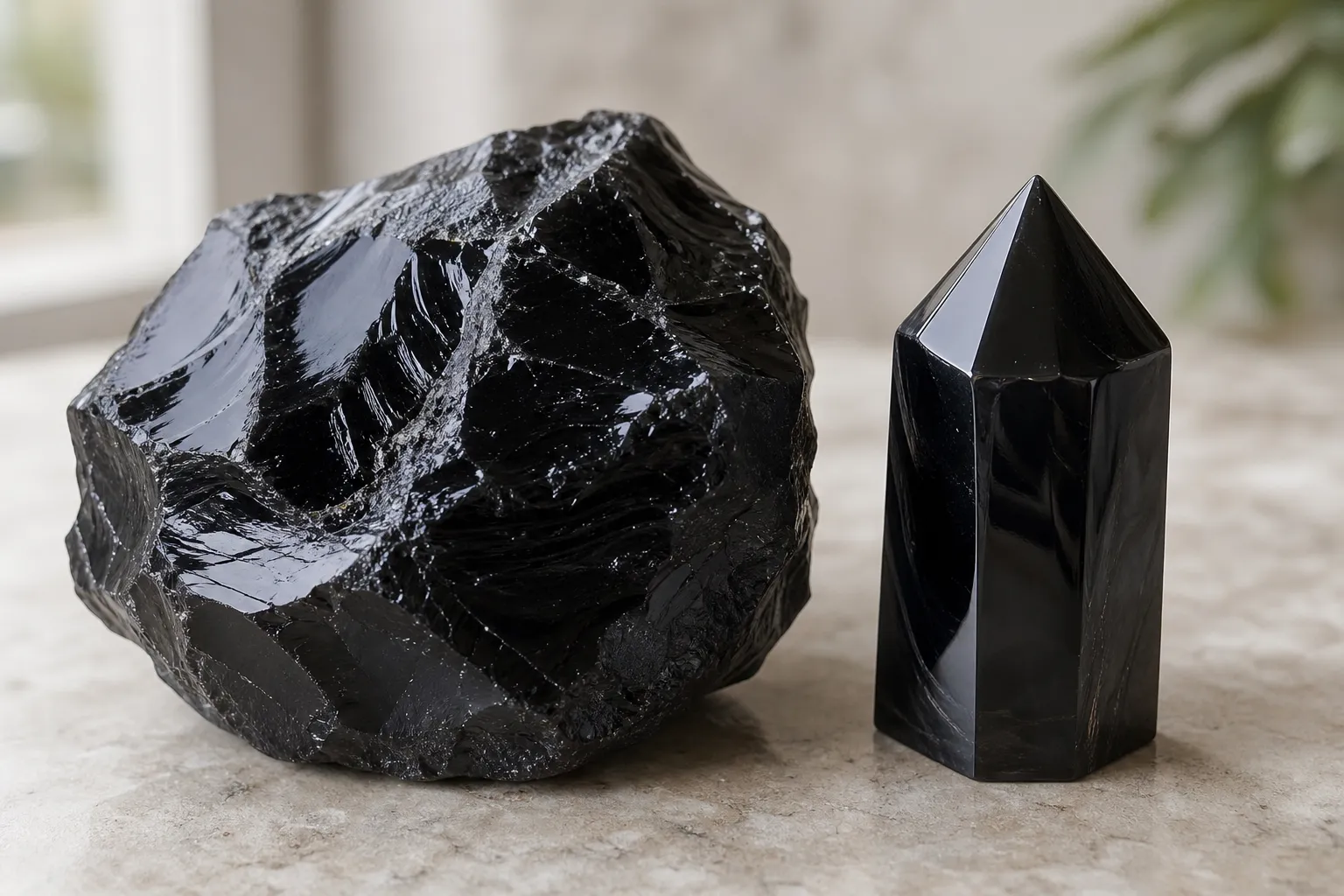
That does not mean every shop label is dishonest. In the crystal market, “crystal” is often used as a broad category for polished stones, carved points, towers, beads, and display pieces. Geologically, though, a crystal has an orderly internal atomic structure. Obsidian forms when silica-rich volcanic material cools so quickly that it becomes glass before large crystals can grow. A carved obsidian point may be crystal-shaped, but the material itself is still volcanic glass.
upward
Start with the broader guide
Use the broader guide first if you need the full scope before this page.
The short answer: obsidian is volcanic glass
Obsidian is a natural volcanic glass. Oregon State University’s Volcano World describes it as volcanic glass with an almost total absence of sizable mineral crystals in its glassy matrix. For collectors, that is the key distinction: obsidian may be sold beside crystals and carved into crystal-like shapes, but its base structure is glassy rather than crystalline.
A useful way to separate the terms:
Volcanic glass
The strict geological classification for obsidian.
Crystal
Not accurate for obsidian’s base material in the strict mineralogical sense.
Obsidian crystal
Common shop wording for a polished or carved obsidian object.
Crystal carving
A shape, not evidence that the material grew as a crystal.
Stone or gemstone
Market or collector wording, depending on context.
So if the question is “is obsidian a crystal or glass?” the answer is glass. If the question is “why do stores call it an obsidian crystal?” the answer is because retail language often uses crystal as a category word, not as a mineralogical definition.
Why obsidian becomes glass instead of crystal
Obsidian is associated with silica-rich volcanic material. In simple terms, the melt is very viscous and cools quickly, which limits the time and movement needed for large mineral crystals to form. Instead, the material solidifies into a glassy mass.
That is why obsidian can be chemically related to volcanic rocks such as rhyolite but look very different from a visibly crystalline rock. A granite-like rock shows intergrown mineral grains. Obsidian usually looks smooth, glossy, and glasslike because its internal structure is largely non-crystalline.
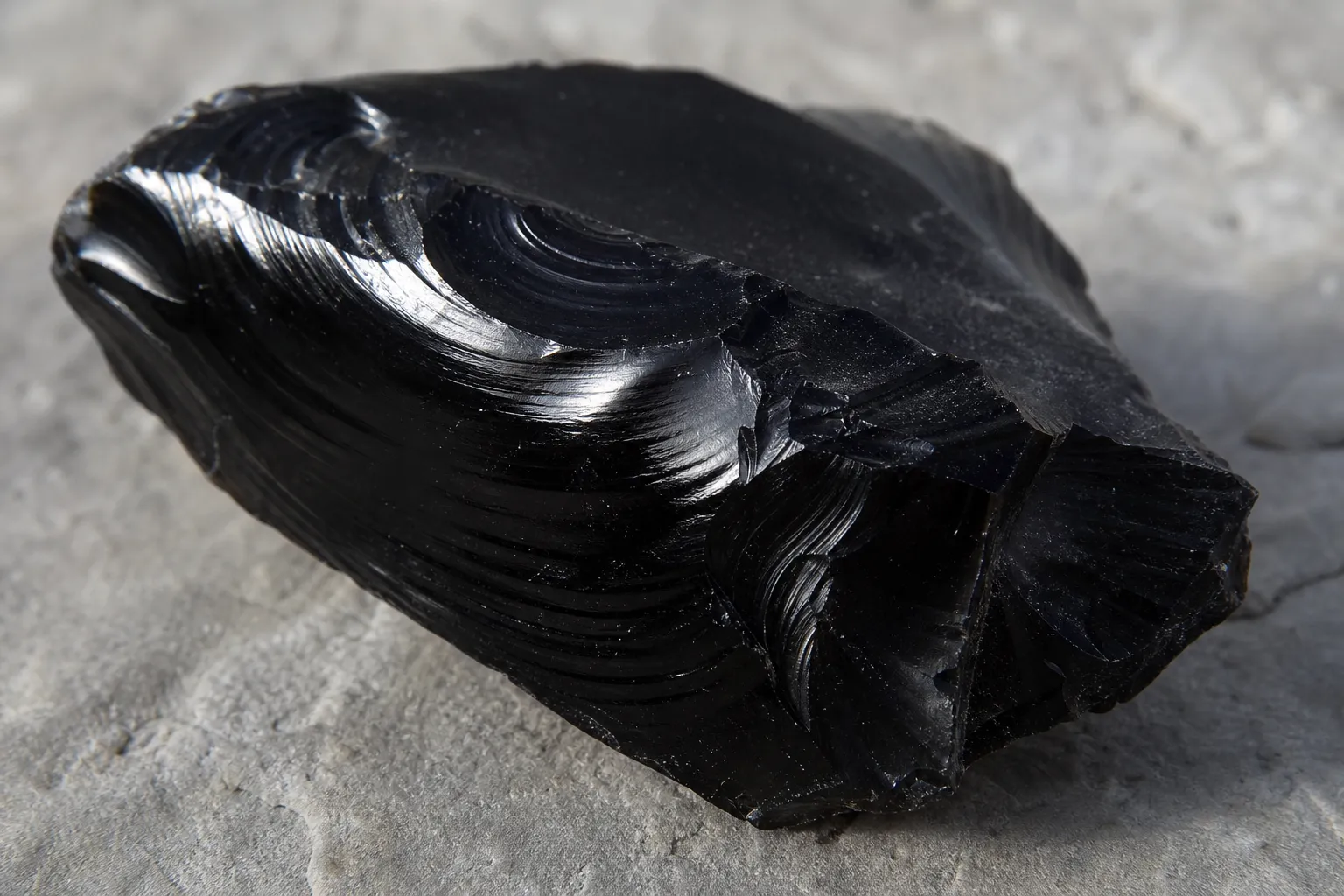
This glassy structure also explains one of obsidian’s best-known visible traits: conchoidal fracture. That means it breaks in smooth, curved surfaces rather than along grain boundaries. If you have seen a chipped piece of obsidian with shell-like curves, that fracture pattern is a practical clue to its glassy nature.
For a beginner collector, look for:
- Glassy luster: polished or fresh surfaces often look shiny and glasslike.
- Smooth curved breaks: chipped areas may show rounded, shell-like fracture surfaces.
- Sharp broken edges: raw flakes or damaged pieces can be extremely sharp.
- Lack of visible grains: most pieces do not show the interlocking grains seen in many crystalline rocks.
- Bubbles, bands, or inclusions: some pieces show flow layers, tiny mineral fragments, flattened bubbles, sheen, or other volcanic features.
These traits are not enough to identify every specimen from a photo, but they explain why obsidian is classified as volcanic glass.
Is obsidian crystalline at all?
The careful answer is: obsidian itself is not a true crystal, but some obsidian pieces can contain tiny crystals or later crystalline features.
It is too simple to say obsidian contains no crystalline material of any kind. Geological and research sources describe obsidian as mostly glassy, while also discussing microlites, nanolites, phenocrysts, and other small crystalline or mineral features that may occur within a glassy matrix.
That distinction matters because readers often see patterns in obsidian and wonder if those patterns make it a crystal. Usually, they do not change the basic classification. A piece can be mostly volcanic glass while still containing inclusions, flow bands, bubbles, or small crystalline features.
The easiest collector example is snowflake obsidian. Its pale “snowflake” patterns are commonly explained as devitrification features. Devitrification is the process by which glass begins to change toward a more crystalline state. Oregon State University describes snowflake obsidian’s white forms as quartz crystals that develop from the original obsidian through this process.
That does not make all obsidian a crystal. It means some obsidian can show crystalline growths or altered textures within or from the original glass.
Black obsidian
Volcanic glass, not a true crystal.
Snowflake obsidian
Volcanic glass with pale devitrification patterns.
Mahogany, rainbow, gold sheen, or silver sheen obsidian
Collector names for visible color or sheen effects, not separate crystal species.
Obsidian with microscopic crystals
Still generally discussed as glassy material with small crystalline features, not as a mineral crystal like quartz.
Why shops still say “obsidian crystal”
The phrase “obsidian crystal” is common because the retail crystal world uses “crystal” differently from geology. In a shop, the word may refer to a decorative stone, a symbolic object, a polished mineral specimen, or a carved shape. It may not mean the object has a crystalline atomic structure.
For example:
- “Obsidian crystal point” usually means a carved point made from obsidian.
- “Obsidian crystal bracelet” usually means a bracelet made with obsidian beads.
- “Black obsidian crystal” usually means black obsidian sold in a crystal-shop context.
- “Natural obsidian crystal” is wording to read carefully, because obsidian does not normally grow as a crystal in the strict mineralogical sense.
This does not automatically mean the object is imitation. It usually means the seller is using crystal-shop language rather than mineralogical language. A crystal-shaped carving is not the same thing as a naturally grown crystal.
What collectors can look for instead
If you are trying to understand an obsidian piece, the label matters less than the visible material. Start with what you can observe.
A typical piece may show a glossy surface, dark body color, smooth curved chips, and no obvious grainy structure. Polished pieces can look even and reflective. Raw or broken pieces may show curved fracture surfaces and sharp edges. Some varieties show bands, sheen, pale patches, bubbles, or inclusions from flow textures and later alteration.
Obsidian is often listed around 5 to 5.5 on the Mohs hardness scale, softer than quartz at 7. That can be useful background, but casual scratch testing is not a good first step for a finished piece. It can damage polished obsidian and still may not give a clear answer.
A better question is:
Not just
“Is this an obsidian crystal?”
Better
“Is this object made of obsidian, and is ‘crystal’ being used as a shape or shop category?”
Better still
“Do the visible traits fit volcanic glass: glassy luster, curved fracture, lack of visible grains, and possible flow or inclusion features?”
If a piece is valuable, unusual, dyed-looking, or sold with a strong claim, a photo-based guess is limited. Lighting, polish, imitation glass, and seller naming can all affect what a beginner sees.
A note on sharp edges
Obsidian’s glassy fracture is not only a classification detail. Broken obsidian can form very sharp edges. Oregon State University notes that intersections of conchoidal fracture surfaces can be sharper than a razor. For collectors, the takeaway is simple: chipped pieces deserve careful handling.
Avoid running your fingers along broken edges. Keep raw flakes, damaged points, and sharp fragments away from children and pets. A polished bead or palm stone is usually easier to handle than a broken flake, but polish does not make every edge or every use harmless.
The point here is narrow: obsidian behaves like glass when it breaks, so its edges can be much sharper than its smooth shine suggests.
What about obsidian crystal meaning?
“Obsidian crystal meaning” is a common search phrase, but it belongs to symbolic and marketplace language rather than mineral classification. Some people use obsidian as a personal symbol for grounding, reflection, protection, or clarity. Those meanings are best understood as beliefs, traditions, or personal interpretations.
They do not change the geology. A piece of obsidian can carry personal meaning for a collector and still be volcanic glass rather than a true crystal. Meaning is interpretation; classification is material structure.
Bottom line
Obsidian is volcanic glass, not a crystal in the strict mineralogical sense. It forms when silica-rich volcanic material cools into a glassy state before large crystals can grow. That is why collectors often notice glassy luster, smooth conchoidal fracture, sharp chipped edges, and a lack of visible intergrown grains.
The phrase “obsidian crystal” is usually shop shorthand for a polished, carved, or decorative obsidian object. It can describe how the piece is sold or shaped, but it does not make obsidian a true crystal. Snowflake patterns, sheen, flow bands, bubbles, and microscopic crystalline features add nuance, yet they do not overturn the main answer: obsidian is best understood as natural volcanic glass.