
Handling guide
Raw Obsidian Safety: Sharp Edges, Chips, and Handling Limits
A glossy black break, a curved fracture edge, or a bag of rough chips can make raw obsidian feel closer to broken glass than to a smooth display stone. That is the center of raw obsidian safety: the label matters less than the exposed edge, loose flake, fresh break, and the way the piece is handled.
Obsidian is natural volcanic glass. When it breaks, it can form smooth curved surfaces and thin margins instead of dull granular breaks. An intact shelf specimen with stable, weathered edges is a different handling problem from raw obsidian fragments in a pouch, loose chips in a bowl, or a newly broken point. Handle the surface you actually have.
upward
Start with the broader guide
Use the broader guide first if you need the full scope before this page.
Why Raw Obsidian Can Have Sharp Edges
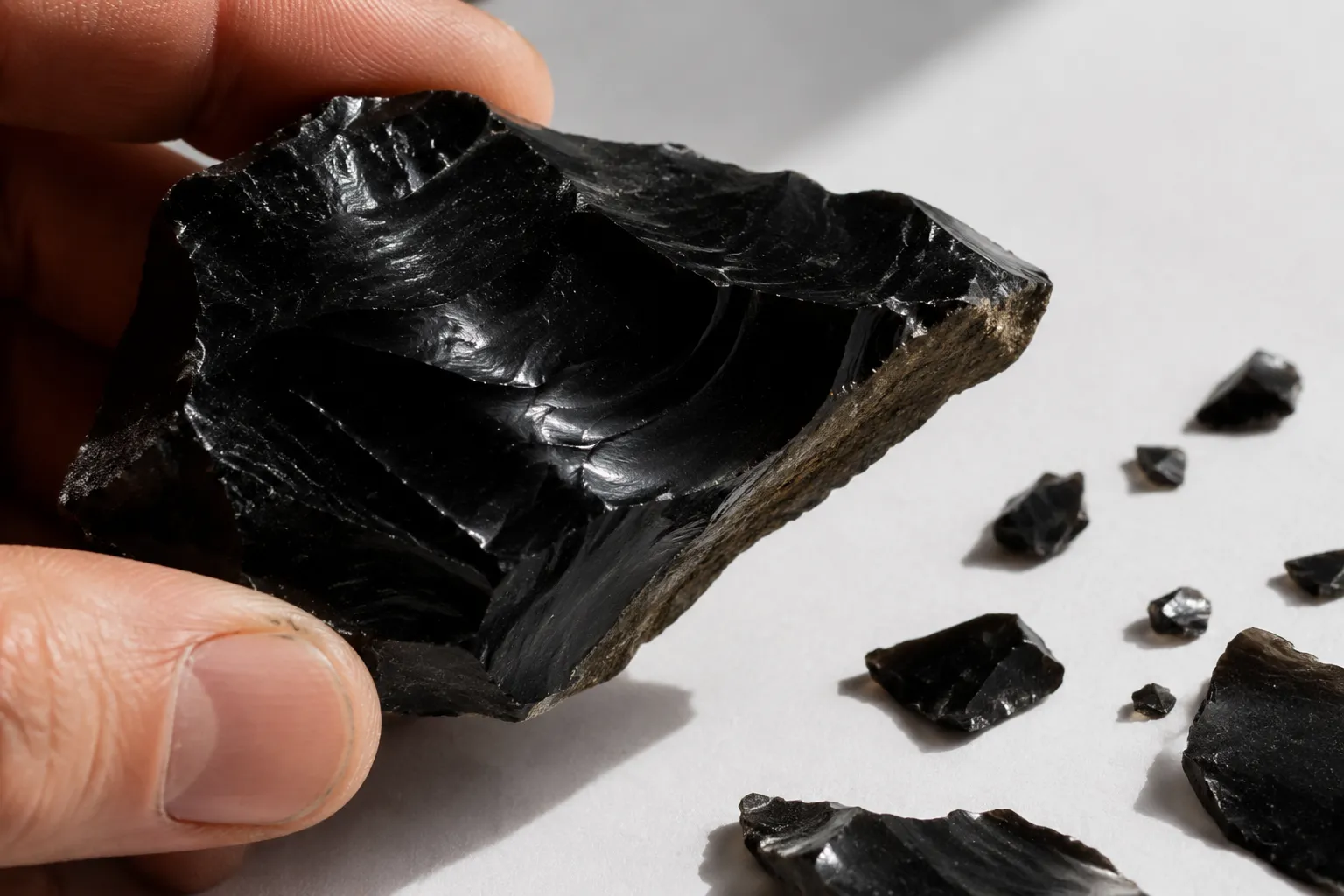
Geology references describe obsidian as glassy volcanic material, often with a vitreous luster, and capable of conchoidal fracture. In collector terms, a break may curve like a shell or scoop. That curved fracture can leave a fine edge.
Not every raw edge is equally sharp. Not every display specimen is a cutting hazard in ordinary shelf use. The concern rises when glass-like material, a fresh or thin fracture, and direct contact all meet: fingers pressing into a rim, cloth snagging on a sliver, chips hiding in packaging, or a broken point sliding across a table.
Raw pieces vary widely. A chunky nodule with rounded weathered surfaces may be easy to place on a shelf and leave alone. A thin flake, shard-like chip, or glossy broken lip deserves more caution. The same specimen can move from low concern to higher concern after it chips.
Sharp obsidian edges are easy to miss when the piece is visually appealing. A clean black face, rainbow sheen, snowflake pattern, or glassy luster can pull attention away from a narrow rim along the side. Inspect the fracture edge before judging the display value.
The Variables That Change the Handling Answer
Raw obsidian safety is not a yes-or-no label. The better question is what the piece is asking you to manage.
Size alone does not settle the question. A large display piece with stable dull edges may be less troublesome than a small thin chip. Tiny obsidian chips can be a cutting hazard when they are sharp, loose, and hard to see. The issue is contact, not drama.
Handling context changes the answer too. A piece placed once on a lined shelf is different from a pocket stone, a tray handled by visitors, or a parcel of rough chips poured onto a table. Frequent handling raises the chance that fingers, fabric, or padding meet an edge.
Raw Obsidian vs Polished Obsidian
Raw obsidian vs polished obsidian is one of the clearest safety distinctions for collectors. Polishing can smooth exposed roughness and make a piece more comfortable to pick up. A tumbled stone, cabochon, bead, or polished palm stone usually presents fewer raw fracture edges than a bag of rough fragments.
Polished does not mean unbreakable. Corners can chip, thin points can snap, and a dropped polished piece can open a new glossy break. After impact, inspect the edges and corners before treating the piece as a normal handling stone again.
Raw material keeps more of the natural break surface visible. That is part of its appeal, but it also makes storage more important. A raw obsidian display piece can be reasonable when it sits stable, is not passed around casually, and has no loose fragments around it. A pile of raw chips is a different object category.
Lapidary work belongs in another context. Cutting, sanding, shaping, and polishing obsidian involve tools, abrasives, water control, and attention to brittleness. That is not the same as picking up a shelf specimen. Do not treat a rough piece as a tool, blade, or practice material unless you are in an appropriate lapidary setting.
How to Inspect Obsidian for Sharp Edges Before Handling
Start with light, not pressure. Place the piece on a stable surface and turn it slowly under bright light. Fresh breaks often show a glossy curved face; sharp edges may catch a thin highlight along the rim.
Look for:
- Thin lips along a broken face.
- Pointed corners where two fracture surfaces meet.
- Small flakes partly attached to the surface.
- Loose chips in the bag, box, tissue, or tray.
- New bright breaks after shipping, dropping, or rubbing against other stones.
- Grit or slivers caught in fabric, paper wrap, or padding.
Do not test sharpness with a fingertip. That creates the contact you are trying to avoid. If you need to reposition the specimen, hold it by a duller mass, broad face, or stable base. Keep the fracture edge away from your palm.
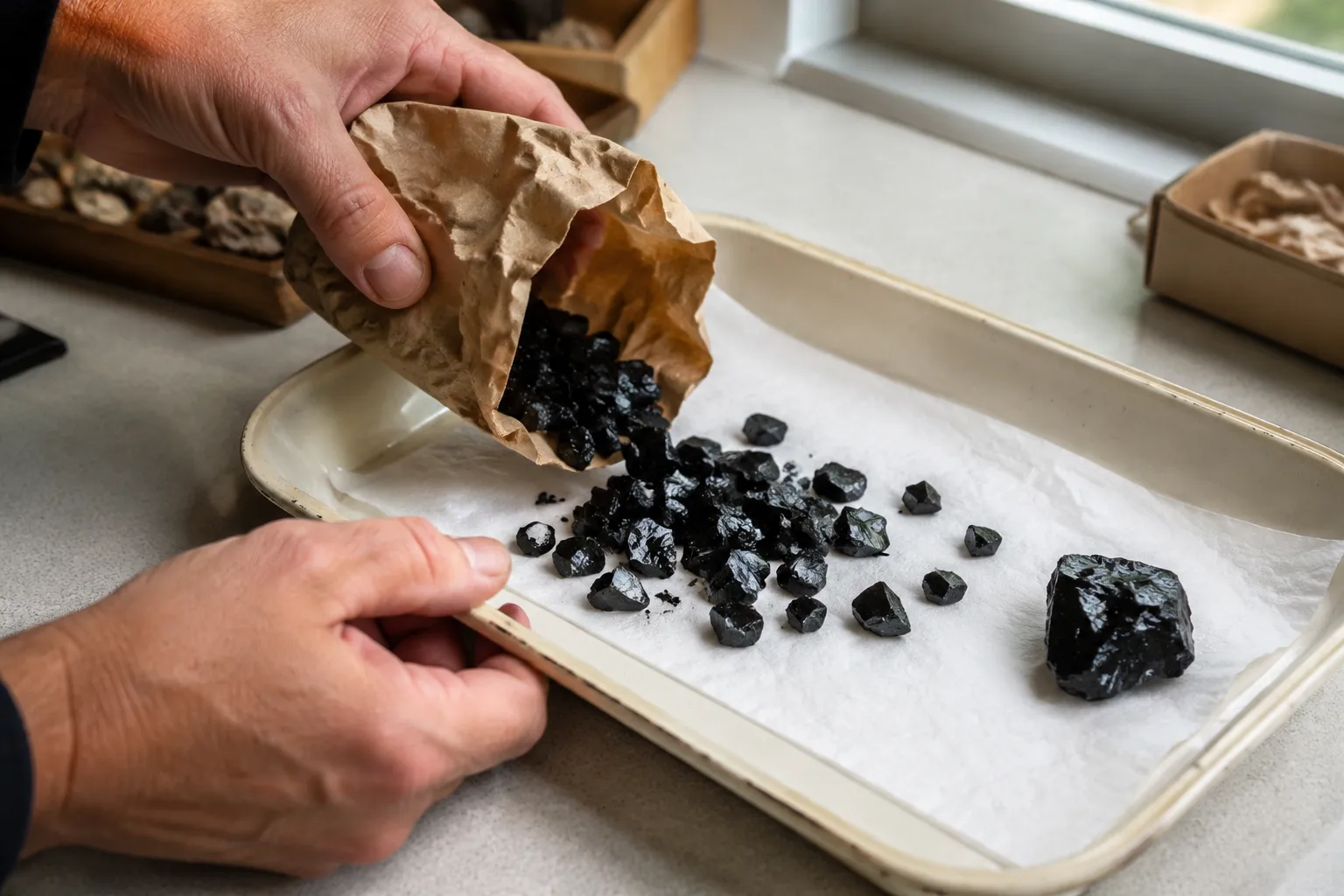
For a newly received order, open the wrapping over a contained surface, such as a tray or sheet of paper that can catch small pieces. Rough chips sold in bulk may arrive as irregular fragments rather than rounded stones. Marketplace phrases like rough chips, raw edges, shard-like fragments, and glossy pieces describe appearance; they are not promises about comfortable handling.
How to Pick Up Raw Obsidian Without Creating a Problem
Slow the contact down. Do not scoop a handful of chips. Do not dig through a pouch blindly. Do not carry raw fragments loose in a pocket where fabric and fingers can press into hidden edges.
Use a simple handling path:
- Put the piece on a clear, stable surface.
- Inspect the edges under good light.
- Choose a broad, dull contact point.
- Lift one piece at a time.
- Set it down on padding, a tray, or a stable display base.
- Check for loose fragments before cleaning the surface.
Gloves can be reasonable for rough obsidian edges, fresh breaks, or many loose chips. Choose them for coverage and grip, not as a guarantee. Thin cloth may snag or press into sharp points. Heavy gloves may reduce feel and make small pieces harder to control. The useful choice is the one that lets you move the specimen slowly without squeezing an edge.
Can raw obsidian cut through cloth or bags? There is no single answer for every piece and fabric. A thin sharp edge may catch or slice some soft materials under pressure, while a duller chunk may not. For storage, avoid relying on a thin fabric pouch as the only barrier around sharp raw fragments. A rigid or semi-rigid container is a better match for loose obsidian chips.
What to Do With Loose Obsidian Chips and Fragments
Loose obsidian chips need containment first. Treat them like small sharp glass-like fragments: keep them from scattering, avoid brushing them away with bare hands, and do not leave them in open bowls where someone may reach in casually.
For collector storage, use a lidded box, divided tray, small jar, or padded container. Label the container if the pieces are sharp or newly broken. Keep sharp fragments away from soft pouches used for polished stones, because tiny slivers can hide in seams and padding.
If a display piece sheds flakes, remove it from open handling until you understand the source. It may have a fragile edge, a recently broken zone, or small chips left from shipping. Place it on paper or in a tray, lift the larger specimen by a stable area, and collect fragments with a tool, tape, damp disposable towel, or another method that avoids bare-finger sweeping.
Disposal is a handling limit, not a mineral identity question. If you decide not to keep tiny fragments, contain them so they do not poke through a bag or scatter into household surfaces. University glassware guidance is useful here as a broad principle: sharp fragments should be controlled and contained. A collector does not need laboratory procedures, but the same basic caution fits small glass-like pieces.
Children, Pets, and Shared Display Areas
Raw pieces with exposed edges, flakes, or chips are poor casual handling objects for children. The concern is not that every specimen on a shelf is dangerous; it is that young handlers may squeeze, drop, mouth, pocket, or pass around a piece without noticing a fracture edge.
Pets add another handling variable. Loose fragments on a floor, low shelf, or open dish can be stepped on, batted around, or mouthed. Keep raw obsidian fragments contained, and keep display pieces stable enough that they will not slide or fall during normal activity around the shelf.
Shared displays deserve the same thinking. If visitors may pick up a specimen, choose polished or smoother pieces for handling and keep raw fragments behind a boundary. If the raw piece is visually important, present it as a look-only object. A display specimen should not become a surprise tool.
Common Misreadings About Obsidian Sharpness
Obsidian has a long association with cutting edges and stone tools, so online discussions often drift toward blades, extreme sharpness comparisons, and dramatic claims about microscopic edges. Those examples explain why people worry, but they are not the right basis for handling a collector specimen.
The practical question is narrower: does this piece have exposed sharp edges, fresh chips, thin flakes, or loose fragments? A viral comparison does not tell you how to store the stone on your shelf. Seller warnings do not establish a universal rule. A photo does not prove whether an edge will catch skin or cloth.
Another confusion comes from mixing identity with handling. Obsidian can be confused with other glossy black materials, including some glassy industrial materials, but safety inspection still starts with visible breakage. If a piece has shard-like edges, loose flakes, or sharp broken surfaces, handle those features cautiously while you sort out the label.
Crystal-market language can also blur the issue by shifting from material care into symbolic meaning. Symbolic meaning belongs to personal or cultural interpretation. It does not change the physical handling of a sharp edge.
A Practical Decision Frame for Storage
Use the storage method that matches the sharpest feature, not the prettiest face.
For an intact raw shelf specimen, a stable base, lined shelf, and limited handling may be enough if the edges are dull or easy to avoid. Reinspect it after moving, shipping, dropping, or knocking it against other stones.
For rough chips and raw obsidian fragments, choose containment. A lidded container, divided tray, or wrapped rigid box keeps pieces from migrating into fabric, drawers, pockets, and open surfaces. Avoid mixing sharp raw chips with polished stones that people expect to handle casually.
For newly broken obsidian, pause before returning it to normal display. Separate the main piece from loose flakes, inspect the new fracture, and decide whether it remains a display specimen or needs more restricted storage.
For pieces meant to be handled often, polished surfaces are usually the more practical choice. Raw broken surfaces are better treated as display, study, or lapidary material, depending on the context and the owner's skill.
FAQ
Is raw obsidian dangerous to handle?
Raw obsidian is not automatically dangerous in every display context, but it can have sharp glass-like fracture edges. The concern rises with fresh breaks, thin flakes, loose chips, and casual contact.
Do you need gloves to handle raw obsidian?
Gloves can help with rough or freshly broken pieces, especially when moving multiple fragments. They do not replace inspection, slow lifting, and keeping fingers away from sharp fracture lines.
Are tiny obsidian chips a cutting hazard?
They can be when they are thin, glossy, and loose. Small chips can hide in cloth, trays, padding, or packaging, so contain them instead of sweeping them aside by hand.
Can raw obsidian break or chip during normal handling?
It can chip if dropped, knocked against harder surfaces, or pressed at a thin edge. After any impact, inspect the piece again; a new glossy break may change how it should be handled or stored.
Raw obsidian safety comes down to visible surfaces and handling habits. Inspect the fracture edge, contain the chips, reserve raw pieces for controlled display when needed, and choose polished stones when frequent touch is the point.