Collector Source Notes
How to Record Where You Got an Obsidian Specimen
To record obsidian specimen source details well, write down four things: where the piece came from, who supplied that information, what supporting material you still have, and how certain the note really is. A good obsidian acquisition record does not need to sound formal. It just needs to help you tell the difference between “I bought this from a shop,” “the seller said it came from Oregon,” “an old label gave this locality,” and “I personally collected this at a known site.”
The key habit is separation. Keep your own knowledge apart from seller wording, previous-owner notes, receipts, labels, and guesses. A source note can preserve useful collection history, but it does not, by itself, confirm geological origin, authenticity, legal collection status, or value.
upward
Read the full overview first
Use the broader guide first if you need the full scope before this page.
The Basic Record to Make When You Add an Obsidian Piece
Start with a short entry that answers five practical questions: what the specimen is, when you got it, how you got it, who or what supplied the source information, and what locality was claimed, if any.
A useful entry can include:
- Specimen name or working label: black obsidian palm stone, snowflake obsidian chip, rainbow sheen obsidian slab, rough obsidian nodule.
- Specimen acquisition date: when you bought, traded for, received, inherited, or collected the piece.
- Acquisition context: purchase, trade, gift, inheritance, field collection, old collection lot, show table, online order, or shop visit.
- Source person or place: seller name, shop name, show vendor, previous owner, family member, or your own field note.
- Claimed locality: the place stated by a seller, label, receipt, previous owner, or collecting note.
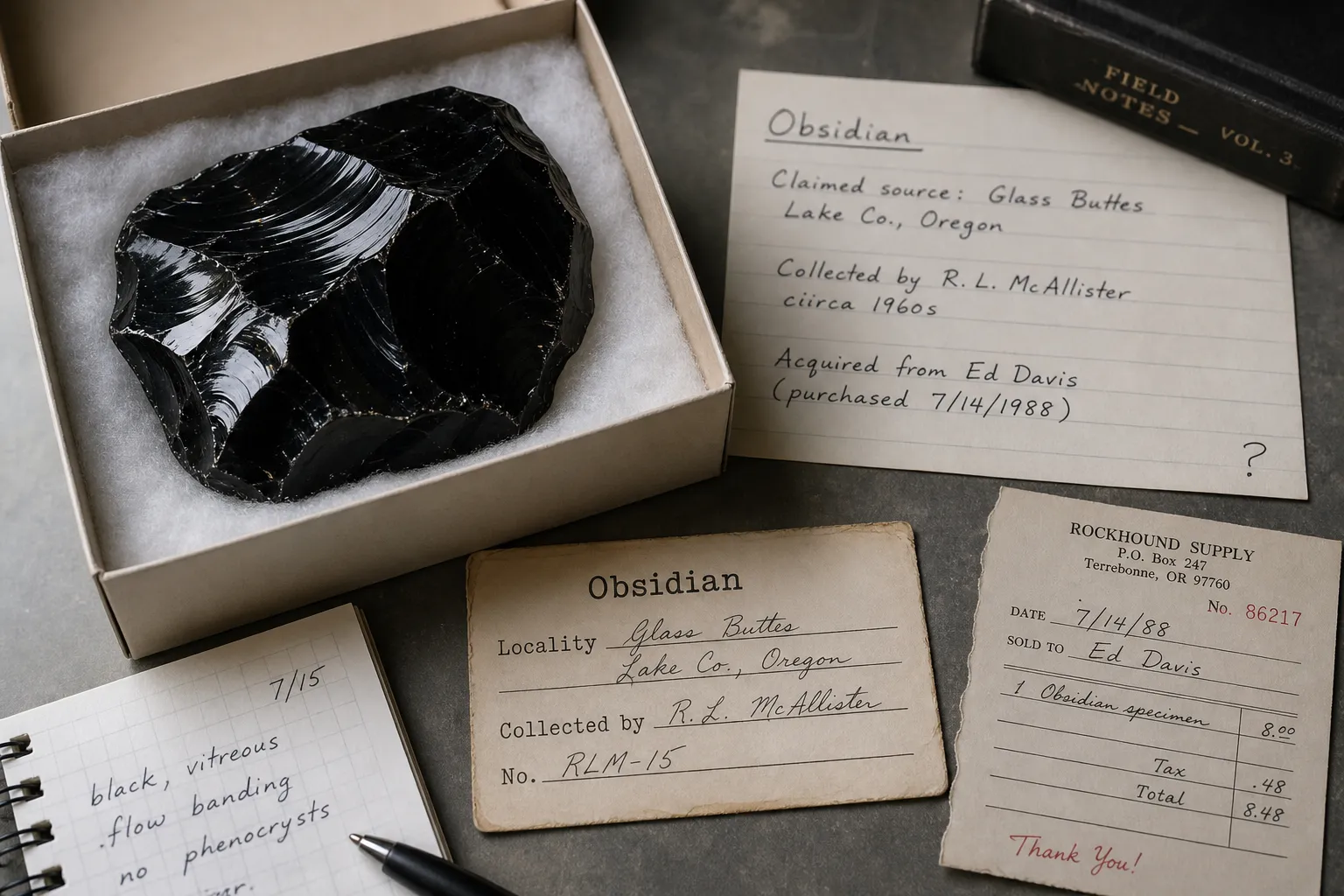
- Supporting items: receipt, invoice, message thread, original label, packaging, price tag, lot number, or photos.
- Uncertainty note: a short phrase that shows how strong or weak the source information is.
That last line matters. “Mexico” on a shop card, “Davis Creek” on an old label, and “bought at a gem show” are all useful, but they do not mean the same thing. Preserve the wording without making it stronger than it is.
For a polished or carved piece, also photograph the specimen from several angles. If the stone has sheen, snowflake-like inclusions, banding, a chip, a saw mark, or an unusual polish, include images that show those visible traits. These photos help connect the written source note to the actual object if labels, boxes, or receipts get separated later.
A Practical Template for Collector Source Notes
You can keep the record in a notebook, spreadsheet, collection app, photo folder, or small card near the specimen. The format matters less than consistency. The goal is to make the entry understandable to your future self.
Example Finished Entry
Specimen ID: OBS-014
Working name: Black obsidian point
Date acquired: March 2026
Acquisition type: Purchase
Source: Gem show vendor table
Claimed locality: “Oregon,” as written on seller label
Evidence kept: Original label photo, receipt photo, specimen photos
Price note: Recorded for collection history only
Uncertainty note: Seller-stated locality; not independently checked
This kind of obsidian specimen source record is plain, but it is useful. It preserves the trail without exaggerating it, and it makes the collection easier to organize if you later compare pieces, update names, sell a duplicate, gift a specimen, or separate polished stones from rough material.
How to Word Locality and Provenance Carefully
Collectors often use “provenance” casually. For a beginner or home collection, clearer wording is usually better. Your obsidian provenance notes should show where the information came from, not just repeat a place name as if it were confirmed.
Instead of writing only
“Collected in California”
Write
“Previous owner stated California; no original label or receipt.”
Instead of writing only
“Authentic Mexican obsidian”
Write
“Sold as Mexican obsidian by online seller; invoice saved; locality not independently checked.”
Instead of writing only
“Davis Creek obsidian”
Write
“Old collection label reads ‘Davis Creek’; label photographed; collector history unknown.”
These small wording choices protect the record. A receipt may show where you bought the specimen. A seller label may show what the seller claimed. An inherited tag may show how a previous owner labeled it. None of those alone confirms where the obsidian formed, where it was collected, whether the variety name is exact, whether collection was allowed, or what the piece is worth.
For most personal collections, that is fine. The point is not to create a legal, scientific, or appraisal file. The point is to keep your collector source notes honest and readable.
Useful uncertainty phrases include:
- Seller-stated locality
- Reported source
- Unverified collection label
- Previous owner record
- Personal purchase record
- Locality not provided
- Locality unknown
- Original label missing
- Receipt saved, no locality listed
- Gift context known, original source unknown
Use the phrase that matches the situation. If you do not know the locality, say so. “Unknown” is better than filling a blank with a guess based on color, polish, price, or variety name.
What to Photograph and Keep
Photos are often the easiest way to preserve context. Labels fade, packaging gets thrown away, receipts are misplaced, and memory becomes less reliable over time.
Photograph:
- The whole specimen under ordinary light.
- Distinctive surface features, such as sheen, snowflake-like patterns, banding, chips, or saw marks.
- The original label before you rewrite or replace it.
- The back of the label if it has a price, lot number, old handwriting, or shop mark.
- Receipt or invoice details that identify the purchase.
- Packaging or box labels if they contain source wording.
- The specimen beside its label before storing them separately.
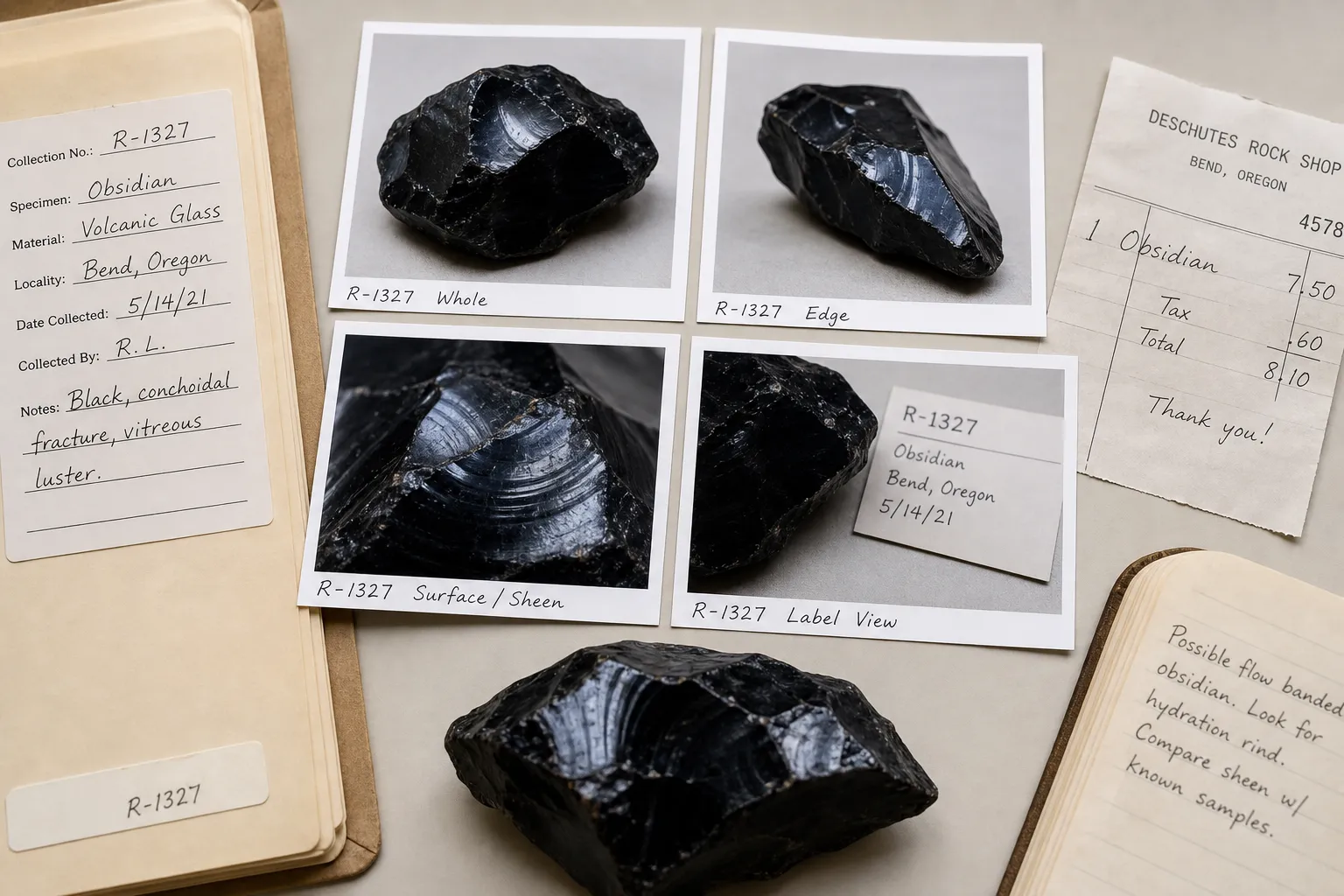
A photo can document that a label existed and what it said. It can help match a stone to an entry. It can also show visible features that support your working name. It should not be treated as confirmation of origin, collection status, age, or formal authenticity.
If the specimen is stored away from the paper record, use a matching system. For example, write OBS-014 on the record card, use the same code in photo file names, and place the specimen in a tray slot or small bag with the same code. Avoid placing ink, adhesive, or labels directly on polished surfaces unless you know the finish will tolerate it. A separate tag, bag label, or tray card is easier to revise later.
Notes for Purchases, Trades, Gifts, and Old Collections
Purchase
For a purchase, record the seller, date, item name, stated locality, receipt or invoice details, and any listing text you saved. If the listing used a variety name such as snowflake, rainbow sheen, gold sheen, mahogany, or black obsidian, keep that name as seller wording unless you later revise your own working label.
Trade
For a trade, record who traded it to you, the date, what you gave in exchange if that matters to your collection history, and whether the other collector had a label or source note. A trade can preserve useful context, but it can also add distance from the original source.
Gift
For a gift, write down the giver and what they knew. “Gift from aunt; she believed it was bought in Arizona; no label” is more useful than “Arizona obsidian” if the location was only loosely remembered.
Inherited or Old Collection Piece
For an inherited or old collection piece, preserve the original label exactly. Do not clean up spelling, abbreviations, or old locality wording in a way that erases the record. Add your own interpretation separately: “Old label reads ‘Mex. obsid.’; meaning uncertain.”
Personally Collected Specimen
For a personally collected specimen, record the date, general place name, your field context, and any limits on how precisely you want to share the location. If land access, permits, protected areas, cultural material, or public land rules are involved, use jurisdiction-specific sources outside this page. Your collection note can record what you did; it should not be treated as a legal conclusion.
What Not to Let the Record Imply
A good source record is valuable because it stays limited. Do not let it imply that:
- The stone’s exact geological origin has been confirmed.
- A seller name confirms the locality.
- An old label confirms the previous collector’s knowledge was correct.
- A receipt confirms authenticity.
- A locality claim confirms the piece was collected legally.
- A named variety establishes value.
- A price paid establishes appraisal value.
- A photo confirms source, age, or collection history.
The collection history price can still be worth recording. It may help you remember when and why you acquired the piece, track your own spending, or distinguish similar specimens bought in the same year. Keep it separate from value language. “Paid $18 in 2026” is a personal record, not an appraisal.
The same separation helps with symbolic or personal meaning notes. If you keep a meaning journal beside your crystal collection, place those notes in a separate field from the acquisition record. Personal meaning can be part of how you relate to a piece, but it should not blur source, locality, or identification notes.
A Short Checklist Before You File the Specimen
Before you put the obsidian into a tray, box, or display, check that the record answers these questions:
- Can I tell when and how I acquired this specimen?
- Did I record the seller, previous owner, giver, or collecting context?
- Did I preserve the exact wording of any claimed locality?
- Did I photograph the original label, receipt, packaging, or invoice if available?
- Did I take clear specimen documentation photos?
- Did I mark whether the source is personal, reported, seller-stated, or unknown?
- Did I avoid turning a label or receipt into a stronger claim than it supports?
- Can I match the physical specimen to the written record later?
If you can answer yes to most of these, the record is doing its job. It gives your obsidian collection a memory without pretending to be a laboratory report, legal file, or appraisal certificate.
The Bottom Line
The best way to record where you got an obsidian specimen is to make a simple acquisition note: date, source, purchase trade gift context, claimed locality, supporting records, photos, and a clear uncertainty phrase. Keep original wording, save label and receipt images, and separate your own knowledge from seller or previous-owner claims.
That approach keeps the piece easier to identify, compare, store, and discuss later. It also leaves room for correction. If better information appears, you can update the working note without losing the original trail.