
Care question
Can Alcohol Wipes Damage Obsidian
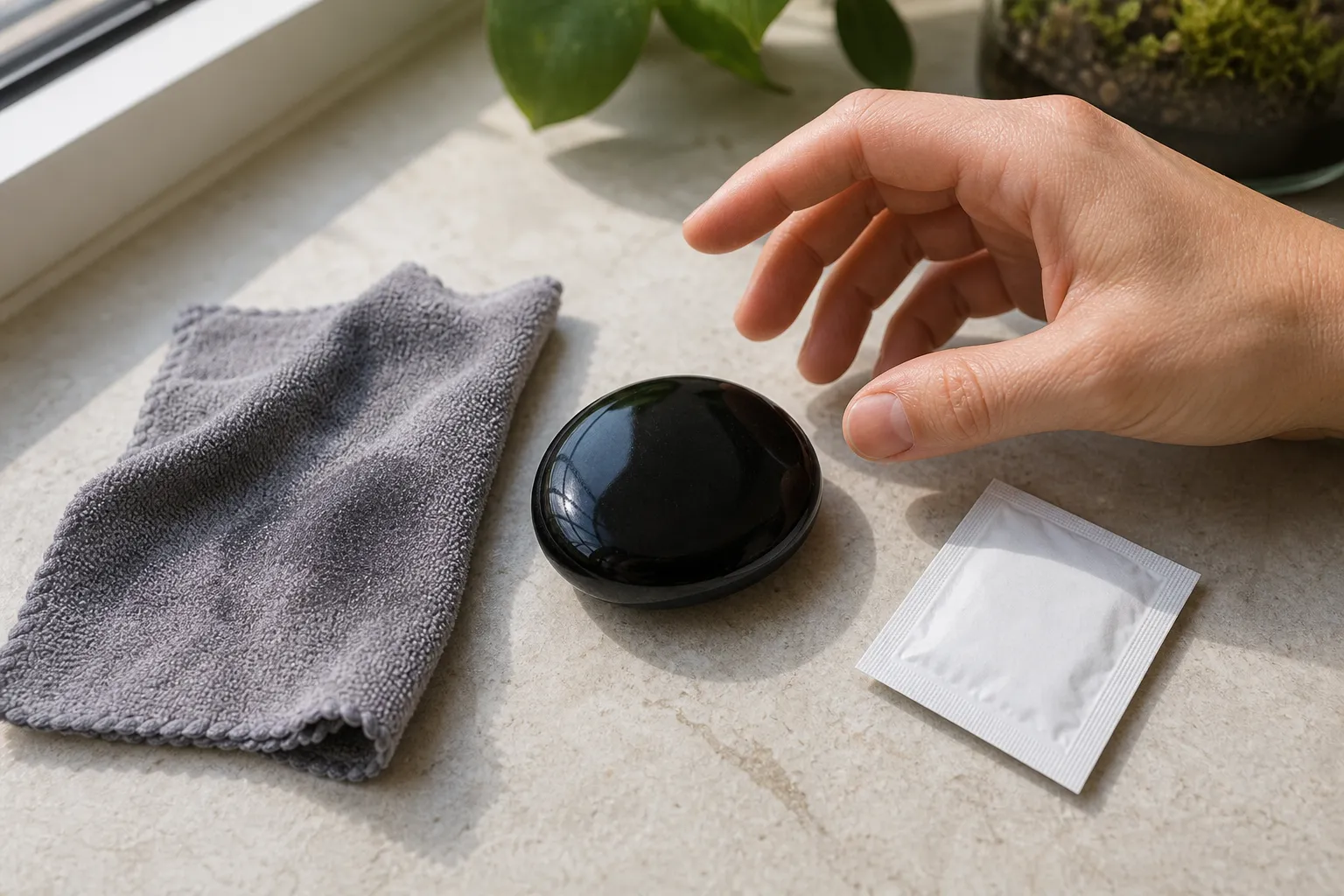
A glossy black surface can make obsidian look tougher than it is as a finished object. Short answer: alcohol wipes on obsidian are not automatically damaging to plain volcanic glass, but they are a poor default for polished, coated, dyed, glued, labeled, or mixed-material pieces. The risk is often not the obsidian alone; it is the finish, residue, adhesive, or setting the wipe also touches.
For routine cleaning, start with a soft damp cloth. If you choose an alcohol wipe anyway, keep contact brief, avoid soaking, test a discreet spot when possible, and dry the piece promptly.
upward
Read the full overview first
Use the broader guide first if you need the full scope before this page.
The Practical Answer for a Piece in Hand
If your obsidian is a simple, solid, untreated piece with no glue, coating, label, metal setting, or decorative finish, a quick wipe is less likely to be the main care concern. Obsidian is volcanic glass, and collectors usually pay more attention to chips, sharp fracture edges, abrasive grit, and unnecessary moisture.
That does not make isopropyl alcohol obsidian care a safe habit for every object. Strong public compatibility sources, lapidary finish tests, and long-term trials are not available here, so the answer has to stay narrow: some plain pieces may tolerate brief contact, while repeated wiping, wet seams, and unknown surface treatments add uncertainty.
The better question is not only “can alcohol damage obsidian?” It is “what exactly am I wiping?” A loose tumbled stone, polished carving, pendant in a glued setting, dyed bead, and souvenir piece with a paper label are different objects. One wipe may touch glass, polish residue, adhesive, dye, coating, metal, cord, and display hardware in the same pass.
If the piece matters to you, choose the gentler path first: dust it, wipe with a soft damp cloth, then dry it.
What Changes the Risk
Alcohol-wipe risk depends on the whole object, not just the black glass. Before cleaning polished obsidian, inspect the piece under steady light and look for anything that may not be the stone itself.
Plain loose stone
Fewer non-stone materials are involved. Use a soft damp cloth; dry promptly.
High polish or waxy feel
A finish may be present or masked. Avoid repeated alcohol wiping.
Rainbow, gold, or silver sheen
Sheen depends on light and surface condition. Wipe gently; avoid abrasion.
Dyed or unusually bright areas
Color may not run through the material. Keep alcohol away unless tested discreetly.
Coating or lacquer-like gloss
A surface layer may react differently. Do not use alcohol as routine care.
Glue, setting, bail, or inlay
Adhesives and attached materials vary. Clean around seams with minimal moisture.
Paper label or sticker residue
Alcohol can disturb labels and residues. Keep the label dry if you want to preserve it.
Metal findings or cord
Mixed materials need separate care. Treat it as a mixed-material object.
The most important split is between plain obsidian and obsidian surface treatments. A sphere, palm stone, tower, cabochon, bead, or carving may have been polished, waxed, coated, dyed, glued into jewelry, or handled with shop-applied products. Without reliable maker information, a quick glance cannot confirm all of that.
Dyed obsidian alcohol risk deserves extra caution. Intense color effects, uniform staining, or an unusual surface appearance may not behave like untreated black volcanic glass. Alcohol can move or disturb some colorants and residues on certain materials, and there is not enough evidence here to promise what will happen on a specific piece.
Coated obsidian cleaning also needs restraint. If the surface looks plasticky, overly even, cloudy at the edges, or different where it has been scratched, skip alcohol wipes unless you accept the possibility of visible change. A coating is not the same as the glass underneath.
For glued obsidian settings, keep liquid away from seams. Alcohol wipes are wet enough to creep into small gaps, and glued joints are often the weak point of pendants, charms, inlays, and display mounts.
A Conservative Cleaning Routine
For ordinary dust, fingerprints, and display handling, do not start with alcohol. Start with the least aggressive method that solves the problem.
- Use a dry microfiber cloth or another soft, clean cloth.
- If needed, lightly dampen the cloth with water.
- Wipe gently; do not drag grit across the polish.
- Keep water away from glued seams, labels, cords, and backing materials.
- Dry obsidian promptly with a clean cloth.
- Let the piece air briefly before storing it in a pouch, box, or tray.
This routine does not claim to restore polish, remove deep residue, or identify a treatment. It simply reduces avoidable handling marks without adding a stronger solvent.
Avoid soaking obsidian, especially when the object includes glue, labels, metal findings, cord, inlay, backing material, or unknown repairs. The stone may be the visible center, but water and alcohol can reach the supporting materials. A short damp wipe is different from leaving a specimen wet.
If residue remains, slow down before reaching for an alcohol wipe. Decide whether the mark looks like dust, skin oil, adhesive residue, wax, polish compound, or a scratch. A solvent may move one substance while dulling, smearing, or spreading another.
For valuable, antique, sentimental, repaired, or unusually finished pieces, stop at gentle dusting and ask a qualified conservator, lapidary professional, or experienced jeweler before using solvents. Not every piece will be damaged; the cost of being wrong is simply higher.
When an Alcohol Wipe May Be Reasonable
Sometimes the concern is a secondhand piece, a recent purchase, or an object handled by many people. People may search for disinfecting obsidian crystal, but collector cleaning is not the same as medical sanitation and should not replace ordinary hygiene or professional guidance.
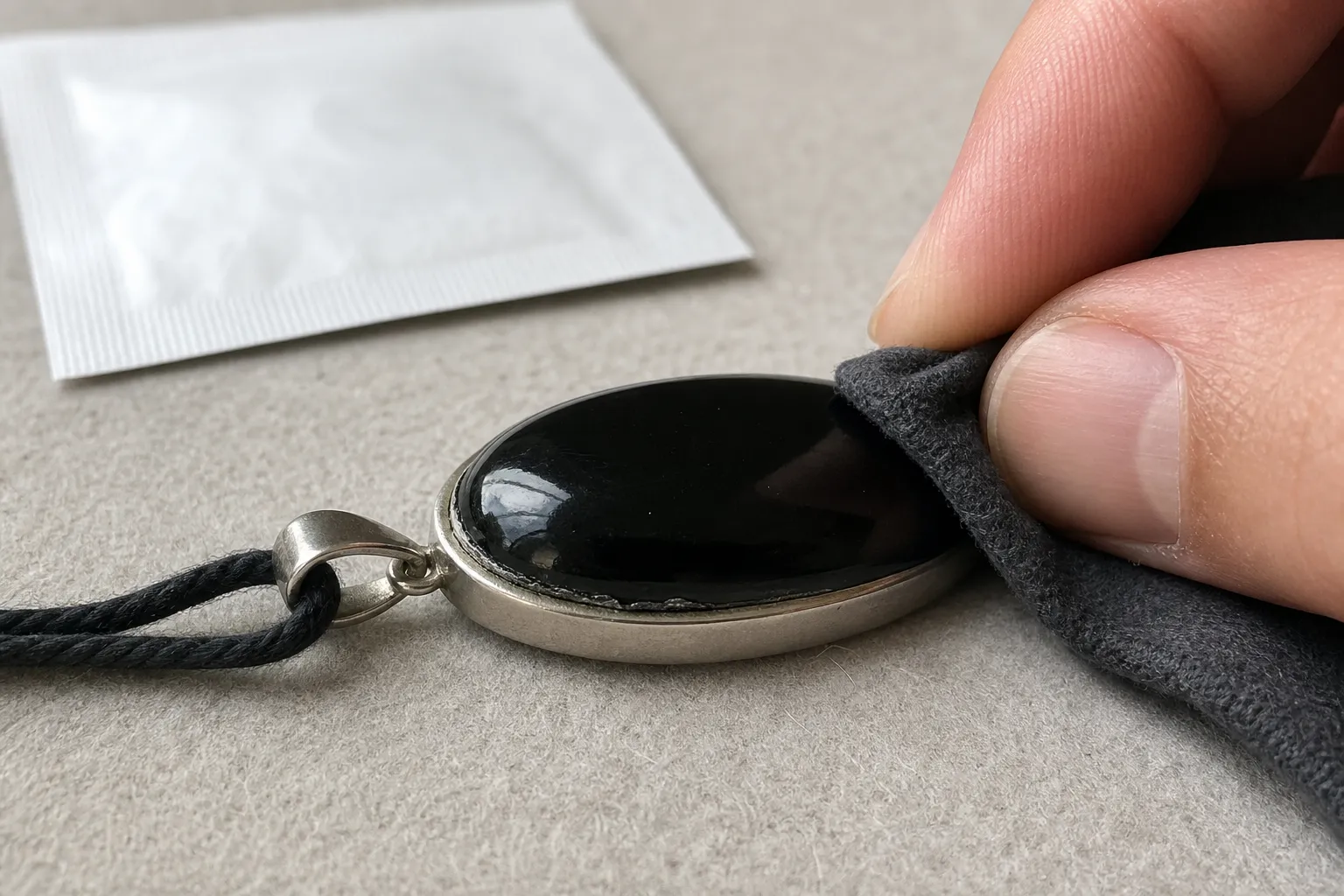
If you still decide to use an alcohol wipe, keep the method narrow:
- Use it only on the visible obsidian surface you can control.
- Avoid labels, cords, glued seams, coated areas, dyed zones, and metal findings.
- Do not leave the wipe sitting on the stone.
- Do not wrap the piece in a wet wipe.
- Do not repeat the process as a daily care habit.
- Dry the surface immediately.
A spot test can help, but it is not a guarantee. Choose a hidden or less visible area only if the object has one. Touch the area lightly, let it dry, then inspect under the same lighting for dullness, tackiness, color transfer, streaking, or a change in sheen. If anything changes, stop.
For a bead strand, pendant, inlay, wand, or mixed material obsidian piece, spot testing is harder because the vulnerable area may be the thread, glue, coating, or setting rather than the exposed stone. In those cases, a soft damp cloth is usually the more careful collector choice.
If the piece has a sharp fracture edge, use extra caution with any wipe. Obsidian can break with very sharp edges, and a thin disposable wipe can catch or tear. Handle the piece by stable surfaces, not by points, chips, or thin protrusions.
Common Confusions About Alcohol and Obsidian
One common mistake is treating “obsidian” as one cleaning category. In collecting, the label may describe a raw chip, polished palm stone, carved figure, cabochon, bead, pendant, or decorative object with several materials. The variety name does not tell you every care detail.
Another confusion is assuming polished means sealed. A polished surface can be smooth and reflective without proving that no wax, coating, dye, or finishing product is present. Glassy luster is useful to inspect, but it does not reveal every treatment.
People also mix up physical cleaning with symbolic or personal cleansing practices. Those practices belong to personal meaning or tradition; they do not show whether alcohol is compatible with a surface, and they do not turn a wipe-down into a safety measure.
A third confusion is thinking that if a wipe did not visibly change one stone, it is fine for all pieces. That conclusion is too broad. One specimen may be untreated, while another may have a coating, glued bail, dyed area, sticker, repair, or softer attached material.
The safest wording is narrower: a brief alcohol wipe may not visibly harm some plain obsidian pieces, but it is not the best default for unknown finished objects.
Quick Decision Path
If the piece is dusty or has fingerprints, use a soft damp cloth and dry it.
If it is plain, loose, and not especially valuable, a brief alcohol wipe is a limited option, but not necessary for normal display cleaning.
If it is dyed, coated, waxy, unusually glossy, labeled, repaired, glued, mounted, strung, or mixed with metal or cord, skip alcohol as routine care.
If you need a cleanliness standard beyond ordinary object care, do not rely on an obsidian wipe-down. Follow appropriate hygiene or professional guidance for that situation, and keep the collector object out of a role it cannot reliably fill.
If you cannot tell what the finish is, treat the uncertainty as part of the object. Clean less aggressively, dry promptly, and avoid soaking.
Bottom Line
Alcohol wipes can be risky for some obsidian objects, especially when the finish or attached materials are unknown. The plain volcanic glass may not be the only thing the wipe touches.
For everyday obsidian cleaning safety, use a soft damp cloth, avoid soaking obsidian, keep liquids away from glue and labels, and dry the piece promptly. Reserve alcohol for brief, careful use on simple pieces where you accept the uncertainty. Inspect the surface before choosing the cleaner.