
Formation answer
Can Obsidian Form in Water
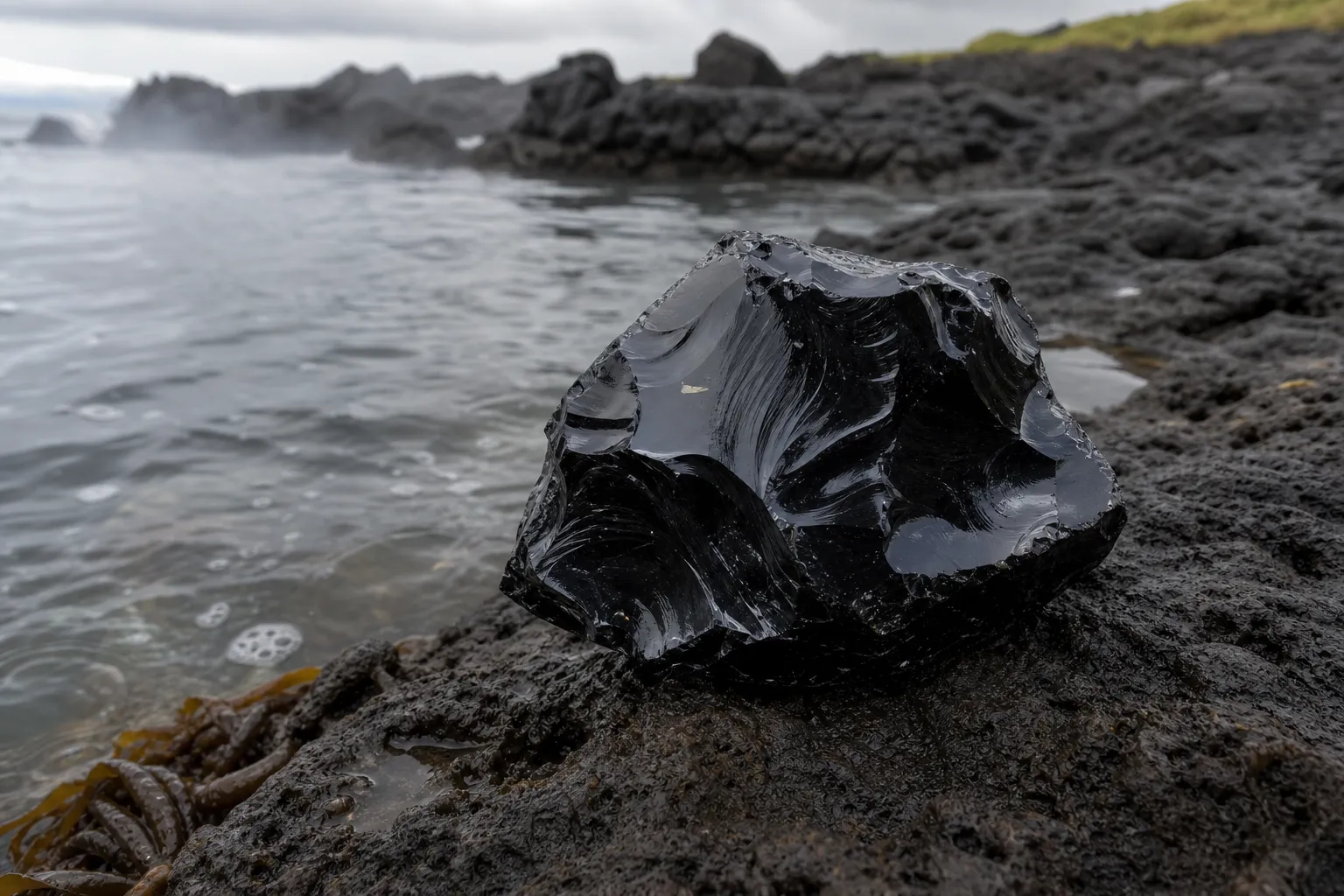
Yes, obsidian can form in water-related settings, but it is not a “water-made” stone. Obsidian forms when suitable volcanic material becomes natural glass instead of growing visible mineral crystals. Water can help by cooling hot lava quickly, especially where lava meets a lake, the ocean, wet ground, groundwater, or ice.
The important limit is this: water is only a possible cooling environment. It is not what defines obsidian.
For collectors, that distinction matters. A glossy black stone may look like volcanic glass, but appearance alone does not show whether water was involved in its formation.
upward
Start with the broader guide
Use the broader guide first if you need the full scope before this page.
Obsidian Is Volcanic Glass First
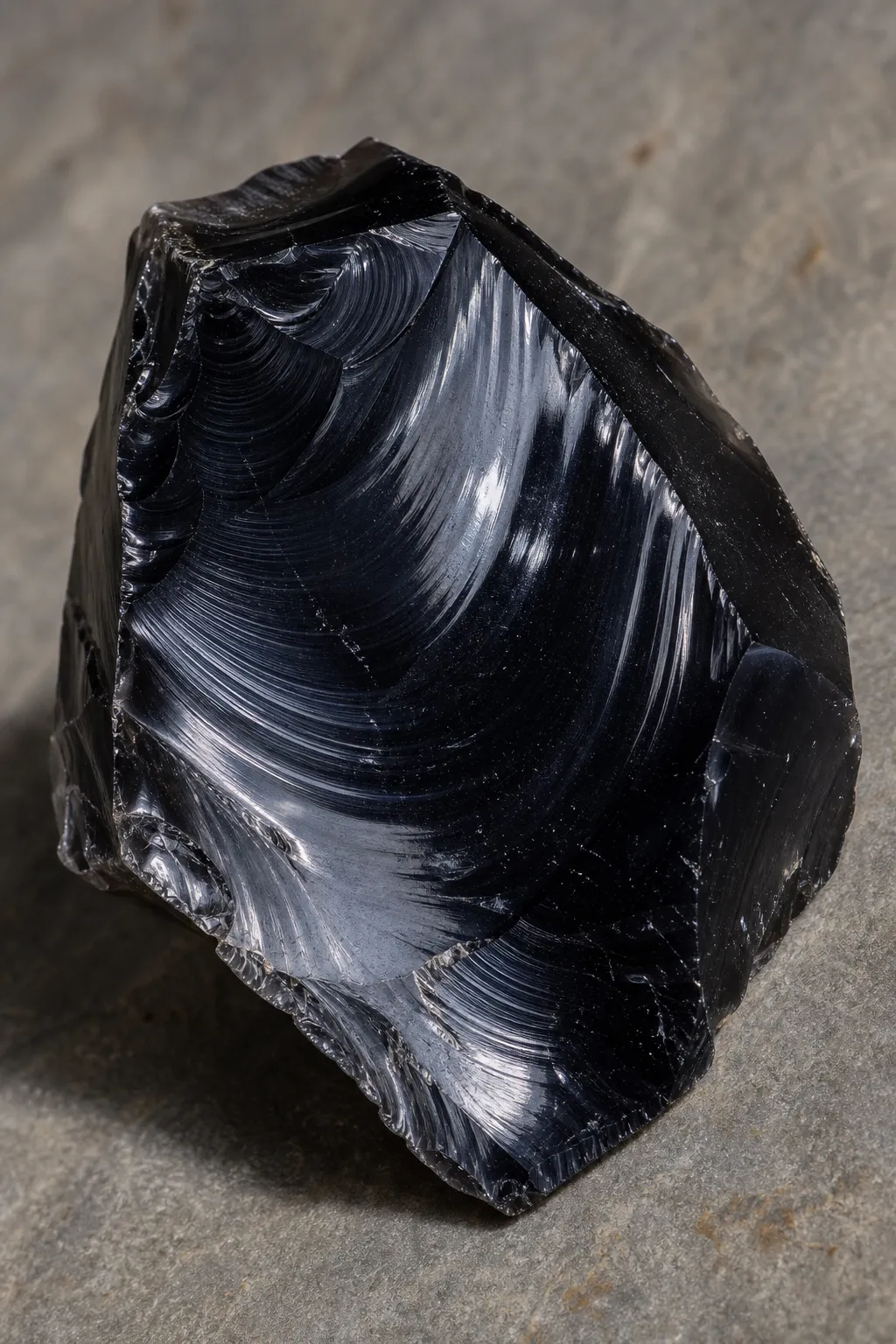
Obsidian is commonly described as natural volcanic glass. In hand specimens, that often means a dark, smooth-looking material with a glassy luster and curved, shell-like breaks. Those curved breaks are called conchoidal fractures, and they are one reason obsidian can look sharper and more glass-like than many ordinary rocks.
A simple formation path looks like this:
- volcanic material is erupted or emplaced;
- it cools and solidifies;
- crystal growth stays limited;
- the result becomes glassy rather than visibly crystalline.
Beginner explanations often say obsidian forms when lava cools rapidly. That is useful, but it is not the whole story. Composition, gas content, degassing, viscosity, crystallization behavior, and the full cooling history also affect whether volcanic material becomes dense glass, frothy material, banded glass, or something else.
So the cleaner answer is: water may help lava cool, but obsidian is identified as volcanic glass, not as a stone that must have formed underwater.
Where Water Can Be Involved
When people ask whether obsidian can form in water, they may be imagining several different situations. They are related, but not identical.
Lava entering a lake or the ocean
When lava reaches standing water, the outside of the lava can lose heat very quickly. That rapid chilling can create glassy margins, glass-rich fragments, or other quenched volcanic textures.
But not every lava-water interaction makes obsidian. Many produce different materials or textures depending on the lava composition, water depth, pressure, movement, and eruption setting. Basaltic lava, for example, can form glassy skins or fragments in water without producing the silica-rich obsidian most collectors mean by the word.
Obsidian is most often linked with silica-rich volcanic compositions, especially rhyolite or related felsic lava. Those lavas behave differently from fluid basalt and can form thick glassy zones or bands under the right conditions.
Lava meeting wet ground or groundwater
Water does not have to be a lake or sea. Lava can also contact wet sediment, water-saturated ground, or groundwater. These contact zones may cool quickly, fracture, or fragment.
That still does not make water a complete recipe. The finished material depends on the original lava and its cooling and crystallization history, not simply on the presence of moisture nearby.
Ice-contact and meltwater settings
Volcanoes can erupt under or against ice. Ice may melt and create complicated cooling conditions involving water, steam, fracturing, and glassy volcanic material.
For a collector-level answer, the useful point is narrow: ice and meltwater can be part of a cooling setting, but “subglacial” is not another word for obsidian. Many ice-water-lava interactions produce other volcanic deposits or textures.
Water inside magma is a different question
Magma can contain dissolved volatile components, including water. That internal water can affect eruption style, bubbles, degassing, and the final texture of volcanic glass.
But dissolved water in magma is not the same thing as lava cooling in a lake, ocean, or wet ground. When someone asks whether obsidian forms “in water,” they usually mean external water as the cooling setting. Internal water content belongs to the more technical side of petrology.
What Has to Be True for Water-Cooled Lava to Become Obsidian?
Water can help remove heat, but the lava still has to be capable of forming volcanic glass. A practical collector-level checklist looks like this:
Volcanic origin
Obsidian is natural volcanic glass, not industrial glass, resin, or slag.
Suitable composition
Obsidian is commonly associated with silica-rich lava such as rhyolite.
Limited crystal growth
The material must remain glassy rather than forming obvious mineral crystals.
Cooling history
Rapid chilling helps explain glass formation, but the full thermal path matters.
Gas behavior
Bubbles and degassing can influence whether the result is dense, frothy, banded, or fragmented.
Later change
Volcanic glass can hydrate, alter, or devitrify over time, changing texture and appearance.
This is why “lava cooling in water” is a useful phrase but an incomplete answer. Water can chill lava. It can help produce glassy surfaces or fragments. The result may be obsidian, another kind of volcanic glass, a fragmented deposit, or a different lava texture.
A short version: water can be part of the setting, but it is not the whole formation process.
What a Collector Can See — and What They Cannot
A rough or polished obsidian piece may show traits that fit volcanic glass:
- glassy luster;
- very fine texture with no obvious large crystals;
- curved conchoidal fracture on broken edges;
- flow banding in some pieces;
- small bubbles, streaks, or internal wisps;
- black, smoky, brown, reddish, or patterned color depending on inclusions and structure.
These features may support an obsidian or volcanic-glass identification. They do not prove the stone formed in water.
A glassy black volcanic rock may have cooled near air, against older rock, at a lava-flow edge, inside a dome, in a complex flow interior, or in a setting involving water or ice. A loose hand specimen usually lacks the field context needed to identify the exact cooling environment. Stronger interpretations rely on locality, surrounding deposits, chemistry, microscopic texture, and regional volcanic history.
If a seller label says “formed in water,” treat that as a formation story that needs geologic context. Shine, color, and polish cannot confirm it by themselves.
Common Confusions About Obsidian and Water
“Can obsidian form in water?” is not “Can obsidian go in water?”
Formation is a geology question. It asks whether volcanic material can become glass in a water-related cooling setting.
Care is a handling question. It asks whether an existing specimen can be rinsed, soaked, or used around water. Those are separate issues. A polished piece briefly getting wet is not the same as molten lava being quenched, and it is not the same as soaking an unknown, fractured, altered, glued, dyed, or mixed-material object.
If you are handling a specimen, remember that obsidian is glass-like and can break with sharp edges. Do not use heat, deliberate break tests, or rough experiments to check a piece.
“Water-formed obsidian” is not a standard variety name
Some market wording can make “water-formed” sound like a special type. In ordinary collector use, names such as snowflake obsidian, mahogany obsidian, rainbow obsidian, and sheen obsidian usually refer to visible pattern, color, inclusions, or optical effect—not simply to whether water was involved during cooling.
A specimen may come with a locality or formation note, but “water-formed” by itself is not enough to define a recognized variety.
Black glassy material is not automatically obsidian
Industrial glass, slag glass, dyed material, resin, and other lookalikes can resemble black obsidian at a glance. That matters here because a glossy black surface does not prove natural volcanic origin, and it certainly does not prove a water-related formation setting.
The surface gives you a reason to inspect further. It is not a complete origin story.
Floating is not normal for dense obsidian
Dense, glassy obsidian is not normally expected to float like pumice. Pumice may float because it contains many gas-filled spaces. Obsidian is generally denser and more compact. If an object sold as obsidian floats, it deserves closer scrutiny because the behavior may point to a different material or structure.
The Best Short Answer
Obsidian can form in water-related environments when suitable volcanic material is chilled into glass, but water is not required for obsidian to form.
More precisely: obsidian forms as volcanic glass. Water can be one cooling medium, especially where lava meets a lake, the ocean, wet ground, groundwater, or ice. But not every lava-water contact produces obsidian, and the result depends on composition, cooling history, gas behavior, and crystallization conditions.
For a collector, a piece can be real obsidian without having formed in water. And a water-related formation story cannot be confirmed from a glossy black surface alone. The visible glassiness tells you about texture; the formation setting requires geologic context.