Classification guide
Is Obsidian a Mineral or Mineraloid
Obsidian is not a mineral in the strict mineralogical sense. The clearer answer to “is obsidian a mineral” is this: obsidian is natural volcanic glass, and it is commonly described as a mineraloid because it lacks an ordered crystalline structure.
That difference is easy to miss because obsidian is sold beside minerals, crystals, cabochons, beads, and display stones. In a shop tray, “mineral” is often used loosely. In geology, the label is more precise: obsidian is glassy and amorphous, not a true mineral species with a regular crystal lattice.
upward
Read the full overview first
Use the broader guide first if you need the full scope before this page.
The short classification: mineral, mineraloid, glass, or rock?
For a collector label, the most accurate simple wording is natural volcanic glass. If you want the mineral-collection category, mineraloid is usually a better fit than mineral.
| Term | Does it fit obsidian? | Why |
|---|---|---|
| Mineral | Not strictly | A mineral normally has an ordered crystalline structure; obsidian is glassy and amorphous. |
| Mineraloid | Yes, in common use | It is natural and mineral-like, but it does not meet the full mineral definition. |
| Volcanic glass | Yes | Obsidian forms from rapidly cooled lava and has a glass-like structure and appearance. |
| Rock | Sometimes | It may be discussed as an igneous volcanic material, but it is not a mineral species. |
| Crystal | Not in the strict structural sense | It may be sold with “crystals,” but obsidian itself is not a crystal with repeating internal order. |
So the phrase obsidian mineral or glass causes confusion because both words appear in real-world use. Casual collecting language may call it a stone, crystal, or mineral. Technical wording calls it volcanic glass or a mineraloid.
Why obsidian is not a true mineral
The main reason is structure.
A mineral is typically a naturally occurring solid with a reasonably defined composition and an ordered internal arrangement of atoms. That ordered arrangement is the crystal structure. Quartz, for example, is crystalline silica: its atoms repeat in a regular pattern.
Obsidian can also be silica-rich, but it forms differently. It comes from volcanic melt that cools so quickly that atoms do not have enough time to arrange into well-developed crystals. The result is a glassy, amorphous material.
“Amorphous” does not mean fake or unimportant. It simply means the material lacks the long-range repeating order expected in a crystal.
Obsidian is natural, geological, and collectible, but it is glassy rather than crystalline.
That is the core answer to why obsidian is not a mineral.
What “mineraloid” means for obsidian
A mineraloid is a natural, mineral-like substance that does not meet every requirement for being a mineral. For obsidian, the missing requirement is the ordered crystal lattice.
The word is helpful because it avoids two common mistakes:
- It does not make obsidian sound like ordinary manufactured glass.
- It does not force obsidian into the mineral category when its structure does not fit.
For collectors, “obsidian mineraloid” is a practical middle term. It recognizes that obsidian is natural volcanic material, explains why it belongs comfortably in stone collections, and keeps the technical distinction clear.
If someone asks is obsidian a mineraloid, the careful answer is yes: obsidian is commonly treated as a mineraloid because it is natural volcanic glass without a regular crystal lattice.
Visible clues that make the glass label make sense
You do not need a lab to understand why obsidian is called volcanic glass. A typical piece may show several glass-like traits:
Glassy luster
Polished or freshly broken obsidian often has a shiny, vitreous surface.
Curved fracture
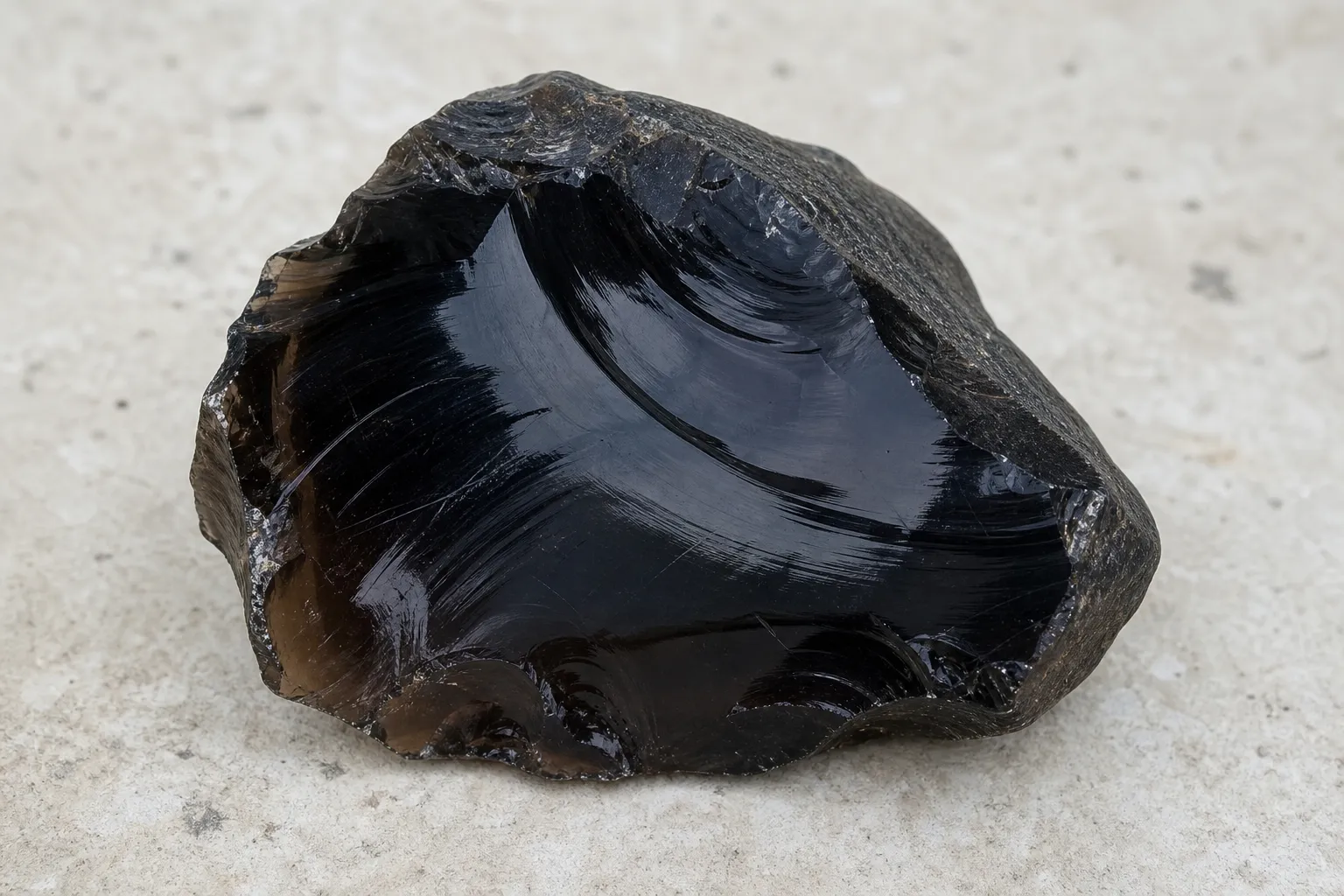
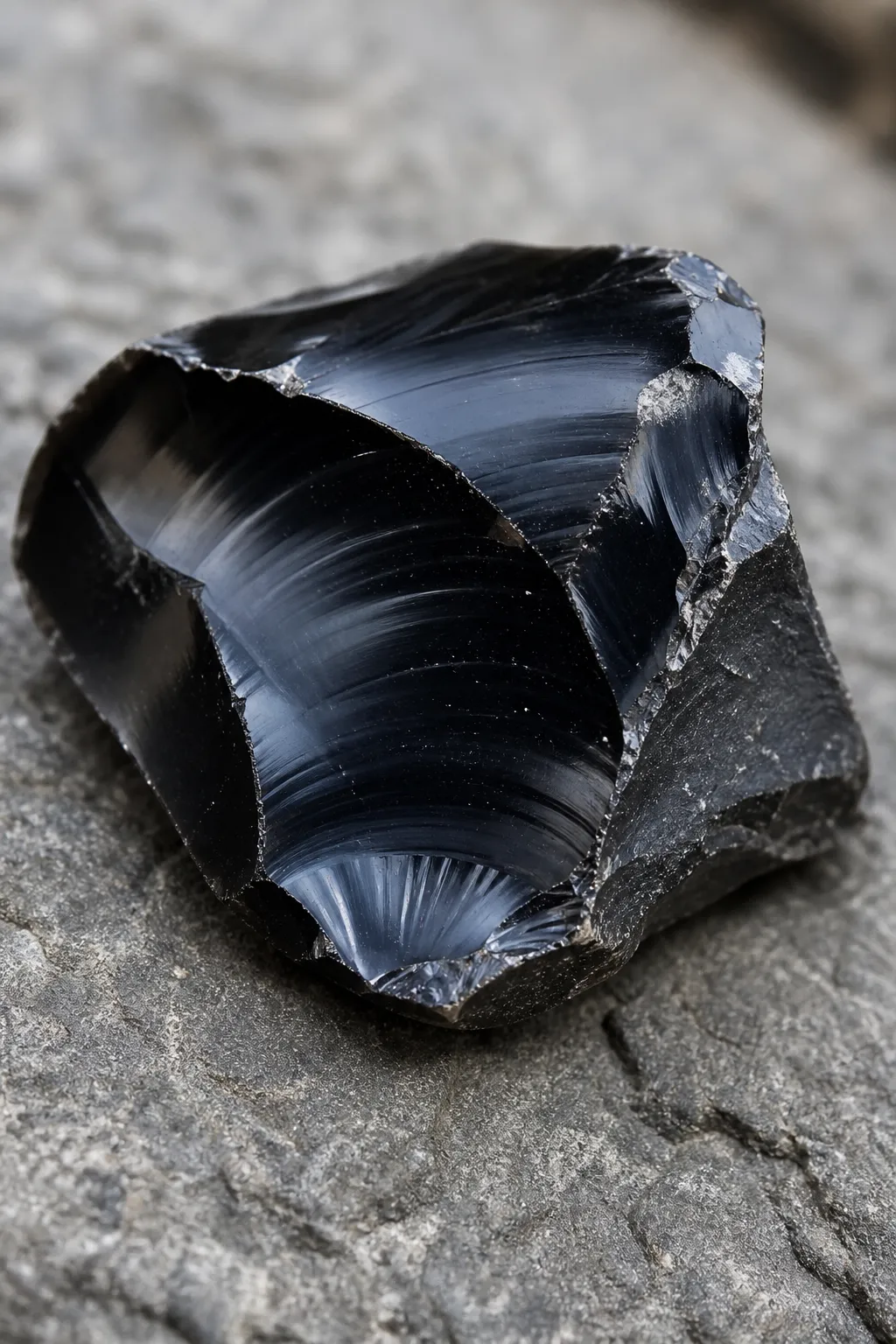
Broken obsidian commonly shows smooth, shell-like curves called conchoidal fracture.
No crystal faces
Obsidian usually does not show the natural flat faces or crystal habit seen in many minerals.
Sharp broken edges
Chips and flakes can form very sharp glass-like edges.
Flow banding or inclusions
Some pieces show bands, wisps, bubbles, or internal features from volcanic formation.
The curved break is especially useful. Many crystalline minerals split or fracture in ways related to their internal structure. Obsidian, like glass, often breaks in smooth curved surfaces.
These clues can support the classification, but they do not prove every glossy black object is obsidian. Black glass, slag, dyed stones, and other dark polished materials can look similar in photos. A polished sphere, tower, or cabochon may also hide the rough edges that would show the glassy character more clearly.
Why mineral shops still sell obsidian with crystals
Seeing obsidian in mineral shops is normal. It does not mean the strict classification has changed.
Shops, lapidary catalogs, and crystal displays often group materials by collector use rather than by formal mineral definition. Obsidian fits that setting because it is natural, attractive, polishable, carvable, and familiar to stone collectors.
That is why people ask, is obsidian considered a mineral? In casual shop language, it may be placed among “minerals” or “crystals” for browsing. In precise wording, it is better described as volcanic glass or a mineraloid.
Useful collector label
Black Obsidian — natural volcanic glass; mineraloid; glassy luster; conchoidal fracture.
That gives the important information without turning a display label into a geology lecture.
Are snowflake, black, and rainbow obsidian minerals?
The variety name does not change the basic classification.
Black obsidian, snowflake obsidian, mahogany obsidian, rainbow obsidian, and sheen obsidian are all generally discussed as varieties of obsidian. Their colors, patterns, or optical effects may come from inclusions, internal textures, oxidation effects, or other formation details, depending on the specimen.
But they remain varieties of obsidian volcanic glass, not separate mineral species just because the names sound distinctive.
There is one nuance: some obsidian pieces can contain tiny crystals, inclusions, or changed areas. That does not turn the whole material into a mineral species. A glass can contain small crystalline features and still be classified overall as glass.
Common confusion: obsidian and black onyx
Obsidian is sometimes confused with black onyx because both can look dark, glossy, and polished in jewelry or decorative pieces. Their classification is different.
Obsidian
Volcanic glass, mineraloid, amorphous.
Black onyx
Usually treated as a form of chalcedony, a microcrystalline quartz material.
That does not make one automatically better, rarer, or more “real.” It means the names describe different materials.
If a dark polished stone is labeled unclearly, avoid relying on a scratch test. It can damage specimens and does not settle every identification problem. Better steps are to ask for the material name, origin details when available, and clear photos of edges, surface texture, and natural features. For higher-value pieces, a qualified gem or mineral lab is more appropriate than guessing from appearance alone.
Does calling obsidian glass make it less collectible?
No. “Glass” is a structural and geological description here, not a downgrade.
Obsidian formed in volcanic environments, not in a factory furnace. Its glassy structure is exactly what gives it many traits collectors notice: dark shine, smooth fracture, clean polish, and sometimes dramatic visual depth.
A simple wording guide:
- Use volcanic glass when describing what obsidian is.
- Use mineraloid when explaining why it is not a true mineral.
- Use stone or collectible stone in casual collector language.
- Use crystal only if you mean the broad shop category, not the strict structural meaning.
Handling note for broken obsidian
Because obsidian behaves like glass, broken pieces can have very sharp edges. Rough chips, thin flakes, snapped points, and damaged carvings should be handled with care. This is a material-property note, not a reason to worry about ordinary polished pieces sitting in a collection.
For identification, visual observation and better labeling are usually more useful than scratch testing. Scratches can damage the piece, mark another specimen, or create sharp debris, and they still may not answer every look-alike question.
Quick answers
Is obsidian a mineral?
Not strictly. Obsidian is natural volcanic glass, usually described as a mineraloid.
Why is obsidian not a mineral?
Because minerals generally require an ordered crystalline structure, and obsidian is amorphous glass formed by rapidly cooled lava.
Can obsidian still be in a mineral collection?
Yes. Many collectors keep obsidian with minerals, crystals, and lapidary stones. That is normal collecting language, even though the precise classification is volcanic glass or mineraloid.
Bottom line
Obsidian is not a true mineral. It is natural volcanic glass and is best described as a mineraloid because it is amorphous rather than crystalline.
It still belongs comfortably in mineral shops, crystal displays, and lapidary collections. Just use the more precise wording when classification matters: obsidian volcanic glass or an obsidian mineraloid, not a strict obsidian mineral.