
Collector color guide
Natural Obsidian Colors, Trade Names, and Lookalikes
If you are comparing a black stone with smoky edges, a bright blue “obsidian” heart, or a shop label that says strawberry, aqua, or transparent obsidian, color is only the starting point. The better question is whether that color belongs to natural volcanic glass, a thin-edge lighting effect, a loose trade name, or a manufactured lookalike.
Natural obsidian colors are best judged by several visible clues together: body color, edge translucency, glassy luster, fracture, polish, thickness, and the wording of the label. A single photo or seller name cannot confirm the material, but it can tell you when the claim deserves a slower look.
upward
Read the full overview first
Use the broader guide first if you need the full scope before this page.
What Natural Obsidian Can Look Like
Obsidian is natural volcanic glass. That matters because its appearance is shaped by the way glass handles light, not only by a flat “color” category. In hand specimens, obsidian is commonly dark, glossy, and smooth-looking when polished. Broken surfaces may show curved, shell-like fracture patterns, often called conchoidal fracture.
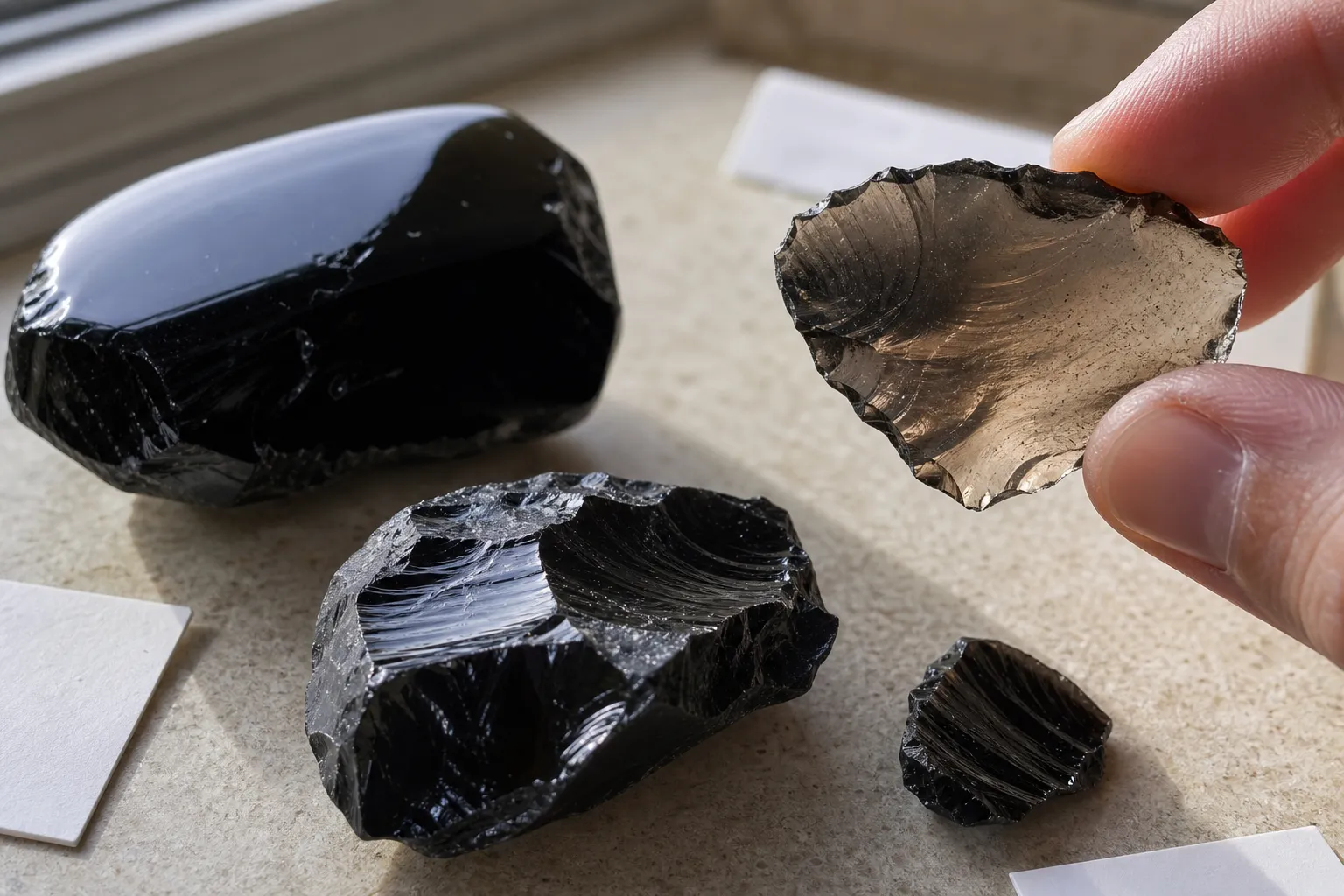
The familiar appearance is black obsidian: a dark body color with a glassy luster. Even then, a piece may not look solid black in every condition. Thin edges, chips, blade-like flakes, or points can transmit light and appear smoky, gray, brownish, or slightly translucent. That edge effect does not automatically make the piece a separate variety.
For collector purposes, separate what you see from what the label asks you to believe.
Dark black body color
It may suggest a common obsidian appearance, but it does not mean every black glassy object is obsidian.
Smoky or gray edge
It may suggest thin-edge translucency or lighting, not that the whole piece is a gray variety.
Brownish edge
It may come from light through dark glass, warmth in tone, or photo conditions, so the seller’s color name is not automatically exact.
Glossy polish
It may reflect natural glassy luster or lapidary finish, but polish alone does not confirm natural origin.
Curved fracture
It is consistent with glassy materials, but fracture alone does not confirm obsidian.
The reliable reference base supports obsidian as dark natural volcanic glass with glassy luster and variable translucency better than it supports the full rainbow of marketplace color names. When a label becomes vivid, decorative, or highly promotional, the material claim needs more context.
Why Black Obsidian Can Look Smoky, Gray, or Brown
Black obsidian edge translucency is one of the easiest features to misread. A thick palm stone, cabochon, or rough chunk may look completely black from the front. Hold a thin edge or chip against light, and the same material may show smoky, gray, or brownish tones.
Several variables change the apparent color:
- Thickness: thinner glass lets more light pass through.
- Lighting: backlighting reveals translucency that overhead light may hide.
- Polish: a smooth surface can deepen shadows or brighten highlights.
- Shape: bevels, curves, and tips concentrate reflections.
- Photo exposure: seller images can make edges look warmer, cooler, or clearer than they appear in hand.
A smoky edge is not automatically suspicious. It is often a normal visual clue in dark volcanic glass. The caution begins when the whole object is sold as a bright, evenly saturated color that does not fit the usual descriptions of natural obsidian.
Gray and brown labels also depend on context. One seller may call a piece “gray obsidian” because it looks gray under bright light. Another may call a similar piece black obsidian with smoky translucency. That difference often reflects viewing conditions and market language, not a strict mineral category.
Obsidian Color Names: Variety Names, Trade Names, and Seller Terms
Obsidian color names do not all carry the same weight. Some names describe recognized visual traits. Others are looser trade terms used in shops, listings, or collector conversations. A useful label should connect to something visible: color behavior, sheen, inclusions, banding, transparency, fracture, or source context.
Visual description
Terms such as “black,” “smoky edge,” or “brownish translucent edge” can be useful, but they remain lighting-dependent.
Variety-style name
A name tied to a visible pattern or optical effect should be supported by the feature it claims.
Marketplace trade name
A shop-recognition name may vary between sellers and should not be treated as identity proof by itself.
Decorative color name
A vivid color word without material context should be treated as uncertain.
Lookalike label
A label that uses “obsidian” for manufactured or slag-like glass needs extra scrutiny.
This is where many confusing listings begin. A polished glassy stone may be described as blue obsidian, green obsidian, aqua obsidian, strawberry obsidian, or transparent obsidian. The name may exist in seller language, but the name itself does not establish that the object is natural obsidian.
A better habit is to reverse the order of trust. Do not start with the shop name and make the stone fit it. Start with the object: Is the main body dark or vivid? Is the unusual color only at thin edges? Is the color evenly saturated? Does the piece show glassy luster and fracture behavior? Is there source context, or only a decorative name?
Blue, Green, Aqua, Strawberry, Purple, Pink, and Bright Red Labels
Bright color names are where caution matters most. The strongest practical conclusion is not that every bright piece is manufactured glass. It is that vivid, highly saturated glassy objects should not be accepted as natural obsidian from the label alone.
Is blue obsidian natural?
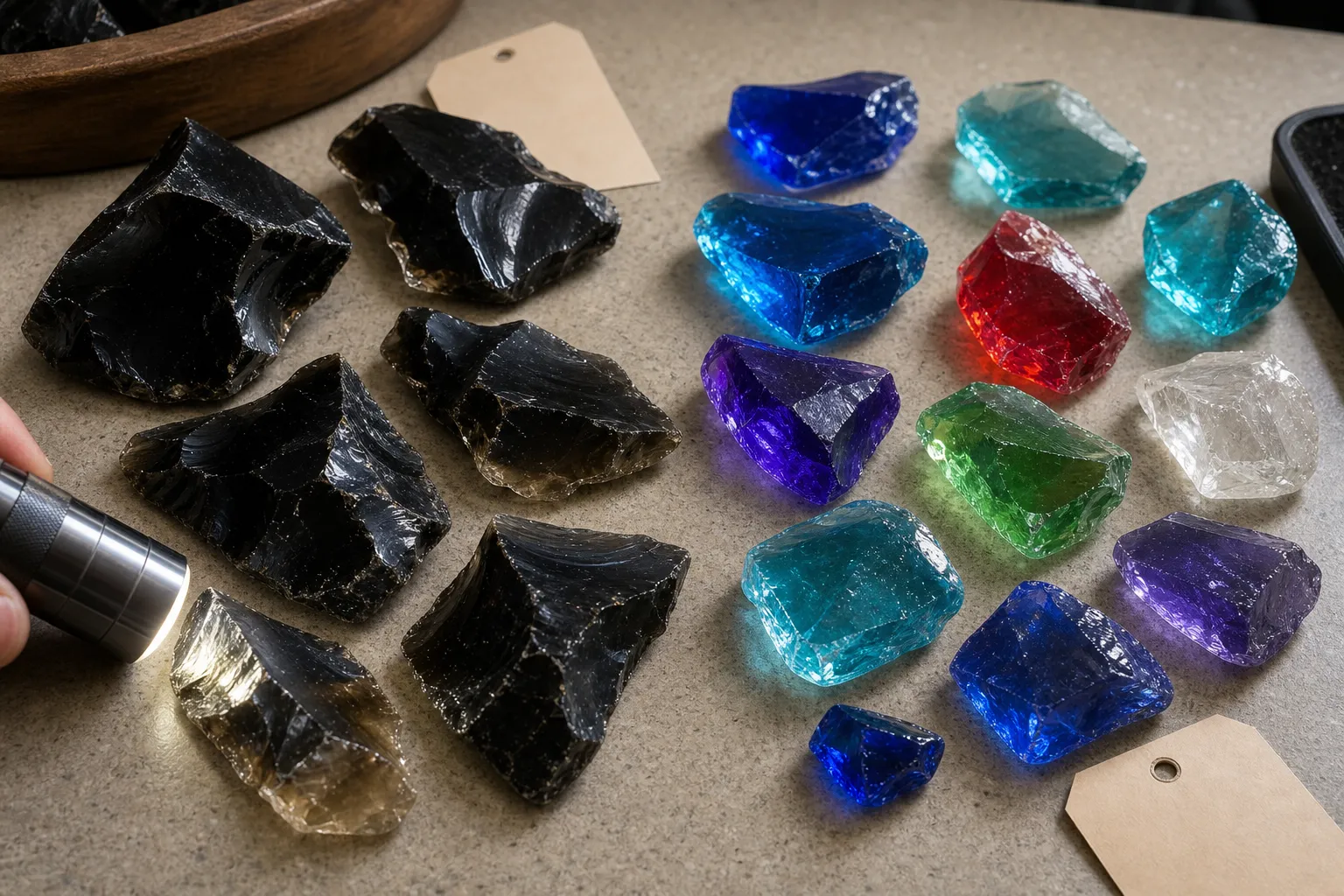
Some dark obsidian can show cool reflections, bluish sheen, or photo color shifts. A vivid transparent or candy-blue glassy object is different. Without reliable source context, it is better treated as uncertain and possibly manufactured colored glass or another lookalike.
Is green obsidian a trade label?
“Green” can describe several appearances: a subtle edge tone, a dark olive cast, bright bottle-glass color, or decorative glass. A dark piece with greenish translucency at a thin edge is not the same claim as a bright emerald object with uniform color. The more vivid and even the green, the less useful the color name becomes by itself.
What does aqua obsidian mean?
“Aqua” reads like a color category more than a material description. On a shop label, it may simply mean aqua-colored glass sold in an obsidian-adjacent style. Unless the label is backed by stronger mineral context, treat aqua obsidian as a market term rather than a dependable natural variety name.
What does strawberry obsidian mean?
Strawberry obsidian is usually a naming problem before it is a geology problem. The word suggests a pink-red decorative color, but a bright berry-red or translucent red glassy object needs more support than a shop label. The name may carry aesthetic or symbolic associations for buyers, but those associations do not verify the material.
Can obsidian be purple, pink, or bright red naturally?
For beginner collecting, vivid purple, pink, or bright red should be approached carefully. Natural dark glass can look warmer, smokier, or brownish in thin areas. That is not the same as a uniformly bright decorative body color. Unusual color claims need better context, not louder wording.
Clear Obsidian and Transparent Obsidian Labels
Clear obsidian meaning depends on how “clear” is being used. In casual listings, it may mean transparent-looking, pale, glassy, highly polished, or reflective. In material terms, obsidian can show transparency or translucency in thin sections, but a fully clear, colorless glass object should not be accepted as natural obsidian without stronger context.
The transparent obsidian label creates two common confusions.
First, a dark piece can look transparent at a thin edge. That edge effect can fit obsidian because thin glass transmits light differently from thick glass. The main body may still be black or very dark.
Second, an entire object can be transparent, pale, or colorless like ordinary glass. That is a different situation. If the whole bead, sphere, heart, or tower looks like clear manufactured glass, the obsidian label needs questioning. Look for source information, fracture behavior, inclusions, surface wear, and whether the seller is using “obsidian” as a decorative category rather than a material claim.
“Translucent at thin edges” is often a more useful observation than “clear obsidian.”
Obsidian vs Slag Glass and Other Bright Lookalikes
Manufactured colored glass can resemble obsidian to a casual buyer because both can be glossy, glassy, and sharp-edged when broken. Glassmaking references are useful here only for a narrow point: people can make glass in many colors, and colored glass objects can circulate in decorative markets. That background explains why fake colored obsidian and lookalike listings exist, but it does not turn manufactured-glass history into an obsidian variety guide.
Obsidian vs slag glass comparisons should stay practical. Slag-like decorative glass may show bright artificial colors, bubbles, swirls, layered color, or unusual patterns. None of those clues identifies the object by itself, but they can raise questions when paired with an obsidian label. A vivid blue, aqua, green, red, or purple glassy object with uniform saturation deserves more scrutiny than a dark piece with smoky edge translucency.
Common lookalike situations include:
- Manufactured colored glass: especially vivid blue, green, aqua, red, or purple pieces.
- Slag-like decorative glass: sold for appearance rather than geological identity.
- Dyed or surface-colored material: possible when color gathers in cracks, pits, drilled holes, or damaged edges.
- Other glassy materials: natural or artificial objects labeled loosely in online marketplaces.
For suspected dyed or surface-colored material, check where the color sits. Uneven color in pits, fractures, holes, chips, or surface damage can be a reason to ask more questions. Visual inspection still has limits; it helps you decide whether the label is worth trusting, not whether the object is formally authenticated.
How Seller Photos Change Obsidian Color Names
Lighting changes obsidian color names more than many listings admit. The same piece can look different on a white background, in sunlight, under warm indoor light, or with strong backlighting. A black point may look smoky at the tip. A brownish edge may look golden. A reflective surface may pick up blue from the sky or green from nearby surroundings.
Before treating a photo as proof of a color name, look for:
- Backlit edges: useful for translucency, but not the same as body color.
- Reflections: blue, white, or green patches may come from the setting.
- Overexposure: bright photos can wash black into gray or brown.
- Saturation: vivid listing images may not match normal viewing.
- Multiple angles: one image rarely shows body color, edge color, and polish behavior.
- Scale and thickness: a thin chip and a thick palm stone can look very different.
If a listing uses a strong color name but only shows studio-bright images, treat the color as provisional. A better listing separates body color from edge translucency and shows ordinary light as well as transmitted light.
A Practical Decision Frame for Collectors
When a label feels uncertain, use a sequence rather than a single yes-or-no test.
- 1. Name the body color first. Is the main mass black, dark brown, smoky gray, vivid blue, bright green, pink-red, purple, clear, or aqua?
- 2. Check the edge separately. Does the unusual color appear only at thin edges, tips, chips, or backlit areas?
- 3. Look for glassy traits. Glossy surfaces and curved fracture may fit volcanic glass, but manufactured glass can share some traits.
- 4. Separate description from identity. “Brownish edge” is an observation; “rare green obsidian” is a stronger claim.
- 5. Watch promotional color names. Strawberry, aqua, and very vivid labels need more support than a standard black obsidian description.
- 6. Ask what would change your mind. Better provenance, clearer photos, lapidary context, or a trusted mineral reference may improve confidence; a name alone should not.
This frame helps avoid the common mistake of accepting a color name before looking at material behavior. Natural obsidian colors make more sense when color is read together with thickness, translucency, luster, fracture, polish, lighting, and label context.
Common Questions About Obsidian Color Labels
Is every black glassy stone obsidian?
No. A black, glassy appearance is consistent with obsidian, but it is not enough on its own. Manufactured glass and other glassy materials can also look dark and glossy. Look for a combination of traits and source context.
Is bright blue or aqua obsidian usually natural?
A vivid blue or aqua glassy object should be treated with caution, especially if the color is uniform and the label gives no source context. Subtle cool reflections are a different issue from a strongly saturated blue body color.
Why does my black obsidian look brown at the edge?
Thin areas can transmit light and reveal smoky, gray, or brownish tones. Lighting, polish, and photo exposure can intensify that effect. It does not automatically make the piece a separate brown variety.
Are trade names useless?
No. Trade names can help collectors talk about appearance, but they are not the same as verified material identity. A useful name should still connect to visible features, especially when the color is unusual.
Natural obsidian is best read slowly: dark body color, thin-edge behavior, glassy luster, fracture, polish, lighting, and label language all matter. The more a name sounds like a bright decorative color rather than an observable volcanic glass trait, the more carefully it should be checked before you treat it as natural obsidian.