
Naming guide
Does Black Obsidian with Gray Flow Bands Need a Different Name
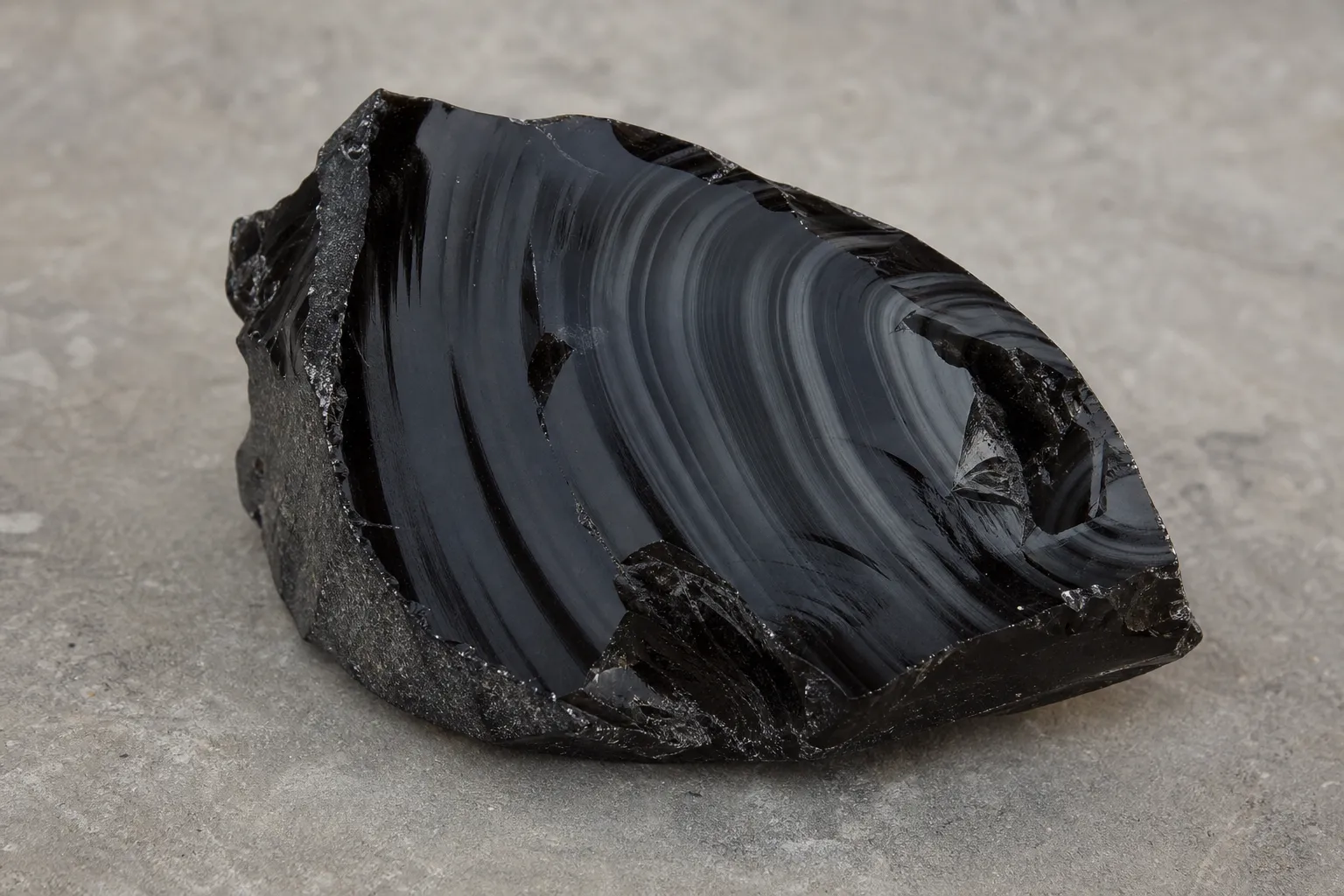
Not necessarily. A piece of black obsidian with gray bands does not automatically need a separate formal name just because pale lines or gray bands are visible. For most collection notes, tray labels, or listings, a plain description is clearer: “black obsidian with gray flow bands,” “gray-banded black obsidian,” or “flow-banded black obsidian.”
Those phrases say what can be seen without turning the piece into a more specific variety than the evidence supports.
The better first question is: are the gray areas actually part of the stone’s visible pattern? Gray banding can be real, but it can also be confused with scratches, polish reflections, residue, fractures, or lighting in a photo.
upward
Start with the broader guide
Use the broader guide first if you need the full scope before this page.
The clearest name is usually descriptive
If the gray areas appear as soft, repeated lines moving through the dark glassy body, “black obsidian with gray flow bands” is a practical label. It gives another collector something specific to look for without overloading the name.
Nearby wording can also work:
Flow-banded black obsidian
Useful when the gray lines look like flowing bands rather than random marks.
Gray-banded black obsidian
Simple and visual, especially for a polished or tumbled piece.
Dark banded obsidian
Broader, helpful when the piece is mostly black but the banding is the main feature.
Obsidian with gray flow bands
Neutral wording that keeps the focus on appearance.
These are descriptive collector terms. They are not, by themselves, evidence of a standardized variety name, a known source, or a special category. Seller labels can vary, and two sellers may describe the same visual feature in different words.
For a personal collection card, a restrained label might read:
Black obsidian, polished; visible gray flow-like bands on one side.
That is often better than forcing a dramatic name onto a stone when the visible information only supports a plain description.
What to check before calling them flow bands
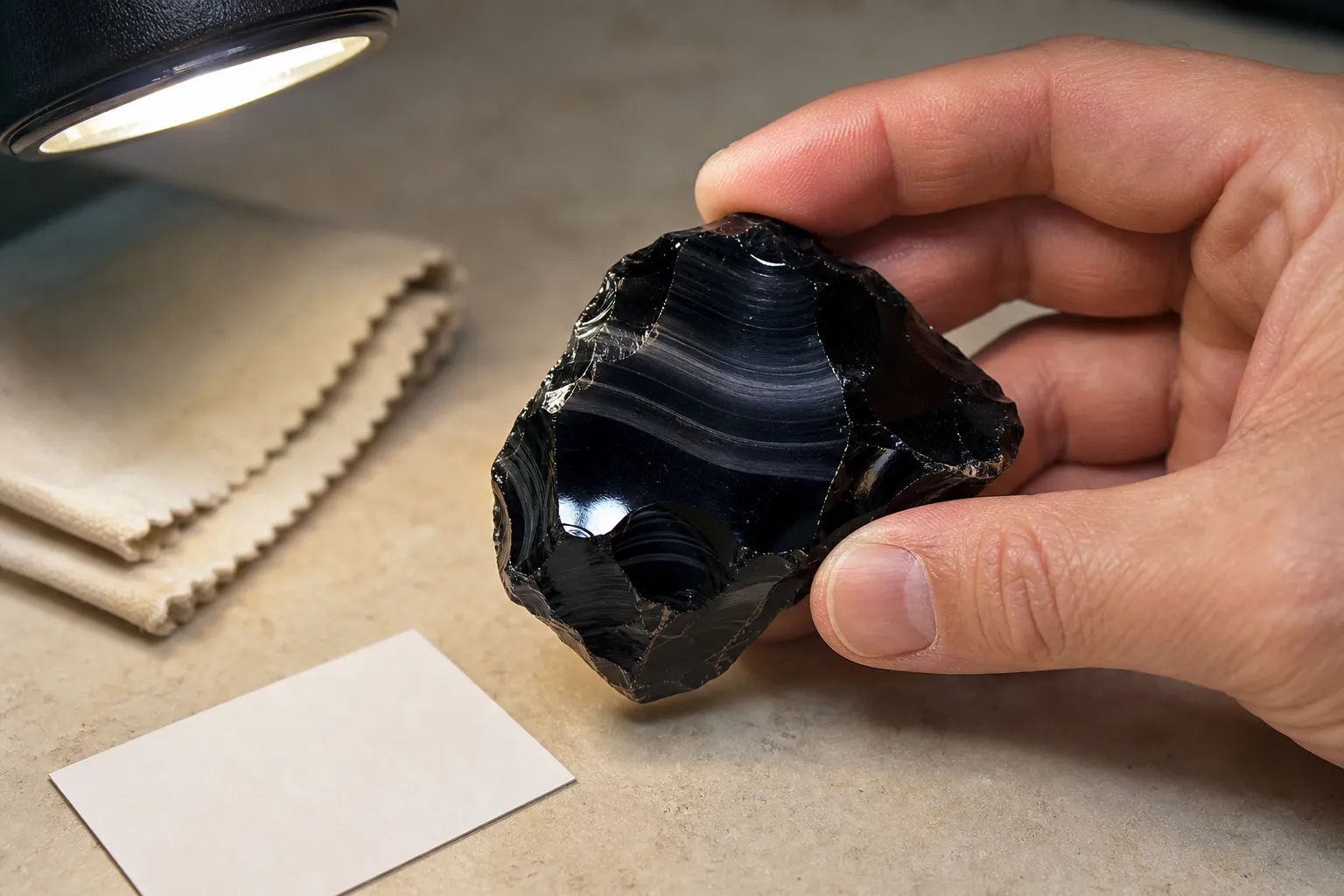
Look at the stone under steady light and rotate it slowly. The goal is not a lab identification; it is simply to avoid naming a surface effect as if it were part of the stone.
Soft gray lines that stay fixed as you rotate the piece
What it may suggest: Possible visible banding.
Naming caution: “Black obsidian with gray flow bands” may be reasonable.
Bright gray streaks that appear only from one angle
What it may suggest: Polish reflection.
Naming caution: Do not treat the reflection as a permanent band.
Thin pale lines that feel rough or interrupt the polish
What it may suggest: Surface scratches.
Naming caution: Describe as scratches or wear, not banding.
Pale material in pits, grooves, or edges
What it may suggest: Residue or polishing compound.
Naming caution: Clean or inspect before naming.
Sharp lines connected to breaks, chips, or internal cracks
What it may suggest: Fractures.
Naming caution: Do not assume these are flow lines.
Spots, patches, or mixed-looking material
What it may suggest: Inclusions or other visual features.
Naming caution: Use a broader description until inspected more closely.
A polished black surface can reflect windows, fingers, lamps, or the surrounding room. In a quick photo, that reflection may look like a gray band. If the mark moves with the light instead of staying fixed in the stone, it is probably not a true visible band.
Surface condition matters too. On dark obsidian, pale scratches and small chips can stand out strongly. If a gray line is raised, rough, or cuts through the polish, it should not be labeled as flow banding.
When a different name is useful
A different name can help when it improves clarity. It does not need to be a formal name.
If you are sorting similar pieces, “gray-banded black obsidian” may distinguish one tumbled stone from a plain black one. If you are writing a listing, “flow-banded black obsidian” may help a buyer understand the visible feature. If you are labeling a collection tray, “black obsidian with gray flow bands” is specific enough for most non-specialist use.
A name becomes less useful when it implies more than the piece shows, such as:
- a formal variety name without support;
- a specific volcanic source or deposit;
- a special trade category;
- confirmation from a photo alone;
- a meaning or effect attached to the banding.
A plain description is not a weak label. For collector use, it is often the most honest one: it names what is visible and leaves room for revision if better information becomes available.
Why gray bands create naming confusion
Obsidian is described in several language systems at once. A shop may use appealing retail wording. A collector may use a practical tray label. A geology source may use more technical language. A photo caption may use whatever phrase seems searchable.
Those systems do not always match.
That is why “a different name for banded obsidian” is not a single-answer question. The right wording depends on what you are trying to do.
If you are identifying a piece for yourself, use visible language: black body, gray bands, flow-like lines, polish, chips, fractures, or translucency at thin edges if you can see it. If you are communicating with another collector, add a little uncertainty: “appears flow-banded” or “gray banding visible under direct light.” If you are buying, ask for photos from more than one angle instead of relying on one listing title.
Without a reliable reference or provenance note, it is better not to present gray-banded black obsidian as a universally recognized formal variety. The more careful wording is that it is a descriptive appearance label.
A simple label check
Use this path when deciding what to write on a tag, inventory note, or listing draft.
-
1. Do the gray marks stay fixed when you rotate the stone?
If yes, continue. If they appear and disappear with the light, describe the polish or reflection instead.
-
2. Do they look like soft lines or bands rather than sharp damage?
If yes, “gray bands” or “gray flow bands” may be reasonable. If they feel rough, raised, or cut across the surface, consider scratches or wear.
-
3. Are the bands the main feature you want to communicate?
If yes, use a descriptive name such as “black obsidian with gray flow bands.” If not, “black obsidian” with a short note may be enough.
-
4. Are you tempted to use a more specific variety name?
Pause unless you have documentation that supports it. A more dramatic name may sound helpful, but it can add confusion if the only evidence is visual banding.
Useful label examples
- “Black obsidian; gray banding visible in polish.”
- “Flow-banded black obsidian, descriptive label.”
- “Dark banded obsidian; exact variety name not confirmed.”
What appearance alone cannot confirm
Visible bands can help you describe a piece, but they do not settle every question. A photo or casual inspection cannot reliably confirm exact source, production history, age, or formal classification. It also cannot show that every gray line formed in the same way.
So the practical answer stays narrow:
A black obsidian piece with gray flow-like bands usually does not need a separate formal name. Use a clear description unless you have stronger support for a more specific label. “Black obsidian with gray flow bands” is often enough, and in many cases it is the most accurate wording a collector can use from visible inspection alone.
Quick answers
Is “gray-banded black obsidian” acceptable wording?
Yes, as a descriptive phrase. It tells the reader that the piece is black obsidian with visible gray banding. It should not be presented as a formal variety name unless you have better documentation.
Are gray bands the same as scratches?
Not always. Some gray lines may appear to be bands within the stone, while others may be surface scratches, polish reflections, residue, or fractures. Rotate the piece, check the surface texture, and inspect it under steady light before deciding.
Should a seller name decide what I call it?
A seller name can explain why you saw a certain phrase, but it should not be your only evidence. For your own notes, a plain description based on visible traits is usually more reliable than copying a market label word for word.