Collector rarity check
Is Mahogany Obsidian Rare or Common
Mahogany obsidian is not reliably “rare” or “common” from the name alone. For a collector asking “is mahogany obsidian rare,” the careful answer is conditional: the label can describe a familiar red-brown and black obsidian appearance, but the current source set is not strong enough to make a firm claim about overall abundance, global supply, price, or exact occurrence.
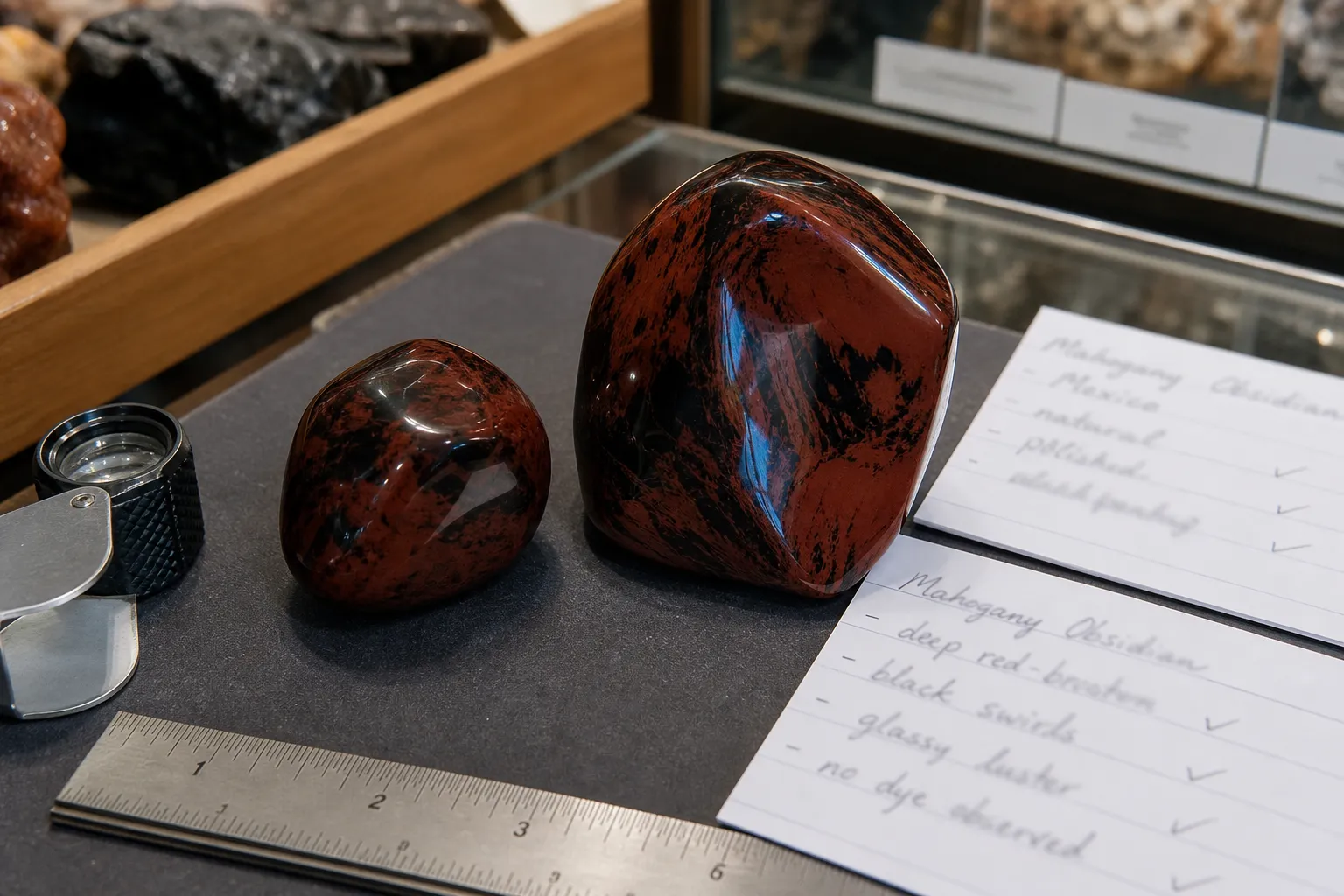
What you can judge more confidently is the piece in front of you. Look at the color contrast, pattern, polish, size, form, and how clearly the seller explains the name. A small tumbled stone, a carved figure, a cabochon, and a large display slab can all be called mahogany obsidian while having very different availability.
Short answer
The variety name alone does not prove rarity. Judge the visible object, the seller’s wording, and the evidence behind any scarcity claim.
upward
Read the full overview first
Use the broader guide first if you need the full scope before this page.
What “Rare” Can Mean Here
“Rare” is often used loosely in crystal and collector listings. With mahogany obsidian, it might mean:
- A stronger black and red-brown contrast than usual
- A larger size or polished form that is harder to find in one shop
- A pattern the seller considers more attractive
- A temporary local supply issue
- A marketing word rather than a documented geology claim
That distinction matters. A piece may be visually appealing or less ordinary without proving that mahogany obsidian as a variety is rare. It is more useful to ask what is unusual about the specific object: its pattern, size, polish, source information, or availability in the market you are using.
Start With Visible Traits
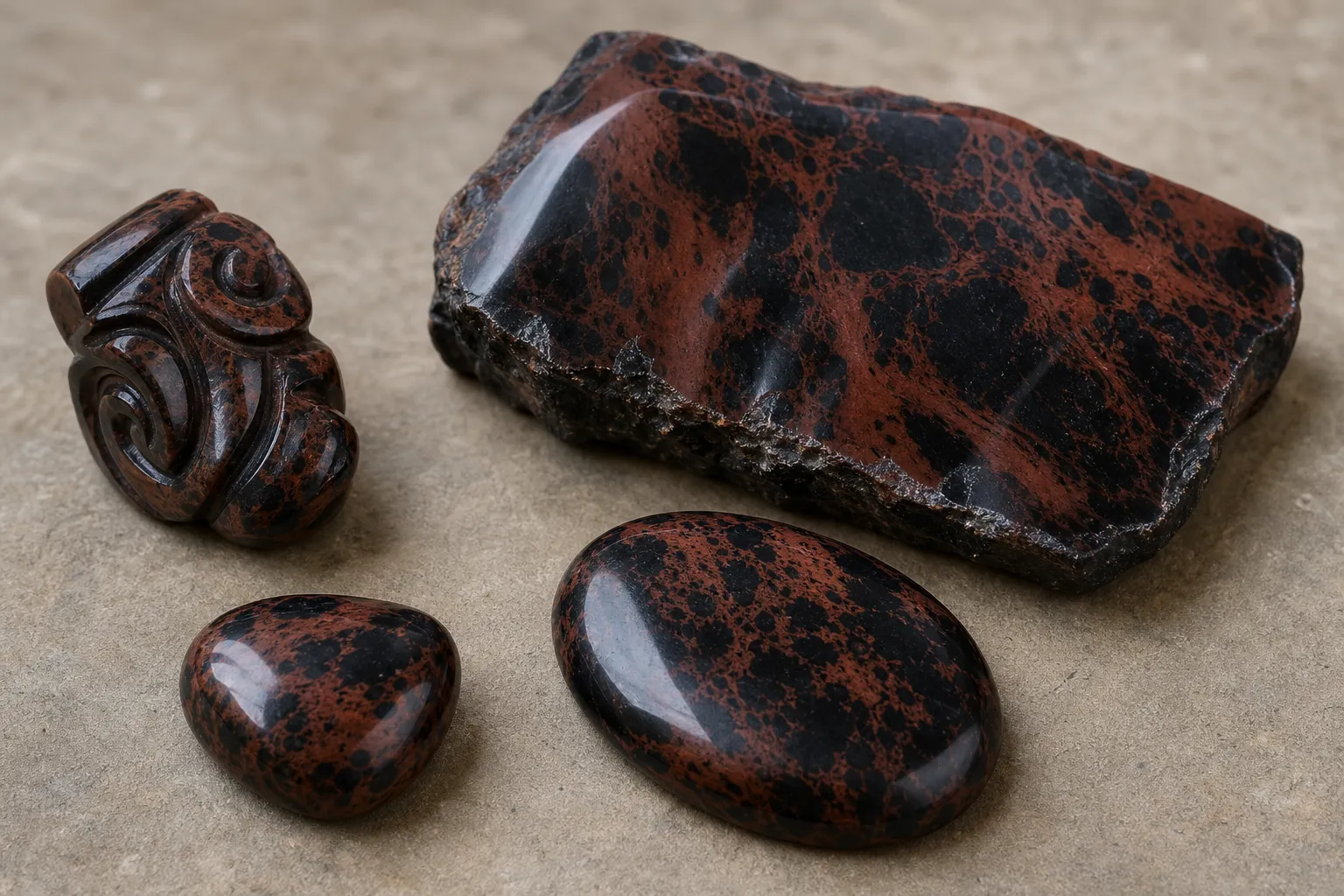
Mahogany obsidian is usually discussed in collector language as obsidian with black areas and red-brown or mahogany-colored zones. The reddish-brown appearance is often broadly connected with iron-related coloration in rock and mineral description, but without stronger references for this exact variety, that explanation should stay general.
Inspection cues
- Is there clear black and red-brown contrast?
- Does the color look integrated into the glassy material rather than painted or surface-only?
- Is the color visible in ordinary light, not only in edited photos?
- Does the piece have the glassy look expected of obsidian-like material?
- Are the zones patchy, cloudy, streaked, banded, or sharply separated?
- Is “mahogany” being used as a visual description or as a confident variety label?
These cues help decide whether the name fits. They do not prove rarity. A piece can look convincingly like mahogany obsidian and still be easy to find in many selling contexts.
Why Availability Changes the Answer
A collector’s sense of rarity often comes from what is available nearby or online. That experience is useful, but it is not the same as documented occurrence.
Mahogany obsidian may seem more or less available depending on:
Shopping context
Your country or region, and whether you shop online, at gem shows, or in small local stores.
Object form
Whether the item is rough, tumbled, carved, cabochon-cut, or polished.
Size goal
Whether you want a small pocket stone or a larger display piece.
Pattern strength
How strong the red-brown contrast is in the piece you are considering.
Naming clarity
How carefully sellers separate mahogany obsidian from other reddish or brownish obsidian labels.
This is why “mahogany obsidian is common” may be true in one narrow shopping context and unhelpful in another. You might see many small tumbled pieces but very few large, well-polished examples with the pattern you want.
Price is also a weak shortcut. A higher price may reflect size, carving work, polish, seller positioning, or local demand. A lower price does not prove the material is abundant everywhere.
Watch Seller Wording
Because mahogany obsidian is a visual name, it is easy for listings to stretch it.
Be cautious when you see
- “Rare” without an explanation
- “High grade” without visible criteria
- “Mahogany” used for a mostly brown piece with little black contrast
- “Natural” without useful identification details
- “One of a kind” for normal pattern variation
- Strong claims based only on the listing title
Better question
The better question is not “Did the seller call it rare?” but “What exactly is being described?” A useful listing should show size, form, color, polish, and pattern clearly. If the word “rare” is doing most of the work, the claim is thin.
A Practical Collector Check
Before treating a mahogany obsidian piece as special, separate three questions:
- Does it visibly fit the mahogany obsidian look?
- Is this particular piece visually strong, large, cleanly polished, or unusual?
- Is there reliable support that the variety, source, or form is rare?
The first question can often be approached through observation. The second is partly personal collecting taste. The third needs better evidence than a shop label or short description.
If you are buying online, ordinary lighting photos are worth asking for, especially on higher-priced pieces. Strong lighting can enrich the red-brown areas, while dim photos can hide the contrast that makes the label useful.
When “Common” Is Too Strong Too
It is also too simple to say mahogany obsidian is definitely common. A name can be familiar in shops and still be inconsistently applied. A color pattern can appear often in small items while being less available in larger, cleaner, or better-finished forms.
So the best wording is:
Mahogany obsidian may be encountered in collector and seller contexts, but the rarity of a specific piece depends on visible quality, form, size, polish, naming clarity, and the market you are actually using. The variety name alone is not enough to prove rarity.
What Would Make the Answer Stronger
A firmer rarity answer would need better public support, such as:
- Non-commercial geology or volcanology sources on obsidian and relevant coloration
- Museum, university, or educational mineral references
- Lapidary or collector resources that discuss the name without selling the item
- Documented occurrence or source information
- Clear discussion of size, grade, polish, and availability
Until then, rarity language should stay modest. This page can help you make a collecting decision, but it should not be treated as an appraisal, price guide, or sourcing map.
Bottom Line
Do not buy mahogany obsidian simply because a listing calls it rare. Treat the name first as a visual variety label: look for red-brown and black appearance, judge the pattern and polish, and ask what any rarity wording actually refers to.
For most collectors, the better choice is a piece that is clearly photographed, visually appealing, and plainly described. If rarity matters to you, look for stronger documentation about the specific form, source, size, or pattern. Without that support, both “rare” and “common” are incomplete answers.