
Collector comparison
Raw Black Obsidian vs Polished Black Obsidian
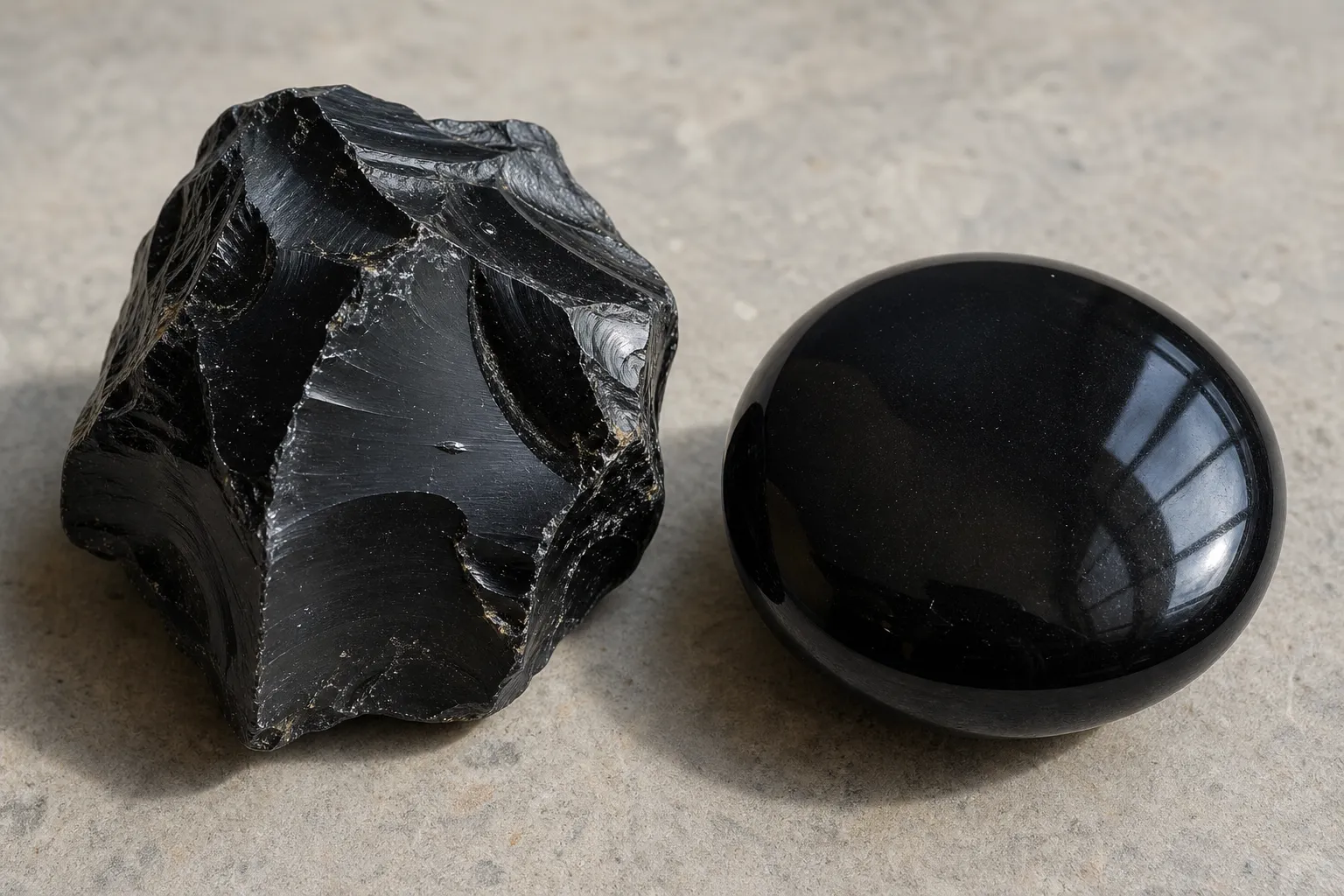
Raw black obsidian and polished black obsidian are usually the same volcanic glass shown in two different finishes. Raw pieces keep more of the broken, uneven surface; polished pieces have been smoothed, shaped, tumbled, or carved to create a glossier, more comfortable surface.
For raw black obsidian vs polished black obsidian, the practical answer is this: choose raw if you want visible fracture texture, irregular edges, and a more natural specimen look. Choose polished if you want stronger shine, easier handling, and a cleaner decorative shape.
The exact look still depends on the individual piece. Lighting, seller photos, break patterns, tumbling, carving, surface wear, and dust can all change how black obsidian appears.
upward
Start with the broader guide
Use the broader guide first if you need the full scope before this page.
The Main Difference Is the Surface Finish
The difference is not usually a separate “type” of obsidian. It is the way the surface has been left or finished.
A piece sold as rough black obsidian may show uneven planes, chips, small pits, dull patches, or glassy broken faces. Some parts may shine like dark glass while other parts look gray-black, dusty, or matte. That mixed look is normal for a raw obsidian surface texture.
Polished black obsidian has been worked until the surface looks smoother and more continuous. A polished obsidian surface finish often appears darker and more reflective because light bounces off the surface more cleanly. This is especially noticeable on spheres, palm stones, cabochons, towers, beads, and tumbled stones.
Polished does not mean better. Raw pieces often show more fracture character. Polished pieces usually emphasize shine, symmetry, and touch comfort.
This comparison works best when you can inspect the actual object. A black obsidian surface finish can look very different in bright direct light, soft window light, or a phone-camera flash.
What to Look For: Gloss, Fracture, and Edge Texture
Move the piece under light and watch how the surface responds.
Raw black obsidian may catch light in separate flashes. One broken face can look glassy, while the next area looks dull, dusty, or uneven. Fresh-looking fracture faces may show curved, shell-like break patterns. That fracture visibility in obsidian is one reason rough pieces can be useful for learning how the material breaks and reflects light.
Polished black obsidian usually gives a broader, steadier reflection. Instead of many broken flashes, the surface may show one cleaner highlight. The outline also tends to look more intentional: a palm stone feels rounded, a cabochon has a prepared dome, and a carved object has smoothed planes.
Gloss helps, but it is not the only clue. A raw piece can still have naturally glassy faces. A polished piece can look dull if it is dusty, scratched, poorly finished, or photographed in flat lighting. Shine tells you about the visible surface, not the full history or value of the piece.
Edge texture is often the more useful difference. Raw obsidian edges may be thin, chipped, pointed, or uneven enough to snag fabric or feel awkward in a pocket. Polished pieces are usually softened, especially if they are tumbled or shaped for frequent handling.
Look for these cues
- Broken-looking planes suggest a raw or rough surface.
- Rounded edges suggest tumbling, shaping, or polishing.
- A mirror-like reflection suggests a stronger polished finish.
- Mixed dull and glossy patches often appear on raw pieces.
- Small chips along thin edges deserve careful handling.
These signs do not prove a full origin story from photos alone. They simply help you read the surface more carefully.
Handling and Care Differences
Handling raw black obsidian takes more attention because the surface may be irregular. A rough piece can have points, chips, thin edges, or brittle-looking corners. Even when it is not extremely sharp, it may feel uncomfortable if gripped tightly or carried loose in a bag.
A practical approach is to pick it up slowly, avoid pressing hard against thin edges, and store it where it will not knock against polished pieces, glass shelves, or softer stones.
Handling polished black obsidian is usually easier because the edges have often been rounded and the surface is smoother. That is why palm stones, spheres, worry stones, and tumbled pieces are common choices for frequent handling or display. The tradeoff is that polish shows surface marks more clearly. Fingerprints, dust, fine scratches, and dull patches stand out on a dark reflective surface.
Care differences follow from the finish
- Raw pieces need protection from chipping, especially along thin edges.
- Polished pieces need protection from abrasion that can mark the shine.
- Both finishes should be kept away from gritty or rough contact.
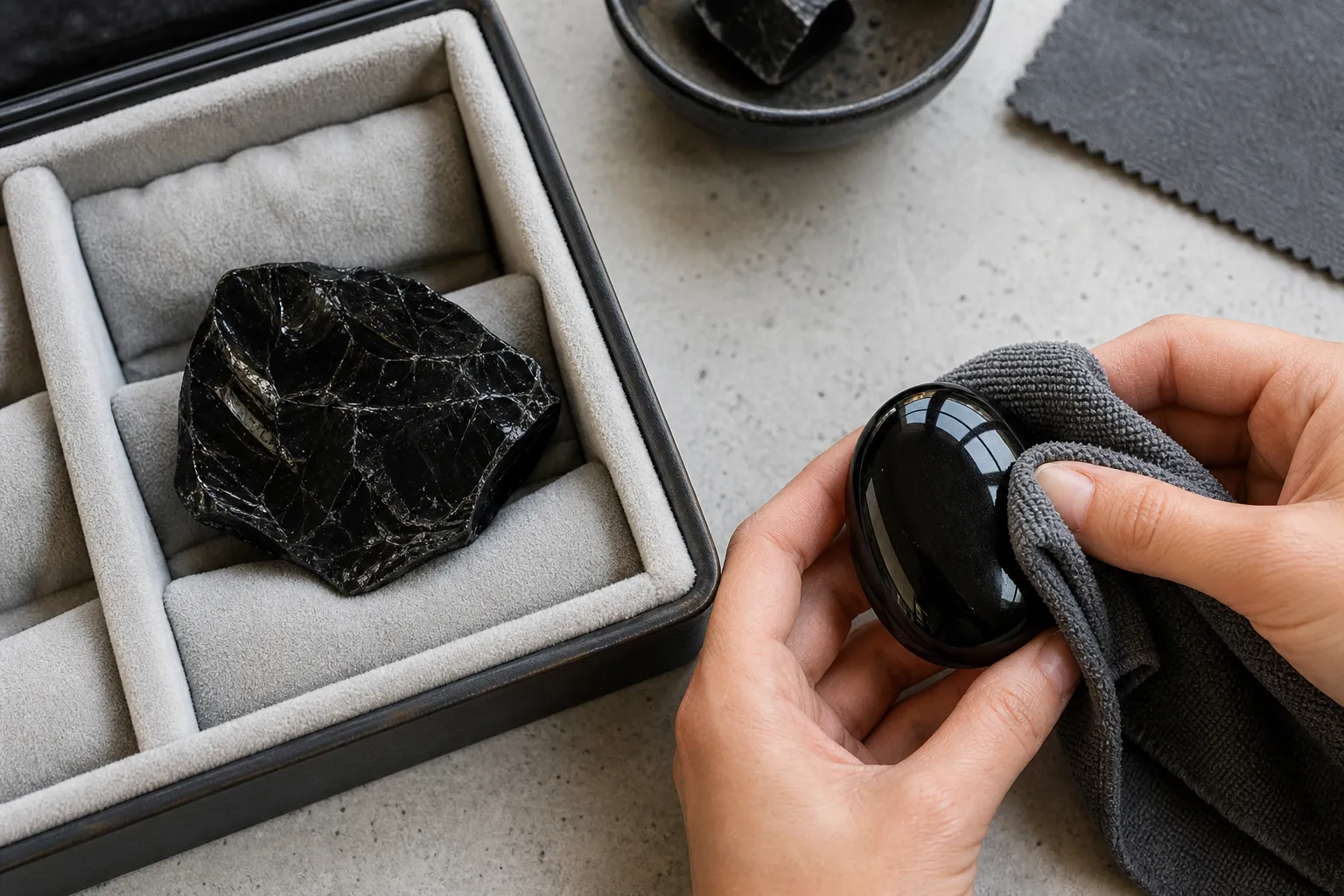
- Both are easier to inspect after a gentle wipe with a soft cloth.
- Neither finish should be treated as unbreakable just because it looks dark and dense.
For storage, a raw piece may sit well in a tray, display box, or padded compartment where its edges do not rub against nearby items. A polished piece may benefit from a soft pouch or separated storage if you want to preserve the reflective finish.
Cleaning should stay simple for ordinary collector handling. Remove dust with a soft dry cloth, or a slightly damp cloth when needed. Avoid abrasive cleaners on polished surfaces, and avoid scrubbing fragile raw edges where small chips could loosen.
Which One Fits Your Collection?
Choose rough black obsidian if you like visible break texture, natural-looking shapes, and a specimen feel. Raw pieces are useful when you want to study surface texture, fracture faces, and edge shapes before heavy finishing. They also look less uniform, which some collectors prefer.
Choose polished black obsidian if you want a clean decorative object, a comfortable handling piece, or a stronger black-gloss appearance. Polished forms fit well where shape matters: spheres, points, eggs, cabochons, beads, and palm stones all depend on shaping and surface finish for their look.
Practical display preferences
- A raw chunk looks natural beside other rough mineral or rock specimens.
- A polished palm stone works better where touch comfort matters.
- A polished sphere or tower emphasizes reflection and shape.
- A raw piece may show break structure more clearly.
- A polished piece may show a smoother, deeper-looking black surface.
Some buyers also attach personal or symbolic meaning to the finish. They may prefer raw pieces because they feel less altered, or polished pieces because they feel calmer in the hand or more formal on display. That belongs to personal interpretation, not a material difference that can be confirmed by appearance. The observable difference remains the finish: rough and irregular versus worked and smoothed.
Naming Limits: “Raw,” “Rough,” and “Polished”
Seller wording is not always consistent.
“Raw” and “rough” usually suggest that a piece has not been fully shaped or polished. But a rough-looking piece may still have one glossy broken face, a cleaned surface, or edges altered during preparation. “Polished” can also describe many levels of finish, from a simple tumbled stone to a highly reflective carved object.
The label alone is not enough. A listing title may say raw, rough, natural, polished, tumbled, carved, or hand-finished, but the photos and dimensions often tell you more about what you will receive.
When comparing listings, check
- Whether the edges are sharp, rounded, or chipped.
- Whether the surface is evenly glossy or mixed.
- Whether the shape looks broken, tumbled, carved, or cut.
- Whether the seller shows multiple angles.
- Whether the description separates the material name from the finish.
A useful question is: “Am I comparing obsidian variety, or am I comparing surface treatment?” Here, the comparison is mainly about finish. Raw black obsidian and polished black obsidian are not automatically separate varieties. They are usually different presentations of black obsidian.
Be careful with photo-based certainty. A very dark polished piece may hide small surface marks until seen in angled light. A raw piece may look dull in one photo but show glassy fracture faces in person. If edge texture matters, ask for side views or close-ups before buying.
A Short Decision Path
Start with use, not the label.
Pick raw black obsidian when you want a more natural-looking display piece, visible broken texture, and a specimen-like presence. It is a better fit if you plan to look at fracture faces, compare surface patches, or keep the piece in a tray where it will not be handled constantly.
Pick polished black obsidian when you want a smoother object for regular handling, a stronger reflective look, or a cleaner decorative shape. It is a better fit if the piece will sit on a desk, be held often, or be displayed where shine and symmetry are part of the appeal.
If you are unsure, choose based on edge comfort. A piece that looks interesting but feels awkward to handle may end up staying in storage. A polished piece that looks beautiful but shows every fingerprint may need more wiping. Neither is the universal better choice; each finish solves a different collector problem.
FAQ
Is raw black obsidian more natural than polished black obsidian?
Usually, raw black obsidian keeps more of its broken surface and irregular outline. Polished black obsidian has been shaped, tumbled, carved, or smoothed. Both can be real black obsidian; the difference is mainly finish.
Is polished black obsidian easier to handle?
Often, yes. Polished pieces usually have smoother surfaces and softened edges, which makes them more comfortable for frequent handling. Still, inspect the individual piece because chips, points, or damaged areas can change the feel.
Does polish make black obsidian look darker?
It can. A smoother surface reflects light more evenly, which can make the black color look deeper and glossier. Dust, scratches, poor lighting, or a weaker polish can make the same material look duller.
Can photos prove whether a piece is raw or polished?
Photos can help, but they are not final proof. Lighting, angle, camera exposure, and seller editing can hide edge texture or exaggerate gloss. Multiple angles and close-ups give a better view.
Bottom Line
Raw black obsidian shows more irregular surface texture, visible fracture features, and uneven edge character. Polished black obsidian shows a smoother finish, stronger shine, and more comfortable handling in many common forms.
Use the name as a starting point, not the final judgment. Look at the actual finish, edge condition, light reflection, and intended use. Those details tell you more than the words “raw” or “polished” by themselves.