
Variety guide
What Is Black Obsidian as a Variety
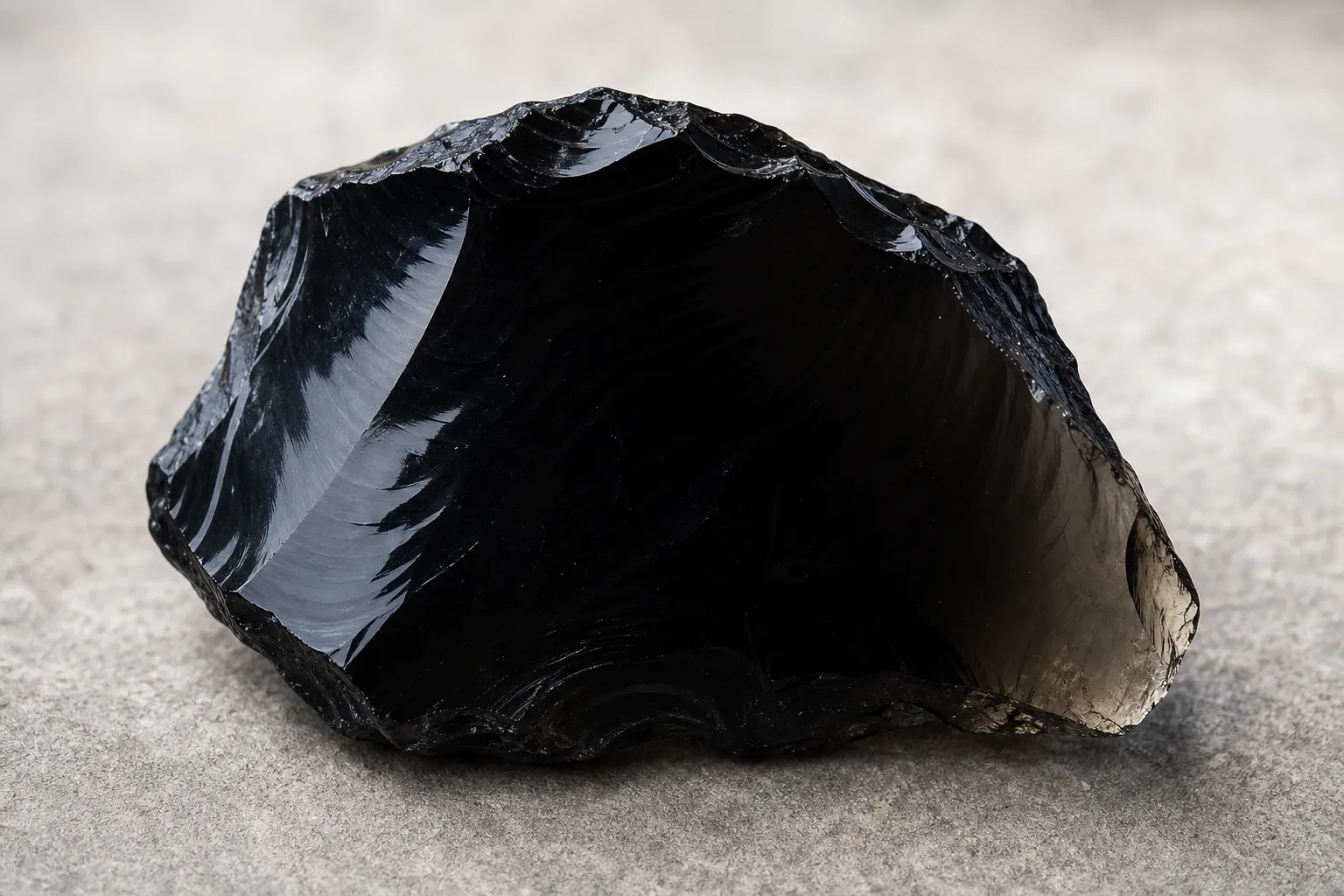
Black obsidian is the plain dark-looking form of obsidian in collector language. If you are asking what is black obsidian, the practical answer is: it is natural volcanic glass that usually looks black or nearly black, with a glossy surface and no obvious pattern such as snowflake spots, mahogany coloring, rainbow bands, or metallic sheen.
The label is useful, but it is not a separate mineral species. Obsidian itself is volcanic glass rather than a crystalline mineral, so “black obsidian” is best read as an appearance-based collector label: dark obsidian with a glassy look.
A piece may appear solid black in normal light and still show smoky gray, brownish, or slightly translucent edges under stronger light. That variation does not automatically rule it out. The important point is what the piece looks like overall, and whether another more specific obsidian name fits it better.
upward
Start with the broader guide
Use the broader guide first if you need the full scope before this page.
A simple black obsidian definition
Black obsidian is often described as black volcanic glass. Obsidian forms when volcanic material cools into glassy rock instead of developing visible crystals. That is why it can look smooth, reflective, and non-grainy.
For a collector, a useful definition is:
Black obsidian is a dark obsidian appearance category: natural volcanic glass that looks black or nearly black, usually with a glassy luster and without a strong named pattern.
This wording matters because “black obsidian” is not a formal mineral species. In shops, collections, and casual labels, people may still say “obsidian crystal,” “obsidian stone,” or “obsidian variety.” Those phrases are common in the hobby, but the material itself is glassy volcanic rock.
So the label does real work, just at the right level. It can describe appearance and collecting category. It should not be treated as full proof of origin, value, quality, or exact identification.
What plain black obsidian usually looks like
A typical piece of plain black obsidian is recognized by visible traits first, not by the name on a tag.
Dark body color
Black, charcoal, or very deep brown-black in ordinary light.
Glassy luster
A reflective, glass-like surface, especially on polished areas or fresh breaks.
Possible thin-edge translucency
Some pieces let a little light through at thin edges or chips.
Smooth, non-grainy appearance
Obsidian usually does not show the visible grains common in many crystalline rocks.
Conchoidal fracture on broken areas
Chips or breaks may show curved, shell-like surfaces.
No strong named effect
Plain black obsidian usually lacks white snowflake spots, reddish-brown mahogany patches, rainbow color bands, or gold/silver sheen.
“Plain black obsidian” does not mean every surface must be perfect, mirror-black, or mark-free. Natural and polished pieces can have scratches, small chips, uneven reflections, or subtle color shifts.
Lighting also changes the impression. A stone that looks flat black indoors may show smoky edges or internal shadows in stronger light. For everyday collecting, the question is whether the piece mainly presents as dark, glossy obsidian without another visible effect taking over the label.
Why “variety” is mostly a collector word here
The word “variety” can be misleading if it sounds too formal. In everyday collecting, a black obsidian variety means a recognizable look within obsidian. In stricter material terms, obsidian is volcanic glass, not a crystalline mineral species with formal mineral varieties in the usual sense.
Many obsidian names are based on visible effects:
Black obsidian
Dark, plain-looking obsidian.
Snowflake obsidian
Dark obsidian with pale, snowflake-like spots or inclusions.
Mahogany obsidian
Obsidian with reddish-brown and black coloration.
Rainbow obsidian
Obsidian showing color bands under suitable light.
Gold or silver sheen obsidian
Obsidian with a metallic-looking reflective effect.
This table is not a grading system. It simply shows how collector names often work. Black obsidian is the dark baseline: the less decorated label used when no stronger visual feature is present.
That is why a tag alone is not enough. If a piece has clear white clusters, reddish-brown areas, strong rainbow bands, or a metallic sheen, a more specific variety name may describe it better. If it is dark, glossy, and visually plain, “black obsidian” is a reasonable collector-facing description.
Common confusions when identifying black obsidian
The main mistake is assuming every polished black stone is black obsidian. A glossy black surface can narrow the question, but it cannot settle it by itself.
Black obsidian vs. any black polished stone
Other dark stones can be polished into smooth black shapes. A glassy look is helpful, but not complete proof from one glance or one photo.
Black obsidian vs. manufactured glass
Obsidian is natural volcanic glass, but not every black glassy object is obsidian. Beads, carvings, and decorative pieces may need more context, especially if their source or material history is unclear.
Black obsidian vs. patterned obsidian varieties
A piece can be mostly black and still belong more naturally under another visual label. White rounded patches suggest snowflake obsidian language. Brown-red areas suggest mahogany obsidian. Color bands or metallic reflection may point toward rainbow or sheen obsidian.
Black obsidian vs. “crystal” wording
In crystal-collecting spaces, a tumbled stone or point may be called a “black obsidian crystal.” That wording is common, but materially obsidian is glassy volcanic rock rather than a crystalline mineral species. The distinction helps when you are trying to understand the object itself, not just the shop language around it.
A modest conclusion is usually the most accurate: visible traits can support a likely description, but they do not confirm provenance, appraisal value, or scientific identification on their own.
What makes the label more or less reliable
The description “black obsidian” becomes more reasonable when the piece has:
- A dark body color.
- A glassy surface reflection.
- A smooth, non-grainy look.
- No obvious snowflake, mahogany, rainbow, or metallic sheen effect.
- A chip or break that visually resembles curved glassy fracture, if a break is already present.
Do not break or scratch a specimen just to check. For a piece in hand, inspection should stay visual and gentle.
The label becomes less certain when the piece is only shown in a low-quality photo, the lighting hides surface effects, the surface looks coated or dyed, or the object is a bead, carving, or decorative item with no reliable material context.
A simple tray-side check
- Look at the overall color in neutral light.
- Tilt the piece and watch for glassy reflection.
- Check thin edges for slight translucency, if visible.
- Look for patterns or sheen that would suggest another obsidian name.
- Inspect chips with your eyes rather than running fingers along the edge.
- Use “likely black obsidian” when the evidence is visual but incomplete.
Black obsidian can look simple, which makes overconfidence easy. The fewer visible features a piece has, the less a name can prove by itself.
Handling chipped or broken black obsidian
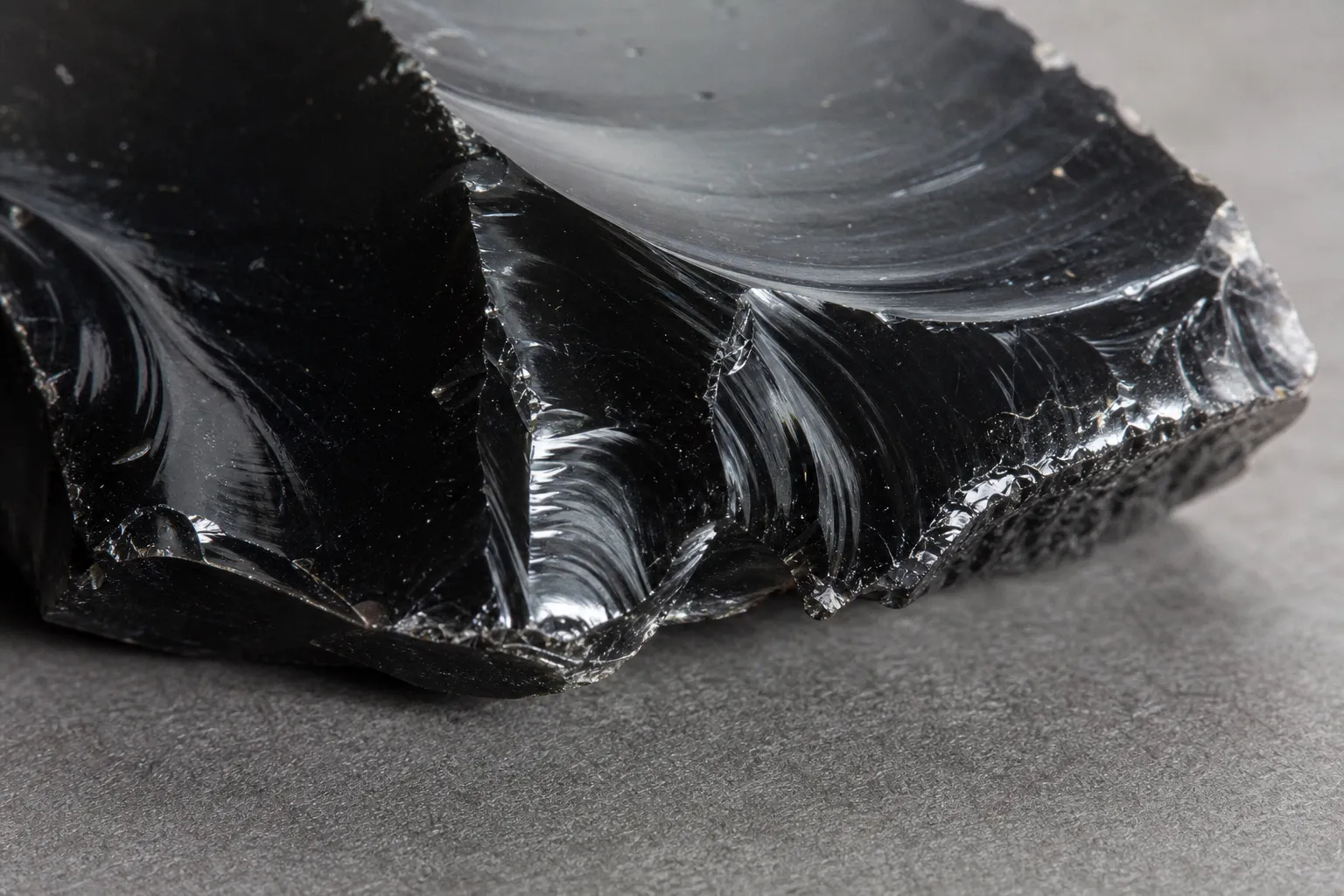
Obsidian’s glassy nature affects how it breaks. It is known for conchoidal fracture, meaning broken surfaces can curve in smooth, shell-like shapes. Those breaks can leave very sharp edges.
A polished palm stone, bead, or cabochon may feel smooth in normal handling. Chips, cracks, raw edges, and fresh breaks deserve more care. Avoid sliding your fingers along a sharp-looking edge. Keep chipped pieces from rubbing against softer polished stones in a box or pouch. If a fragment has a fresh break, wrap it separately or store it in a small container.
This is ordinary glass-aware handling, not a dramatic warning. Black obsidian is attractive partly because it behaves like volcanic glass; damaged or raw pieces should be treated with that material behavior in mind.
Where symbolic language fits
Black obsidian is often discussed in symbolic or personal-meaning contexts, especially in crystal-collecting spaces. Those meanings may be part of why someone chooses to keep or display a piece, but they are separate from the material definition.
As a variety description, black obsidian is identified by observable traits: dark color, glassy luster, volcanic-glass character, and the absence or presence of visible effects. Symbolic language may describe personal interpretation or tradition, but it should not be used to identify the material or promise an outcome.
For this page’s question, the grounded answer stays simple: black obsidian is a dark obsidian collector label for natural volcanic glass, not a separate crystalline mineral species and not a guarantee of origin, value, or effect.
Quick answer for a dark piece in hand
If your piece is dark, glossy, glass-like, and lacks snowflake spots, mahogany coloring, rainbow bands, or metallic sheen, “black obsidian” or “plain black obsidian” may be an appropriate collector description. If it has a fresh chip or broken edge, treat that area like sharp glass. If you need definite identification, locality confirmation, or valuation, the label alone is not enough.
In short: black obsidian is the plain dark face of obsidian in collector language—useful, recognizable, and widely understood, as long as the name is kept within its limits.