
Hand-sample identification
What Does Obsidian Luster Look Like in Hand Samples
Obsidian luster is usually glassy: a crisp reflection like bottle glass, dark window glass, or a polished black mirror. In hand samples, polished obsidian can look glossy, wet-looking, or mirror-like under direct light. A fresh chip or broken edge may show curved, shell-like glossy faces. Rough or weathered areas can look dull, grayish, dusty, or patchy, even when the material is obsidian.
That shine is useful, but it is not a complete identification on its own. Other polished black stones and manufactured glass can also look reflective.
upward
Start with the broader guide
Use the broader guide first if you need the full scope before this page.
Quick visual answer
Look for crisp glass-like highlights on smooth areas, curved glossy shine on existing chips, and remember that rough or weathered surfaces may look much duller.
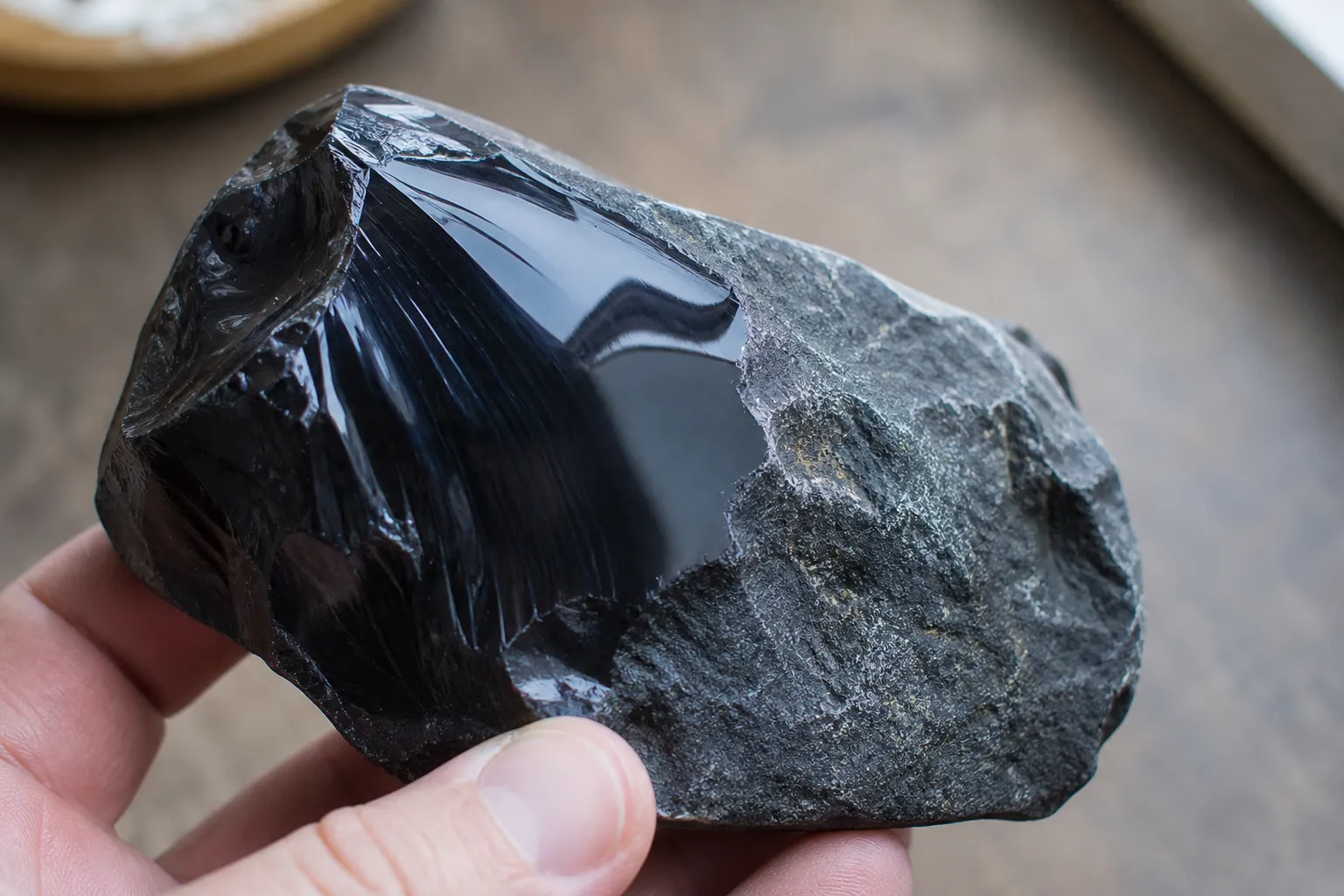
The basic look: glassy, crisp, and reflective
In mineral-description terms, obsidian has a vitreous luster, meaning glassy. In plain collector language, the surface reflects light with a sharper, cleaner shine than a waxy stone, a grainy rock, or a metallic mineral.
A typical obsidian hand sample may show:
- Sharp highlights when tilted under a lamp, window, or sunlight.
- A smooth dark reflection on polished areas.
- A wet-looking gloss even when the surface is dry.
- No obvious crystal faces like quartz points or feldspar cleavage surfaces.
- Broken-glass shine on existing chips or fracture faces.
This look comes from obsidian’s nature as natural volcanic glass. It forms when lava cools quickly, so it does not develop the visible crystal texture seen in many rocks. That is why obsidian visual properties often feel closer to dark glass than to a granular stone.
Color and pattern can distract from the luster. Black obsidian is the classic example, but snowflake, mahogany, rainbow, and golden-sheen obsidian can still show glassy luster where the surface is smooth, fresh, or polished. The pattern changes what you notice first; it does not change the basic luster category.
How the surface changes what you see
A hand sample rarely has one perfect surface. A polished face, a rough natural area, and a chipped edge can look different on the same piece. The better question is not only “Is it shiny?” but “Where is it shiny, and what kind of shine is it?”
On a polished obsidian surface, the reflection may be strong enough to show vague shapes, light bars, or a dark mirror effect. It may not be perfectly clear if the surface is curved, scratched, or cloudy, but the highlight usually feels crisp rather than earthy.
On a broken face, the shine is different. Look for conchoidal fracture: curved, rippled, shell-like surfaces formed when glassy material breaks without neat cleavage planes. These glossy fracture faces are one of the most recognizable obsidian clues. If the specimen already has a chip, inspect it carefully; do not create a new chip as a casual test, because broken obsidian can have very sharp edges.
On rough or weathered areas, the luster may be interrupted. Dust, abrasion, tiny pits, handling wear, or a natural outer rind can make the same material look much less dramatic. A dull outside and a glossy interior edge can belong to one piece.
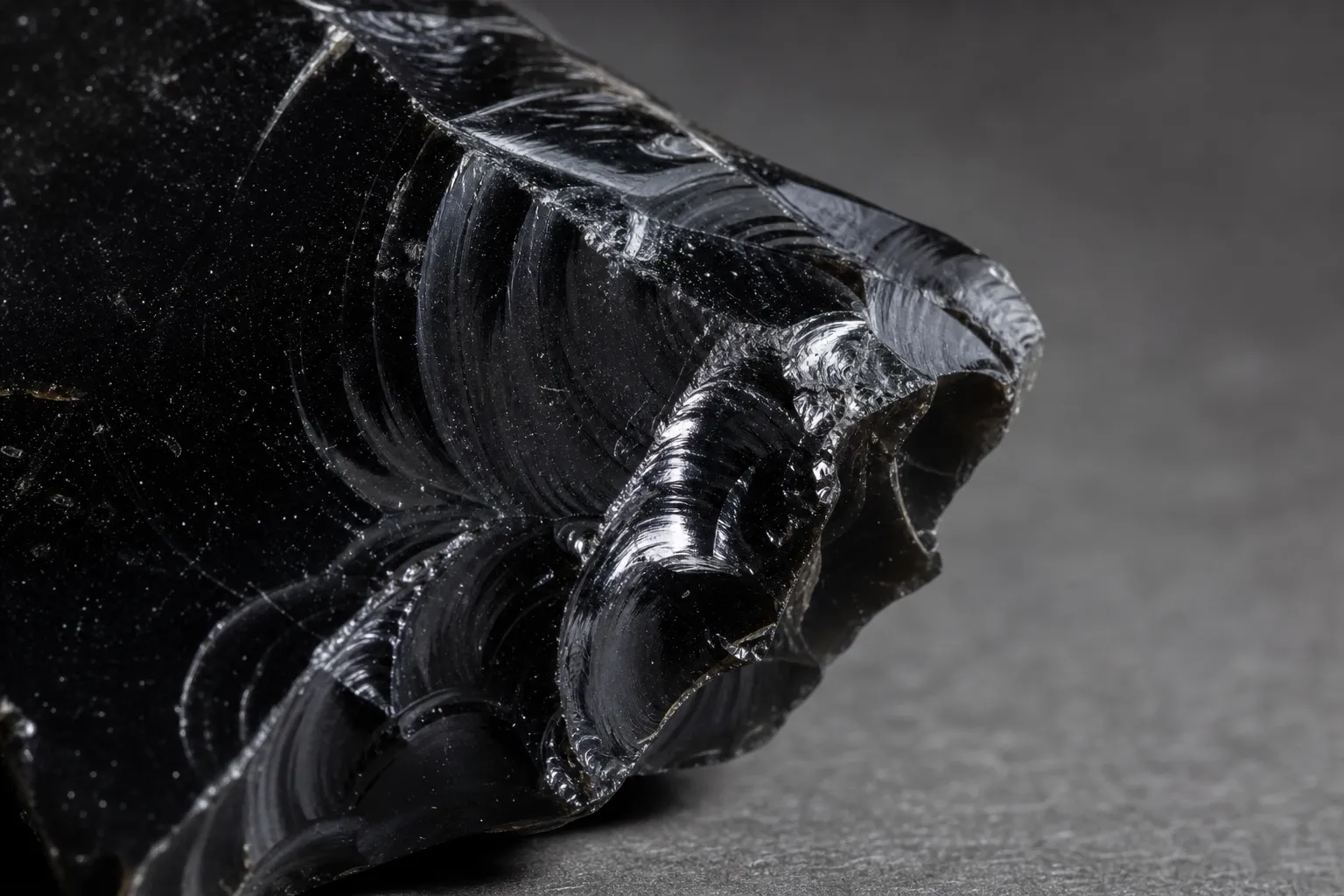
A simple way to inspect obsidian luster
Use light and angle before trying anything that could scratch, chip, or alter the sample.
- Wipe away loose dust and fingerprints. A soft cloth is enough for a basic look. Smudges can make polished obsidian seem cloudy.
- Hold it under a strong light. A desk lamp, window, or sunlight helps reveal whether the reflection is sharp.
- Tilt slowly. Glassy luster often appears as moving, crisp highlights rather than a constant glow from every direction.
- Compare different areas. Check a polished face, a rough patch, and any existing chip.
- Notice the reflection shape. A polished area may look mirror-like; a fracture face may flash along a curved surface.
- Account for surface condition. Scratches, weathering, fingerprints, and abrasion can all reduce the visible shine.
For rainbow and gold-sheen obsidian, tilt matters even more. The colored effect may appear only at certain angles because it depends on how light interacts with fine internal features and the polished surface. A rainbow or golden flash that comes and goes as you turn the piece is normal for these sheen varieties. Weak light, dirt, or a poor polish can make the effect look subdued.
Snowflake obsidian can also confuse the eye. The pale “snowflake” patches usually do not look as glossy as the black glassy groundmass, so the piece may read as mixed: shiny black areas with softer gray or white patches. Mahogany obsidian can show red-brown swirls inside a glassy surface. In both cases, separate the pattern from the luster.
What glassy luster can and cannot tell you
Glassy luster is a strong visual clue for obsidian, but it is not a final verdict. A glossy black object may be obsidian, another polished stone, manufactured glass, resin-like material, ceramic, dyed chalcedony, or dyed onyx. That does not mean every shiny black piece is questionable. It means luster belongs with other observations.
Luster can help you say
- “This surface looks glassy rather than waxy or earthy.”
- “This polished area has a dark mirror-like reflection.”
- “This chip shows a curved glossy fracture.”
- “This rough face is dull, but another part looks more glass-like.”
- “The sheen appears mainly at certain angles.”
Luster cannot reliably tell you
- The exact volcanic source of a specimen.
- Whether a seller’s variety name is precise.
- Whether a piece is natural from appearance alone.
- Whether a black polished stone is obsidian rather than onyx, dyed chalcedony, or another material.
- Whether bubbles, by themselves, settle the question.
Bubbles are a common point of confusion. Natural obsidian can contain bubbles or vesicles, and manufactured glass can also contain bubbles. In casual visual inspection, the setting matters more than the mere presence of bubbles. Rounded isolated bubbles may raise questions in some pieces, while stretched or flow-related bubbles can occur in natural volcanic glass. Even then, bubble appearance is a clue, not proof.
The difference between onyx and obsidian is another common shopper question. Obsidian is volcanic glass; onyx is a banded variety of chalcedony. Polished black onyx can look smooth and attractive, but it often has a more waxy or microcrystalline appearance rather than the sharp broken-glass character of obsidian. The comparison is useful, as long as it does not become “shiny means obsidian” or “less shiny means onyx.”
Why real obsidian may look dull
Real obsidian does not always look like a polished black cabochon. A natural or collected piece may have a weathered exterior, matte abrasion, tiny pits, or a dusty rind. Weathered obsidian can look gray, brownish, cloudy, or subdued at the surface. If that same piece has an existing broken edge, the interior may look much more glassy.
This matters because many people first see obsidian as polished retail pieces. Polished obsidian luster can be dramatic: glossy black, reflective, and smooth. Rough field pieces may be less obvious. A rough surface scatters light instead of reflecting it cleanly, so the luster looks weaker. That does not cancel the glassy nature of the material; it only means the surface is not showing it well.
The reverse is also true. A highly polished imitation or a polished non-obsidian stone can look convincing if you judge only by shine. Better observation means comparing several surfaces, checking the fracture texture if a chip already exists, and reading luster alongside color pattern, surface condition, and context.
Quick hand-sample checklist
Use this when you are holding a possible obsidian specimen:
- Does a smooth area show glassy luster with crisp highlights?
- Does any existing chip show a curved, glossy conchoidal fracture?
- Are dull areas explained by roughness, weathering, dust, scratches, or fingerprints?
- Do rainbow or gold-sheen effects appear mainly when tilted?
- Are pattern names, such as snowflake or mahogany, being separated from basic luster?
- Are you avoiding tests that could damage the piece or create sharp edges?
- Are you treating luster as one visual clue rather than the whole identification?
The shortest useful answer is still: obsidian usually looks glassy. In polished hand samples it may be glossy, wet-looking, and mirror-like; on fresh fracture faces it may show curved shell-like shine; on rough or weathered surfaces it may look much duller. Read the shine together with surface condition, fracture texture, color pattern, and context.