Material structure
Does Obsidian Have Crystals Inside It
Mostly, no. The direct answer to does obsidian have crystals is that obsidian is chiefly natural volcanic glass, so its main body is usually amorphous rather than crystalline. In plain terms, its atoms are not arranged in a repeating crystal pattern the way they are in quartz.
There is one important exception: some obsidian can contain tiny crystal-related features inside the glass. These may include microlites, nanolites, spherulites, phenocrysts, bubbles, or other inclusions. They can be real features of the stone, but they do not make the whole piece a true crystal.
Quick answer
Obsidian is mainly non-crystalline volcanic glass. Some pieces can hold small internal crystal-related textures, but the glassy host remains the defining material.
upward
Read the full overview first
Use the broader guide first if you need the full scope before this page.
Obsidian is volcanic glass, not a normal crystal
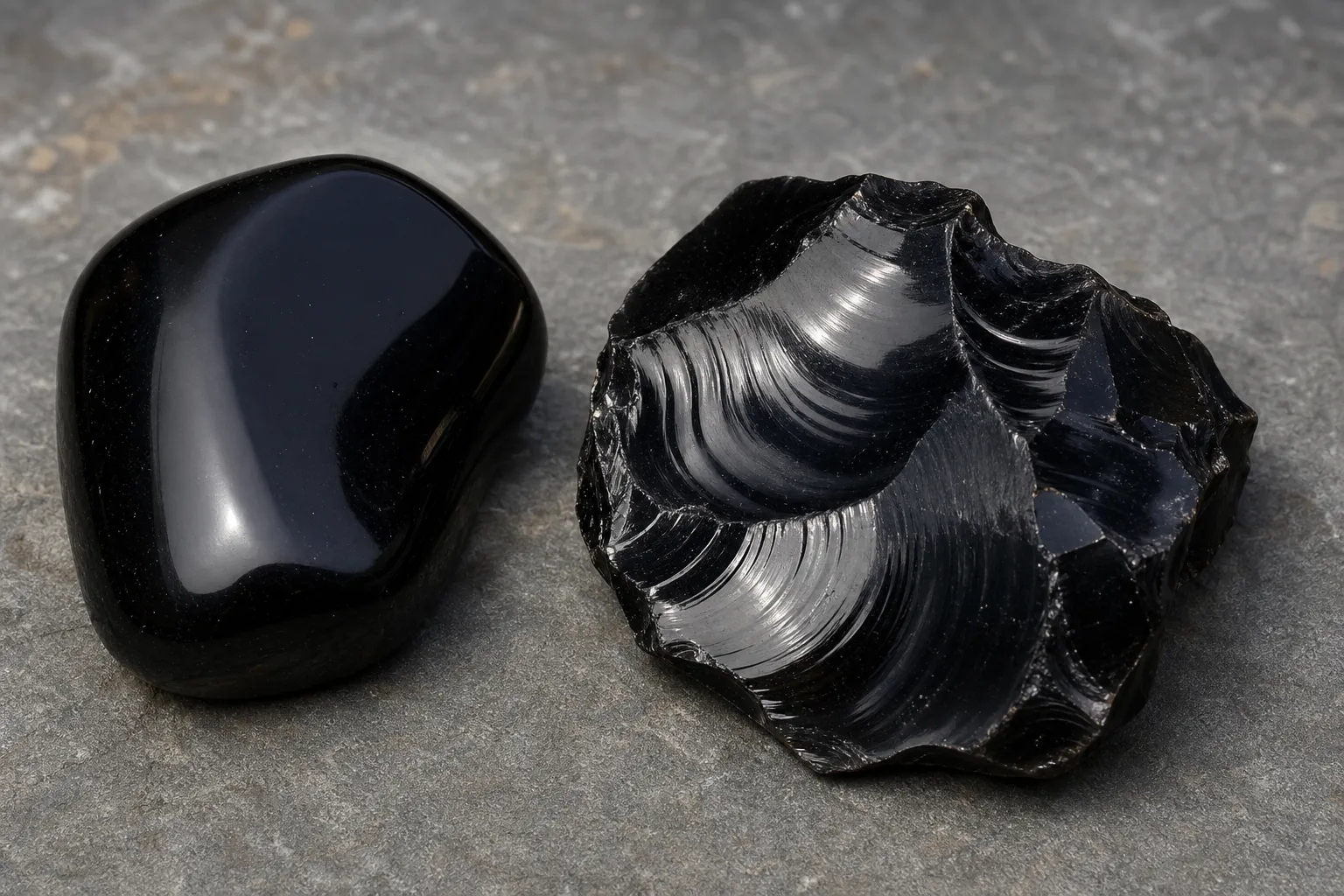
Obsidian forms when silica-rich lava cools so quickly that large, orderly crystals do not have time to grow. The result is a glassy volcanic material rather than a crystalline mineral.
For a collector, the difference is simple:
Quartz
Internal structure: crystalline
Atoms are arranged in a repeating pattern. Under the right conditions, quartz can grow recognizable crystal faces.
Obsidian
Internal structure: mostly amorphous glass
The main body lacks a long-range repeating crystal pattern, even when the surface looks shiny, polished, or stone-like.
This is why obsidian is often described as a mineraloid rather than a strict mineral. It is natural and geological, but its glassy structure does not fit the usual mineral requirement of an ordered crystal structure.
That does not make obsidian fake or low quality. A piece of natural black obsidian can be genuine volcanic glass while still not being a true crystal in the mineralogical sense.
Why shops still call obsidian a “crystal”
The confusion usually comes from retail language. In many shops, “crystal” is used as a broad category for collectible stones, polished tumbles, spheres, carvings, and display pieces. In that setting, “obsidian crystal” often means “an obsidian piece sold with crystals,” not “a substance with a crystalline structure.”
Mineralogy uses the word more narrowly. A crystal is defined by internal order: a repeating atomic arrangement. By that definition, the glassy host of obsidian is not crystalline.
These three statements are not the same:
- “This is an obsidian crystal” is usually shop or collector shorthand.
- “Obsidian has a crystal structure” is not accurate for the main glassy material.
- “Obsidian can contain tiny crystal-related features” is the useful exception.
If you are labeling a collection, “obsidian,” “black obsidian,” “snowflake obsidian,” or “natural volcanic glass” is usually clearer than implying the entire piece is a true crystal.
What tiny crystals in obsidian can mean
Although obsidian’s main body is glassy, some pieces contain small internal features that relate to crystal growth, trapped gas, or included material. Many of these are microscopic, so they are not always visible without magnification.
Useful terms include:
Microlites
Very small crystals that can occur within volcanic glass.
Nanolites
Even smaller crystallites in an amorphous glassy matrix, normally studied with specialized equipment.
Phenocrysts
Larger crystals that formed before the surrounding melt cooled into glass.
Spherulites
Rounded or radiating growth textures that can appear in glassy volcanic material, especially where the glass has partly changed away from a fully glassy state.
Bubbles and inclusions
Trapped gas bubbles, flow features, or included material may be visible, but they are not automatically crystals.
A careful collector phrase is: obsidian is a glassy host that may contain crystal-related features. That avoids both overstatements. It does not call obsidian a normal crystal, and it does not claim that crystals can never occur inside it.
Snowflake obsidian shows the nuance clearly
Snowflake obsidian is the easiest visual example. The dark background is obsidian’s glassy volcanic material. The pale gray or white “snowflake” markings are commonly described as spherulitic features within that glassy host.
Those markings may look like spots, soft bursts, small flowers, or pale flakes suspended in black glass. In a polished piece, the pattern often appears to continue into the material rather than sitting only on the surface.
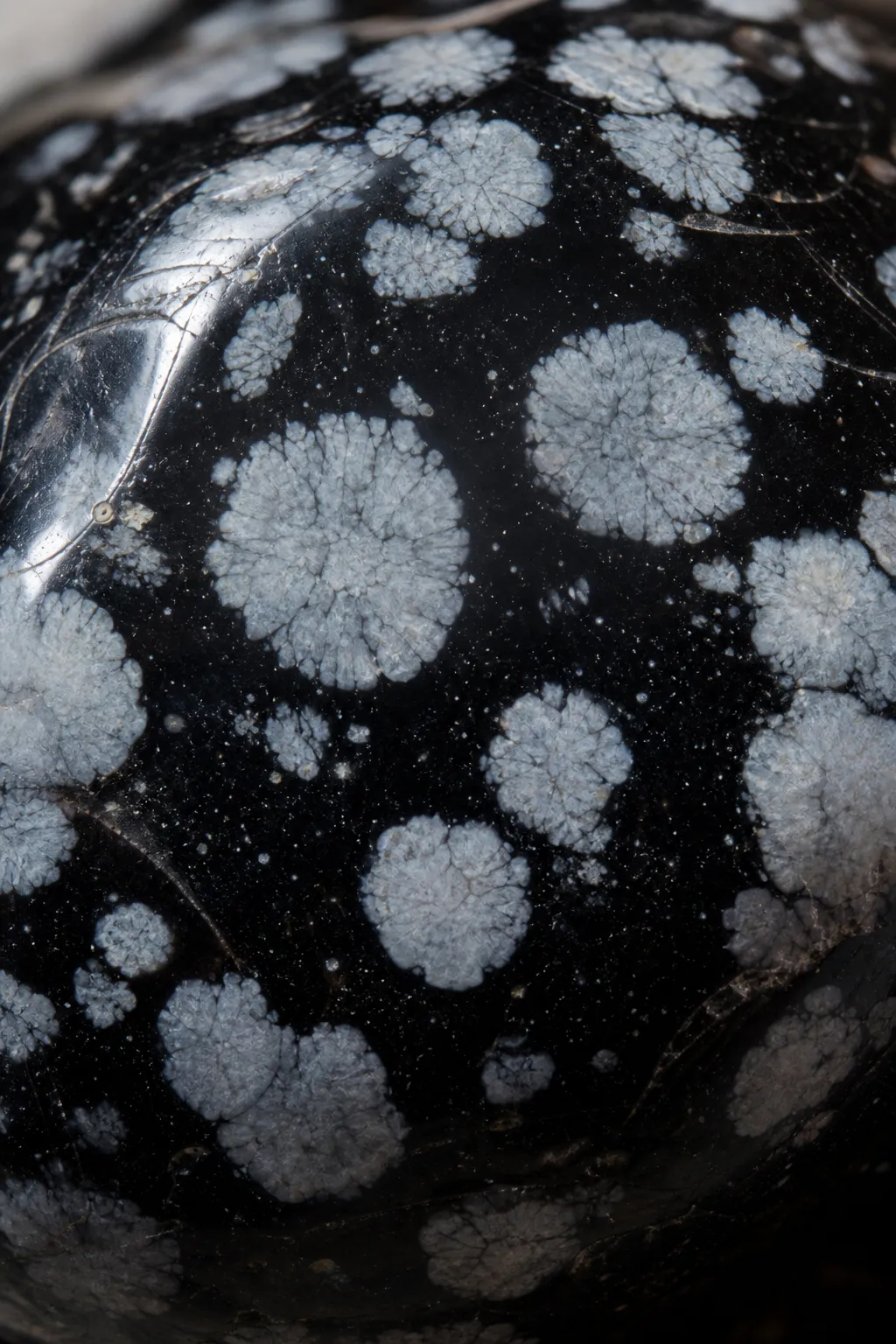
Still, exact composition should be described carefully. Without magnification or lab work, you usually cannot identify the precise mineral makeup of the pale markings by sight alone. For a beginner collector, this wording is enough:
- The dark host is obsidian volcanic glass.
- The pale markings are internal spherulitic features.
- The presence of those features does not make the whole piece a true crystal.
That is why the answer to “can obsidian have crystals inside?” is more precise than a simple yes or no: sometimes there are small internal crystal-related textures, but the main material remains glass.
What you can and cannot tell by looking
A visual check can suggest obsidian, but it cannot prove every part of the internal structure. Some clues are easy to see; others are microscopic.
Look for the broad glassy character first:
- Glassy or vitreous luster: obsidian often has a shiny, glass-like surface, especially when freshly broken or well polished.
- Conchoidal fracture: broken obsidian often shows curved, shell-like fracture surfaces.
- Sharp chips: fresh breaks can be extremely sharp because obsidian fractures like glass.
- Flow bands or subtle streaks: some pieces show lines or internal movement patterns from the lava flow.
- Bubbles or small voids: trapped bubbles or tiny pits may appear in some samples.
- Snowflake-like markings: pale rounded markings can point to spherulitic textures in snowflake obsidian.
- Sheen or flash: rainbow, gold, or silver-looking sheen may relate to fine internal features, bubbles, or inclusions, but the exact cause should not be guessed too confidently from appearance alone.
What you cannot reliably do by eye is prove the full internal crystal structure. A uniformly black, glossy stone may be obsidian, but one photo or a shiny surface is not final identification. A sparkle, pale spot, or flash also does not automatically mean there are large crystals inside.
If a piece has obvious separate crystals, large mineral grains, or a mixed rock texture, describe what you see. It may be a glassy volcanic rock with crystals, a specimen containing obsidian and other material, or a retail mislabel.
Does obsidian have large crystals inside?
Typical collector pieces of obsidian do not have large, well-formed crystals throughout the main body. The defining material is glassy, and rapid cooling limits large crystal growth.
However, some glassy volcanic rocks can contain phenocrysts or visible mineral grains. If you see large crystals embedded in a black glassy material, that does not automatically make the specimen wrong, but it does make the label less simple. It may not be a uniform piece of obsidian in the way a plain black tumble is.
Useful collection notes might be:
- “black obsidian, glassy”
- “snowflake obsidian with pale spherulitic markings”
- “glassy volcanic material with visible mineral grains”
- “obsidian-like specimen; identification uncertain”
That wording is more helpful than forcing every piece into “crystal” or “not crystal.”
Does non-crystalline mean low quality?
No. Non-crystalline describes structure, not value.
Many collectors like obsidian because of the traits that come from its glassy nature: smooth polish, deep black color, curved fracture, reflective surfaces, and visual effects in certain varieties. A piece can be natural, collectible, and attractive even though it is a mineraloid rather than a true mineral crystal.
The word “crystal” carries a lot of market weight, but it is not the only way a natural material can be interesting. Obsidian’s real identity is volcanic glass, rapid cooling, and fine internal texture.
A simple way to describe your piece
If you are labeling or explaining your own obsidian, use this quick path:
- Uniformly black and glassy: call it obsidian or black obsidian; the main body is volcanic glass.
- Black with pale snowflake marks: call it snowflake obsidian; the pale marks are spherulitic features in a glassy host.
- Visible bubbles, pits, or flow lines: describe them as bubbles, voids, or flow features unless you have stronger identification.
- Colored sheen or flash: note the sheen as a visual effect, but do not assume it proves large crystals.
- Large obvious crystals or mixed textures: use a cautious label, because the specimen may include other minerals or need closer identification.
Handling note for chipped obsidian
Because obsidian fractures like glass, chipped or broken pieces can have very sharp edges. Do not test fresh breaks with your fingers. Avoid sliding your hand along damaged areas, and wrap chipped pieces before storing them with softer stones or loose polished pieces.
This handling note comes from the same material fact as the main answer: obsidian is volcanic glass, and broken volcanic glass can behave like glass.
Bottom line
Obsidian is mainly non-crystalline volcanic glass. Its main body does not have the repeating crystal structure of a true mineral crystal like quartz, which is why it is often described as volcanic glass or a mineraloid.
Some pieces can contain small crystal-related features such as microlites, nanolites, spherulites, phenocrysts, bubbles, or inclusions. Snowflake obsidian is the most familiar example: the dark host remains glassy, while the pale markings are internal spherulitic features.
So the most accurate answer is: obsidian is not itself a true crystal, but some obsidian can contain tiny crystals or crystal-like internal features.