Collector value check
Does Rainbow or Sheen Make Obsidian More Valuable
A bright flash on a dark glassy surface can make an obsidian piece more desirable, but rainbow or sheen does not automatically make it more valuable. The practical answer: rainbow sheen obsidian value may be higher when the flash is strong, easy to see under normal light, well placed on the surface, and supported by good polish, clean shaping, solid condition, and real buyer interest.
Treat rainbow and sheen as interest factors, not price certificates. The visible surface matters first.
upward
Read the full overview first
Use the broader guide first if you need the full scope before this page.
Quick answer
Rainbow or sheen can support a higher value when the flash is visible, attractive, and backed by polish, cut, condition, naming clarity, and demand. The label alone should not set the price.
What Rainbow or Sheen Can Add
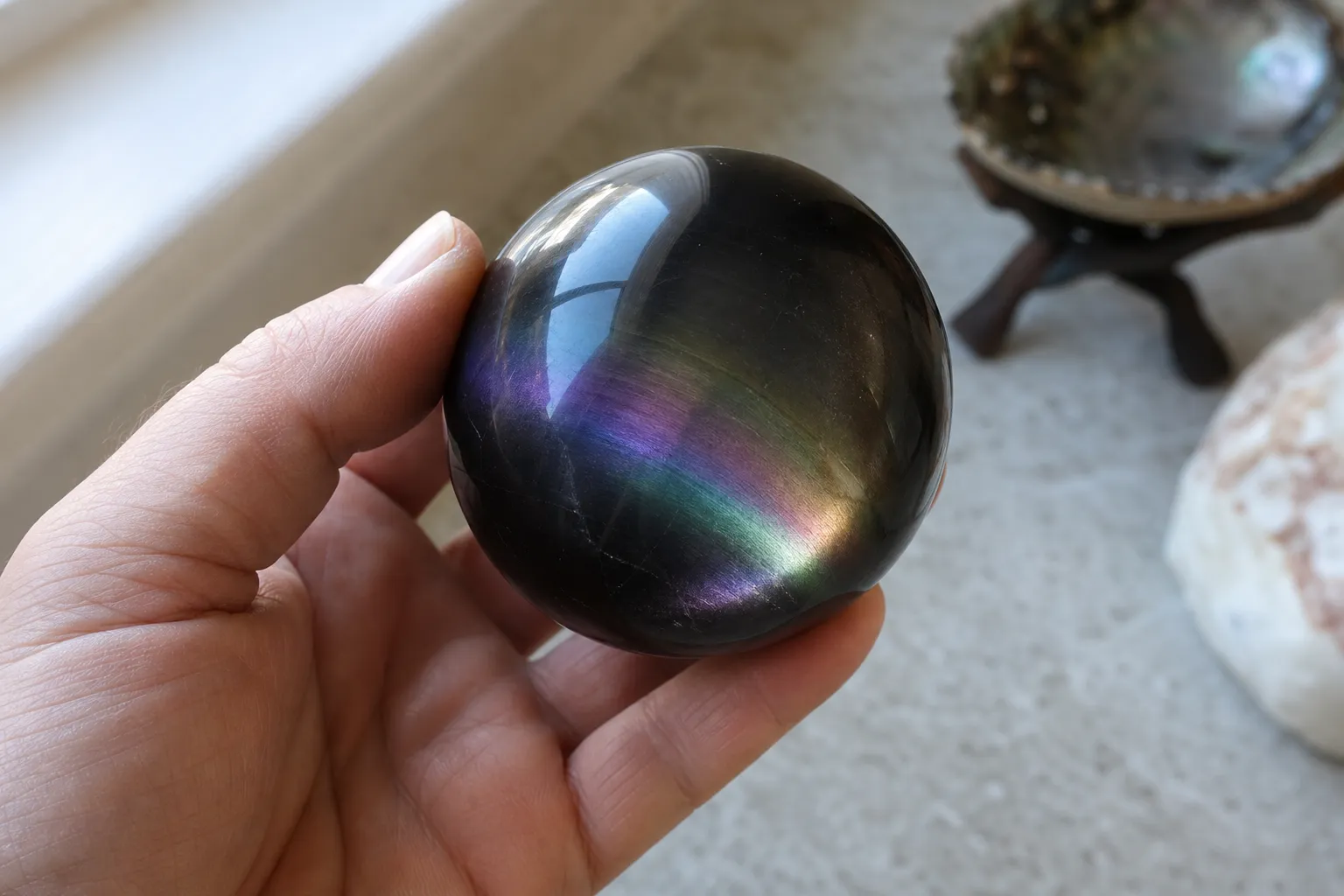
Rainbow and sheen change how a piece looks in the hand. Plain black obsidian may have a clean glassy luster, while rainbow obsidian can show bands, arcs, or shifting color when the surface turns under light. Sheen varieties may show golden, silver, greenish, or other reflective effects depending on cut, polish, and viewing angle.
That visual effect can raise collector interest because it gives the specimen more display appeal. A strong flash is easier to enjoy, easier to show, and easier to compare with other pieces. That is why sheen obsidian value often gets discussed as if the flash is the main price driver.
It is only one driver. A polished sphere with a clear rainbow band is not judged the same way as a small tumbled stone with one faint streak. A cabochon cut to reveal color may be more appealing than a chunk where the sheen is present but hard to find. Sheen can raise interest; it does not erase weak workmanship, chips, poor polish, or unclear naming.
How to Judge Obsidian Flash Quality
Start with the flash before the label. Do not rely only on words such as “rainbow,” “gold sheen,” or “silver sheen.” Turn the stone slowly under one light source and watch how the color appears, disappears, and moves across the surface.
Flash strength
Is the sheen bold at a normal viewing angle, or visible only when the piece is tilted sharply?
Color visibility
Can you see the rainbow or reflective color in ordinary room light, or only under a directed lamp?
Color spread
Does the effect cover a meaningful part of the surface, or only a small isolated patch?
Pattern appeal
Are the bands, arcs, or reflective areas balanced enough to display well?
Surface clarity
Does the polish let the flash show cleanly, or do scratches and haze break it up?
Flash strength is not only brightness. A narrow but vivid band may be more appealing than a broad, muddy reflection. A rainbow line that follows the curve of a sphere or cabochon can look more intentional than color that appears only near an edge. The useful question is not just “does it have sheen?” but “how well does this cut reveal it?”
Photos help, but they have limits. A seller can angle a piece under strong light to make a faint flash look dramatic. A poor photo can also understate a good piece. If you are judging online, look for multiple angles, neutral lighting, and at least one full-object image, not only the brightest close-up.
Other Price Factors That Matter
Rainbow obsidian price factors go beyond color. A piece with good sheen can still be less desirable if the polish is dull, the shape is awkward, or the condition is poor. A quieter piece may be more appealing if it is well cut, clean, and pleasant to handle.
Polish and value are closely connected because sheen depends on light moving across the surface. Hazy polish can make a good underlying effect look weak. Scratches may interrupt the flash. Uneven shaping can make a display piece feel unfinished.
Size and cut also need to be judged together. A larger piece is not automatically more desirable if the flash is scattered, dull, or poorly placed. A smaller cabochon or palm stone may show stronger color because the surface was oriented well. In practical collecting terms, the form should help the visible trait, not fight it.
Condition matters because obsidian is volcanic glass. Sharp edges and fracture marks may be expected on rough material, but damage on a polished piece affects how it displays. A small nick may not matter much on an inexpensive pocket stone. A chip across the main flash area matters more.
Seller Naming and Pricing Uncertainty
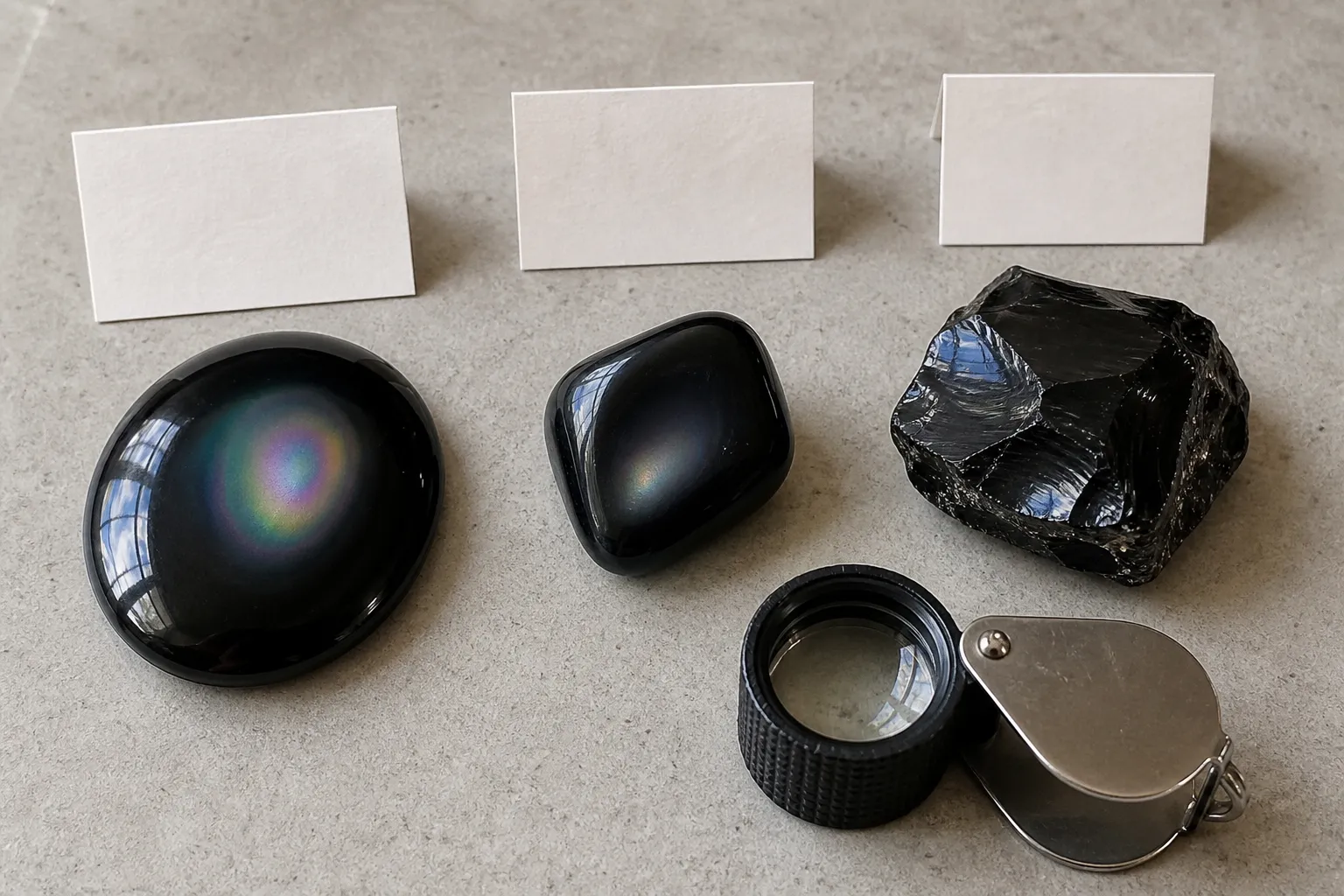
The tag is not the same as the value. Seller naming for obsidian can be loose, especially around rainbow, sheen, gold sheen, silver sheen, and mixed descriptive names. Some labels describe a clear visual feature. Others are shorthand for a piece that shows only a weak reflective effect.
That does not mean every seller label is wrong. It means the label should send you back to inspection. If a piece is called rainbow obsidian, look for actual color banding or rainbow-like flash. If it is called sheen obsidian, look for the reflective quality that justifies the name. If the photos or in-person view do not show the claimed feature, the name should not carry much weight.
Pricing uncertainty is part of the answer. Public, well-attributed evidence for exact rainbow or sheen premiums is limited, so it would be too strong to say that these features always increase price by a set amount. A better boundary is this: visible flash may increase desirability when the rest of the piece supports it.
Buyer demand also changes by setting. A display collector may care about dramatic flash. A lapidary buyer may care more about usable material and orientation. A casual buyer may respond to color, size, and presentation. Someone choosing a symbolic piece may prefer the look or personal meaning, but that preference is not a fixed market rule.
Use the label as a starting clue. Use the surface as the evidence.
When Rainbow or Sheen May Not Add Much
Rainbow or sheen may add little when the feature is weak, hidden, or poorly presented. A label cannot make a faint surface effect impressive. A high asking price also does not prove stronger collector value.
Be cautious when:
- The flash appears in only one seller photo and not in others.
- The color requires extreme lighting or a very narrow angle.
- The polish looks cloudy, scratched, or uneven.
- The piece has chips near the main display area.
- The variety name is more dramatic than the visible traits.
- The price depends only on “rainbow” or “sheen,” not on size, cut, condition, and presentation.
There is also a difference between personal appeal and resale value. You may reasonably pay more because the rainbow effect is beautiful to you. That is a collector preference, not a documented appraisal conclusion or a fixed pricing rule.
The safest buying approach is to compare similar pieces by visible traits: same general form, similar size, comparable polish, similar condition, and clearly shown flash. If one piece has stronger color visibility and the other factors are close, it may deserve more interest. If the flash is weak and the piece has damage, the label alone should not do the work.
A Simple Collector Check Before Paying More
Before paying extra for rainbow or sheen, ask five direct questions:
- Can I see the flash clearly without special lighting?
- Does the color or sheen cover an important part of the piece?
- Is the polish clean enough to show the effect well?
- Are chips, cracks, or scratches interrupting the main view?
- Does the asking price make sense beside similar size, cut, condition, and visual quality?
If the answer is mostly yes, rainbow or sheen can be a reasonable reason for greater interest. If the answer is mostly no, the variety name is doing more work than the stone.
For online purchases, ask for a short video or additional photos under ordinary lighting if the flash is the reason for the price. A moving view is often more useful than one dramatic still image because sheen changes as the surface turns. In person, rotate the piece slowly and check the main display side, edges, and damaged areas before deciding.
The measured answer stays the same: rainbow and sheen can make obsidian more desirable, and sometimes more valuable to the right buyer, but only when the flash is visible, attractive, well presented, and supported by polish, size, cut, condition, naming clarity, and demand. The surface gives the best clue; the label should not make the decision for you.