
Collector value guide
How Pattern Quality Changes Snowflake Obsidian Value
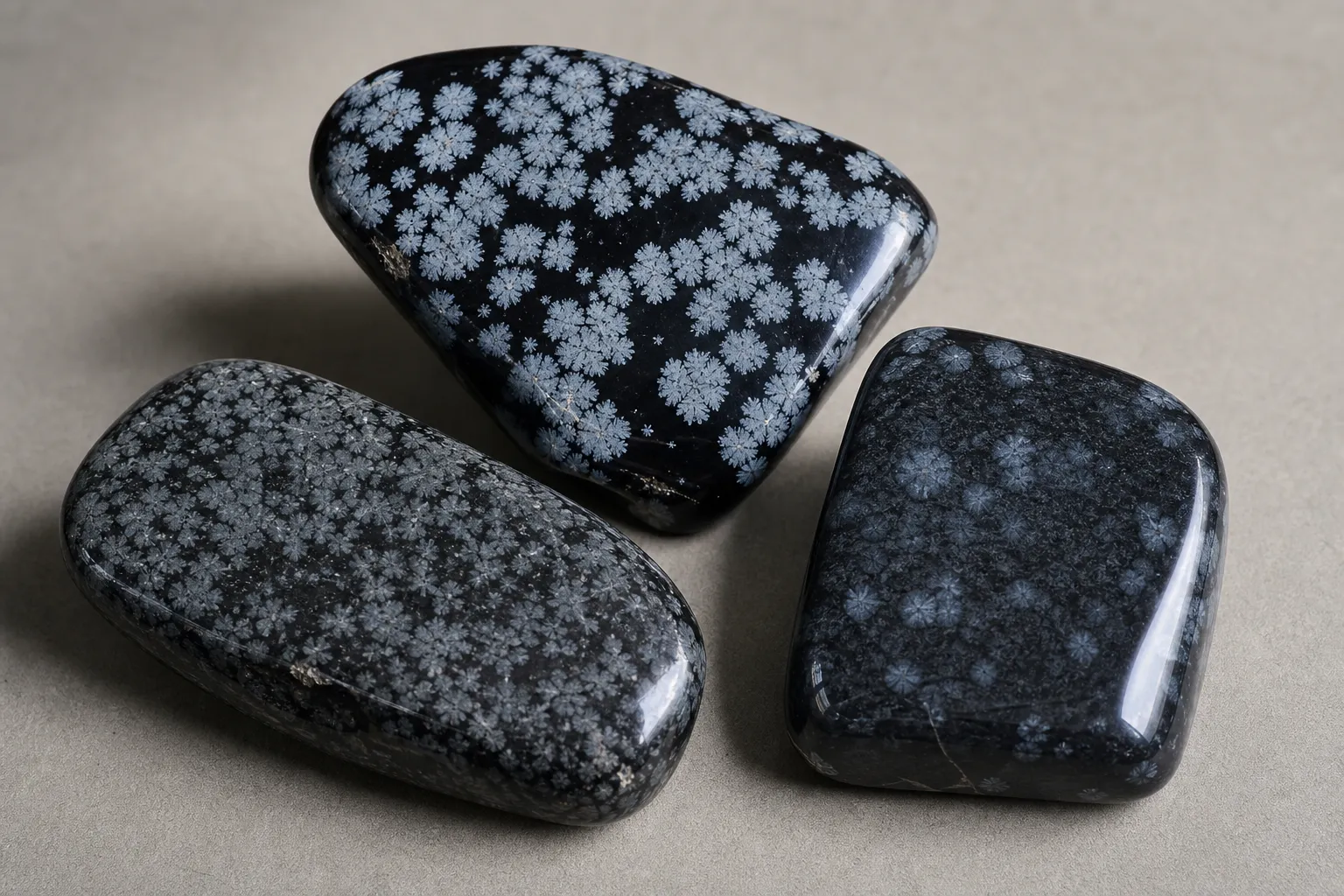
Snowflake obsidian value can shift with pattern quality, but pattern is not a pricing formula. A piece with clear contrast between the black glassy base and pale snowflake-like patches may have stronger collector appeal than one that looks muddy, crowded, chipped, or poorly polished. Still, the pattern is only one part of the object. Condition, polish, size, cutting or carving quality, seller transparency, and overall display appeal can matter just as much.
The better first question is not “Does it have more snowflakes?” It is “Do the visible markings make this particular piece more attractive?”
upward
Start with the broader guide
Use the broader guide first if you need the full scope before this page.
Start With What You Can See
Pattern quality in snowflake obsidian is mainly a visual judgment. There is no widely used public grading scale for this specific pattern, so it is more accurate to treat pattern as an appeal factor than as a fixed value rule.
A useful inspection starts with five questions
- Is there strong contrast between the black base and the pale patches?
- Do the pale areas read clearly as snowflake-like markings?
- Does the pattern feel balanced across the main viewing face?
- Is the polish smooth enough to show the contrast well?
- Do chips, scratches, bruises, or fractures distract from the display side?
A small piece with crisp markings, clean polish, and balanced placement may look more desirable than a larger piece with weak contrast or poor finishing. A bold pattern also does not make up for careless shaping or obvious damage. For many collectors, the strongest piece is the one where pattern, polish, shape, and condition work together.
That is why snowflake obsidian pattern value is best understood as perceived desirability, not a strict price equation.
Pattern Traits That May Improve Appeal
The most attractive snowflake obsidian pieces usually have a readable relationship between dark base and pale inclusions. The black glassy background gives the light patches room to stand out. If the surface looks gray, scuffed, cloudy, or poorly polished, the pattern can lose sharpness even when there are many pale areas.
Contrast also depends on finish and lighting. A glossy polish can make the dark areas look deeper and the pale areas more defined. A worn, matte, or scratched surface can flatten the effect. Photos may exaggerate contrast with bright light, wet-looking surfaces, or tight cropping, so one dramatic listing image should not carry the whole value claim.
Distribution
Distribution matters, but not in only one way. Some collectors prefer evenly spaced markings. Others like a dramatic cluster, a diagonal sweep, or a mostly black field with a few strong pale patches. The practical test is visual balance: does the pattern make the piece feel displayable, or does it fight the shape?
Placement
For cabochons, beads, palm stones, and carvings, placement can matter as much as the raw pattern. A good cut may put the strongest markings on the front face. A weaker cut may leave the best area on the edge, underside, or an awkward corner. In carvings, a pale patch can support the form or distract from it, depending on where it falls.
A simple test: step back from the piece. If the pattern still reads clearly at normal viewing distance, it likely has stronger display appeal than a piece whose details only work under close inspection.
When Pattern Does Not Add Much Value
A strong pattern can be weakened by the rest of the object. Chips and fractures matter because obsidian is glassy and can break with sharp-looking edges. A small mark on the back may matter less than a chip across the main face, but visible breaks usually reduce appeal.
Surface condition changes the answer too. A piece may have attractive pale patches, but if the polish is cloudy, uneven, pitted, or scratched, the pattern may not show well. For jewelry, cabochons, and handled stones, polish is part of the value impression, not a separate detail.
Size can also mislead buyers. A larger specimen gives more room for pattern, but it may also show more flaws. A small, clean, well-shaped piece can feel more refined than a larger item with weak contrast or rough finishing. For carved objects, workmanship may outweigh the pattern if the shaping is asymmetrical, crude, or poorly detailed.
Seller language can stretch expectations. Pattern names may describe appearance, shop style, or marketing preference; they are not the same as a formal grade. Terms such as “bold contrast,” “balanced pattern,” or “clean polish” are easier to inspect than broad claims about rarity or fixed worth.
A Short Inspection Path Before Paying More
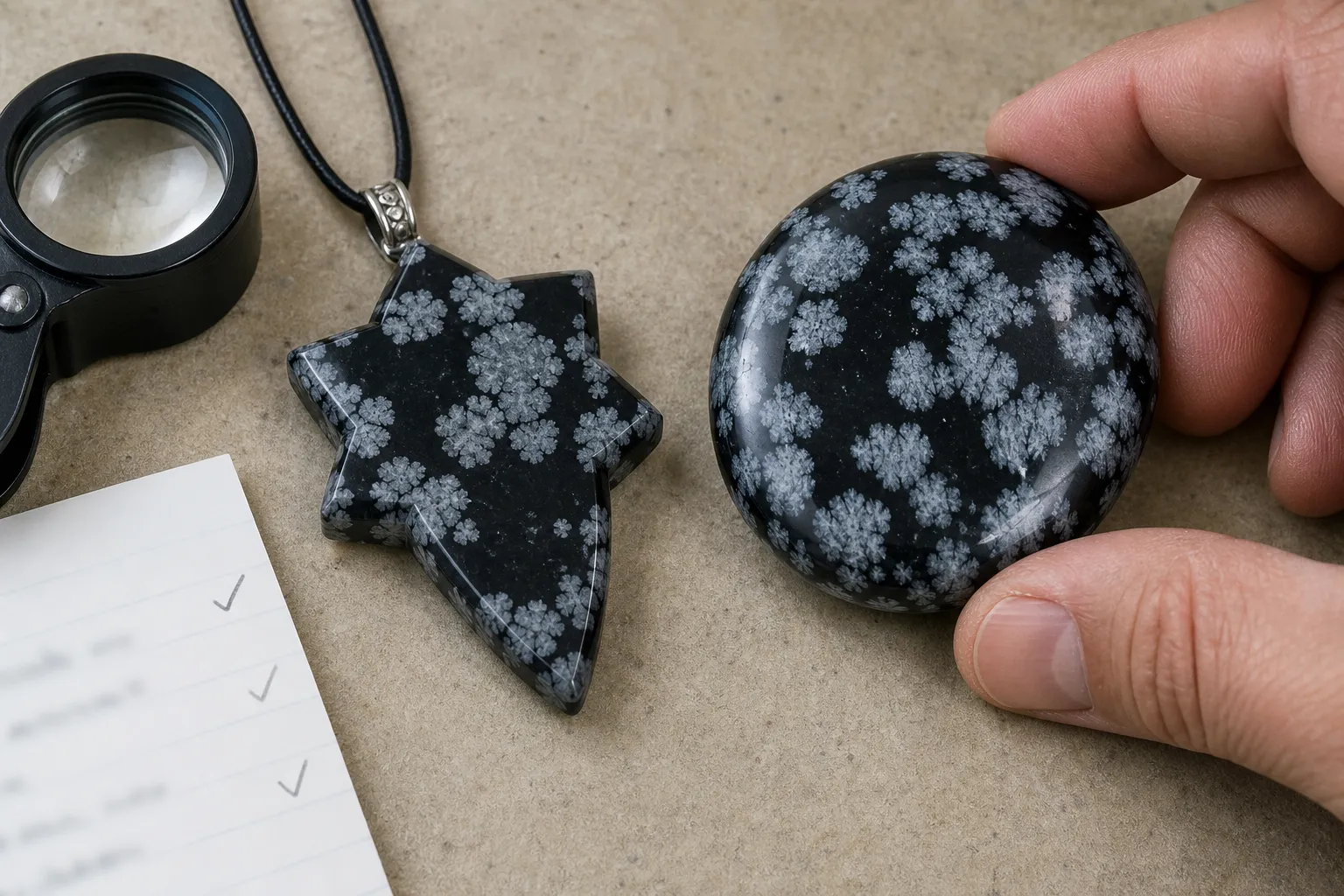
If a seller asks more because of pattern quality, look at the whole object before accepting the claim.
-
Check the main viewing face.
The strongest pattern should appear where the piece is meant to be seen: the front of a pendant, the dome of a cabochon, the face of a palm stone, or the display side of a specimen.
-
Compare it under normal light.
Bright lighting can make pale patches stand out. Ordinary room light gives a better sense of everyday display appeal.
-
Look for interruptions.
A fracture, chip, drill mark, flat spot, or dull patch across the main pattern may matter more than a small mark on the back.
-
Judge shape and finish together.
A balanced pattern loses appeal if the cut is awkward or the polish is poor. A modest pattern can still look good when the form is clean and the surface is well finished.
-
Read the wording closely.
A useful description separates visible traits from value claims. Inspectable details are more helpful than vague statements about rarity or rank.
This process does not produce a formal obsidian specimen value. It helps you decide whether the visible features support the asking price in a practical collector sense.
Common Confusion Around “Better” Patterns
Dense patterning is not always better.
A heavily marked piece can be attractive, but it can also look crowded if the black background nearly disappears. Many collectors respond to contrast: the eye needs enough dark field for the pale patches to stand out.
Symmetry is not required.
Snowflake obsidian does not need a perfectly even layout to have appeal. A natural scatter, dramatic cluster, or off-center field can still look strong if it suits the object’s shape.
Photo certainty is a trap.
Pattern quality can look different depending on lighting, polish, angle, cropping, and whether the surface has been dampened for photography. If the asking price depends heavily on pattern, multiple images are more useful than one close-up.
Seller labels are not fixed categories.
Seller labels can make ordinary visual differences sound like fixed categories. Descriptive names are not automatically a problem, but they should not be treated as proof of rarity, quality, or market position.
What This Page Can and Cannot Tell You
This page can help you inspect visible snowflake obsidian pattern quality. It cannot provide a formal appraisal, exact price band, rarity ranking, or universal rule about which arrangement is worth more. The available source packet for this draft did not include usable public references or transparent market data, so the answer should stay narrow.
A grounded conclusion is this: visible pattern quality may influence perceived snowflake obsidian value when it improves contrast, balance, polish presentation, and display appeal. It matters less when condition is poor, workmanship is weak, photos are unclear, or the seller turns a visual description into an unsupported market claim.
For a collector, the best next step is simple. Compare the pattern with the whole object, not with a slogan. A strong snowflake pattern matters most when the piece is cleanly finished, honestly described, and attractive in ordinary viewing conditions.
FAQ
Does more snowflake pattern mean higher value?
Not automatically. More pale pattern can look interesting, but it may also reduce contrast if the black background nearly disappears. Balance, polish, condition, and placement matter more than the number of markings alone.
Is a rare-looking pattern enough to justify a higher price?
Only if the rest of the object supports the claim. A striking pattern can improve buyer appeal, but damage, weak polish, poor carving, unclear photos, or vague seller wording can reduce confidence.
What should I check first in a listing photo?
Start with the main viewing face. Look for clear contrast, readable pale patches, clean polish, and visible damage. If the price depends on pattern quality, ask for more than one angle under normal light.
Can pattern quality prove the piece is valuable?
No. Pattern quality can support perceived value, but it does not prove market value by itself. Treat it as one visible factor alongside condition, workmanship, size, provenance, and seller transparency.
Pattern Value Lens
- Pattern is an appeal factor, not a fixed grade.
- Contrast matters only when the surface and finish support it.
- Placement matters most on the main viewing face.
- Damage, weak polish, and vague seller wording can outweigh a bold pattern.