Shopping label check
Natural Obsidian vs Glass Obsidian Labels When Shopping
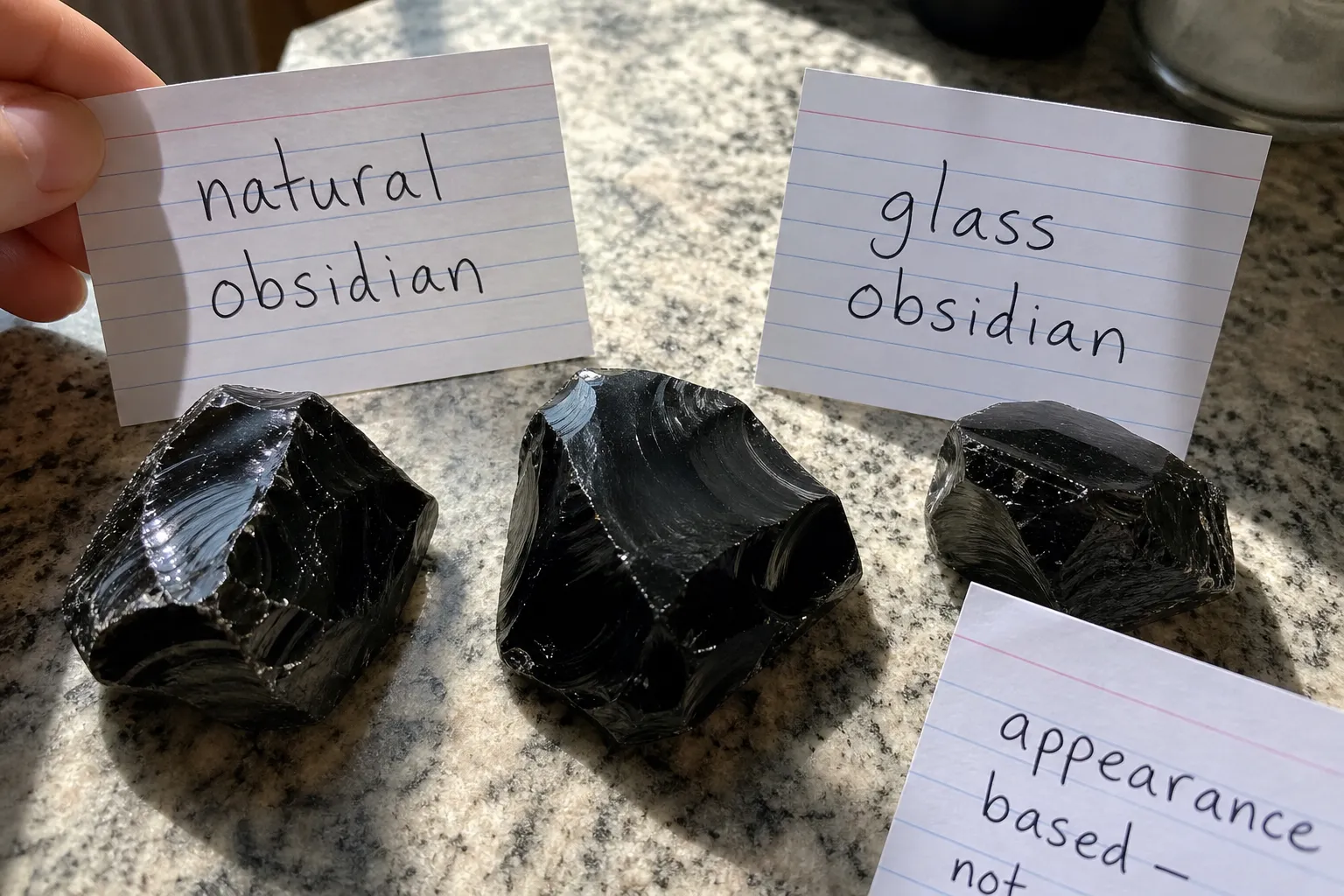
A glossy black surface can make a listing look convincing, but the label is only a first clue. A natural obsidian vs glass obsidian label tells you how the seller is framing the item: natural volcanic glass, manufactured glass, or an appearance-based shop term that needs clarification. It does not identify the material by itself.
For shopping, the useful move is simple: read the exact wording, inspect the photos, ask what the seller means by “natural” or “glass,” and check the return option before treating the piece as identified. If the item is expensive, rare-looking, or tied to a specific origin claim, a title alone is too thin. Ask for better evidence or choose a clearer listing.
upward
Start with the broader guide
Use the broader guide first if you need the full scope before this page.
What the Label Can Tell You
A natural obsidian label usually means the seller is presenting the piece as obsidian formed in nature rather than ordinary manufactured glass. That is a material claim, not proof. A careful listing should support it with clear photos, plain wording, and direct answers to material questions.
A glass obsidian label is less settled. In geology, obsidian is often described as volcanic glass. In marketplace wording, “glass” can also mean manufactured glass, decorative glass, or a vague substitute. The word needs its sentence.
That is why obsidian listing labels need interpretation. “Natural obsidian,” “volcanic glass,” “black glass,” “glass obsidian,” and “obsidian-style glass” do not carry the same weight. Some phrases describe material; others describe appearance. The difference matters when you are deciding whether a listing belongs in a collection tray or is simply attractive.
A label can tell you what to ask next. It cannot finish the identification.
Read the Wording Like a Collector
Separate material from appearance
Start by separating “natural obsidian” from “obsidian-like.” A natural obsidian listing should be able to say, in ordinary terms, that the item is being sold as natural volcanic material. If the wording circles around appearance with phrases such as “obsidian look,” “glass stone,” or “black crystal style,” treat the material identity as uncertain.
Give “glass” its sentence
Then look at how the seller uses “glass.” If the description says “volcanic glass,” the wording may be describing obsidian’s material nature. If it says only “glass,” “style,” or “look,” the listing may be describing a visual effect rather than a natural specimen.
Check named traits
Variety names need the same caution. Snowflake, rainbow, mahogany, sheen, and similar labels are useful only when the photos show the visible trait being named. A variety name without a pattern, color band, reflective effect, or clear disclosure is a weak clue.
Keep origin claims limited
Origin claims should also stay in their lane. A location can be interesting for collecting, but it is easy to type into a listing and harder for a shopper to verify from photos. Use it as a question, not a conclusion.
Sort the listing into three groups: clear enough to consider, unclear enough to question, or too vague for the price.
Photo Clues That Help the Label
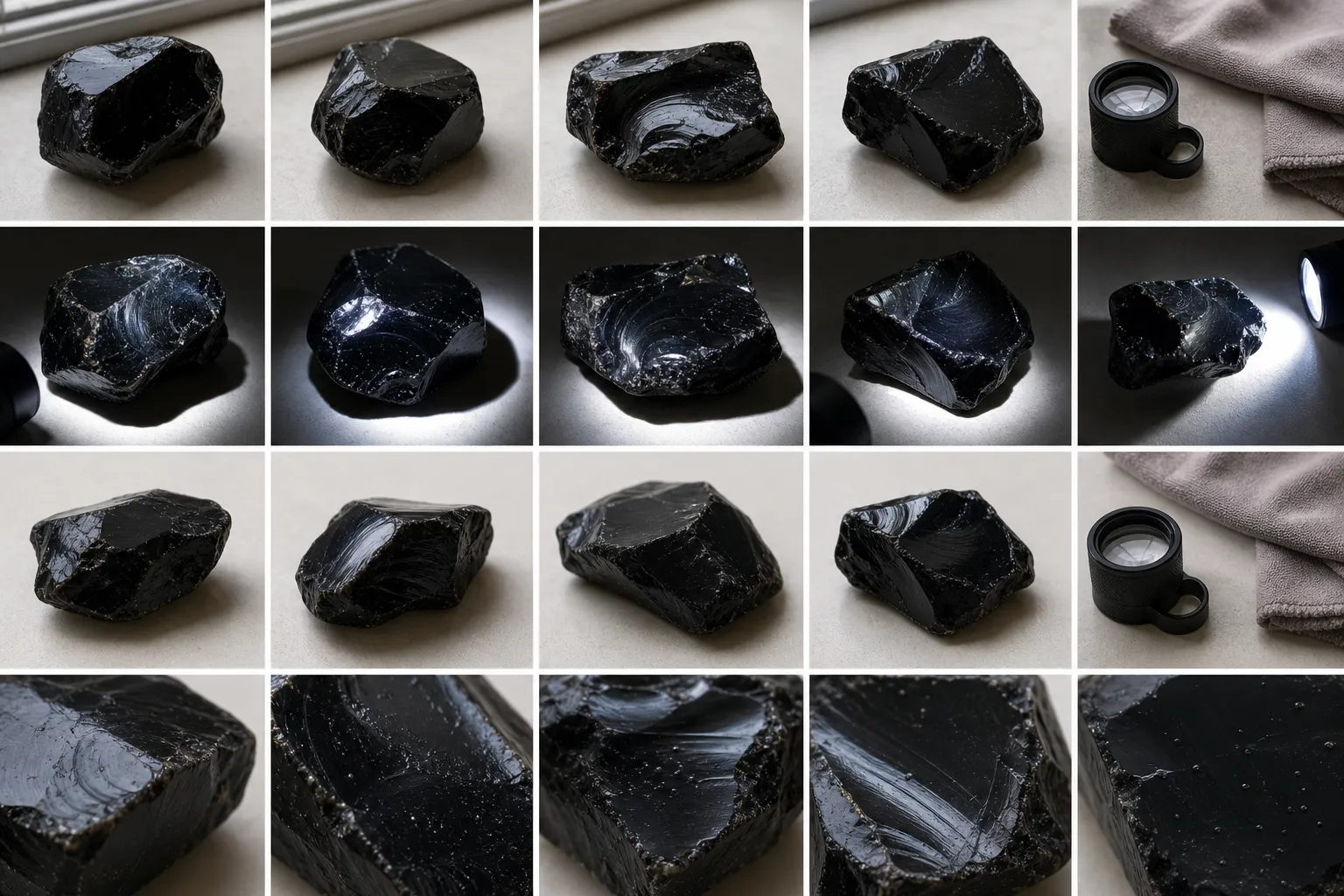
Photos cannot identify a specimen on their own, but they can make a label more or less believable. Start with the surface. A piece presented as obsidian should show a glassy luster, but shine is not unique to natural material. Manufactured glass can shine too. Luster supports the conversation; it does not close it.
If the listing claims a named variety, the visible trait should be visible. A snowflake piece should show the pale pattern that gives the name meaning. A sheen variety should show its reflective effect under angled light. A mahogany piece should show brown, reddish, or darker contrast rather than a plain black surface with an ambitious title.
Edges and chips can help when the seller includes close photos. A fracture edge, rounded tumble, or polished face may show how the object was shaped and handled. Still, lighting, polish, image compression, and scale can hide details that matter.
Form changes what you can inspect. A tiny bead, carved figure, palm stone, and raw chunk do not show the same evidence. Beads and carvings may hide natural surfaces. Polished pieces can make material clues look smoother. Raw pieces may show more texture, but also more shadow and broken edges.
If the photo set is blurry, heavily filtered, or limited to one glamour image, the natural obsidian label is not well supported. Ask before buying.
Questions to Ask Before You Rely on the Label
A careful seller should be able to answer simple material questions without turning the reply into a sales pitch. You do not need a debate; you need clarity.
- Is this being sold as natural obsidian, manufactured glass, or an obsidian-style decorative item?
- What does the glass obsidian label mean in this listing?
- Are the photos of the exact piece I will receive?
- Can you provide a close photo in natural light and another at an angle?
- Is there a return option if the item does not match the description?
- For a higher-value piece, is any independent assessment available?
These questions focus on listing evidence instead of guesswork. Many ordinary collector pieces are not sold with formal analysis, but the seller should still be able to explain the wording used in the listing.
If the answer changes from message to message, the label becomes less useful. If the seller avoids the material question and only repeats attractive phrases, treat the listing as uncertain. If the piece is inexpensive and you simply like the appearance, that may be enough for a decorative purchase. If you are buying it as natural obsidian, uncertainty should affect the decision.
Common Confusion Around “Natural” and “Glass”
The most common confusion is thinking “glass” always means manufactured glass. Obsidian is volcanic glass, so the word can be part of an accurate description. The problem is that marketplace labels are not always written with geological precision. “Glass” might be accurate, vague, or a sign that the item is not being presented as natural obsidian.
Another confusion is assuming “natural” means untouched. A natural obsidian label can still apply to a piece that has been cut, tumbled, polished, drilled, or carved. “Natural” usually speaks to the material, not the shape. If form matters, read for words such as raw, tumbled, polished, carved, or bead.
Color is also easy to over-read. Black is common in obsidian shopping labels, but black glossy material should not be accepted on color alone. A dramatic sheen or pattern should be checked against the actual photos, not just the title. The visible trait should carry the variety name.
Symbolic wording belongs in a separate box. Sellers may attach cultural, personal, or shop-language meanings to obsidian, but those meanings do not identify the material. If your question is natural versus manufactured glass, stay with visible traits, disclosure, and return terms.
The label is a shopping clue. The object still needs inspection.
When the Label Is Not Enough
Some listings deserve a stricter standard. If the price is high, the variety name is unusual, the origin claim matters, or the piece is meant for a serious collection, a short title is not enough. Ask for better photos, clearer disclosure, and any available documentation. If the seller cannot provide it, decide whether the uncertainty fits the purchase.
Photo-only judgment has a hard limit. Lighting can flatten sheen, hide banding, exaggerate color, or make polished surfaces look more uniform than they are. Listing photos may show the best angle rather than the most informative angle. A confident title cannot repair weak images.
Return terms matter because shopping labels can remain ambiguous even after reasonable inspection. A clear return option gives you room to compare the received piece with the description. No-return listings are not automatically wrong, but they shift more uncertainty onto the buyer.
For rare, costly, or collection-defining purchases, independent assessment may be the better path. Not every small tumbled stone needs that step. The level of evidence should rise with the price and the claim.
A Short Decision Path for Shoppers
If the listing says “natural obsidian”
If the listing says “natural obsidian” and shows clear, consistent photos, read the description for material wording and form details. If the seller explains the item plainly and offers reasonable return terms, the label is usable as part of your buying decision.
If the listing says “glass obsidian”
If the listing says “glass obsidian,” pause. Check whether the seller means volcanic glass or decorative glass. If the phrase is not explained, ask. If the answer stays unclear, do not treat the piece as confirmed natural obsidian.
If the title says “obsidian” but the description is appearance-based
If the title uses “obsidian” but the description only says “glass,” “style,” “look,” or similar appearance-based wording, treat it as uncertain unless the seller clarifies. The safer reading is that the listing is describing a look, not confirming a material.
If photos or answers stay weak
If the photos are poor, the variety name is unsupported, or the seller avoids direct questions, step back. There are many attractive pieces available; a confusing label does not need to become your problem.
Buy the evidence you can inspect, not just the word in the title.
Bottom Line
Natural versus glass obsidian labels are useful only when they are backed by clear wording, visible traits, seller disclosure, and a purchase path that leaves room for uncertainty. “Natural obsidian” is a claim to check. “Glass obsidian” is a phrase to clarify. Neither label identifies a piece from a title alone.
Before buying, look for the glassy surface, the named visible trait, the quality of the photos, and the seller’s willingness to explain the wording. If the listing stays vague, keep the decision modest or choose a clearer piece.