
Obsidian care
How to Dry Obsidian After Cleaning Without Water Spots
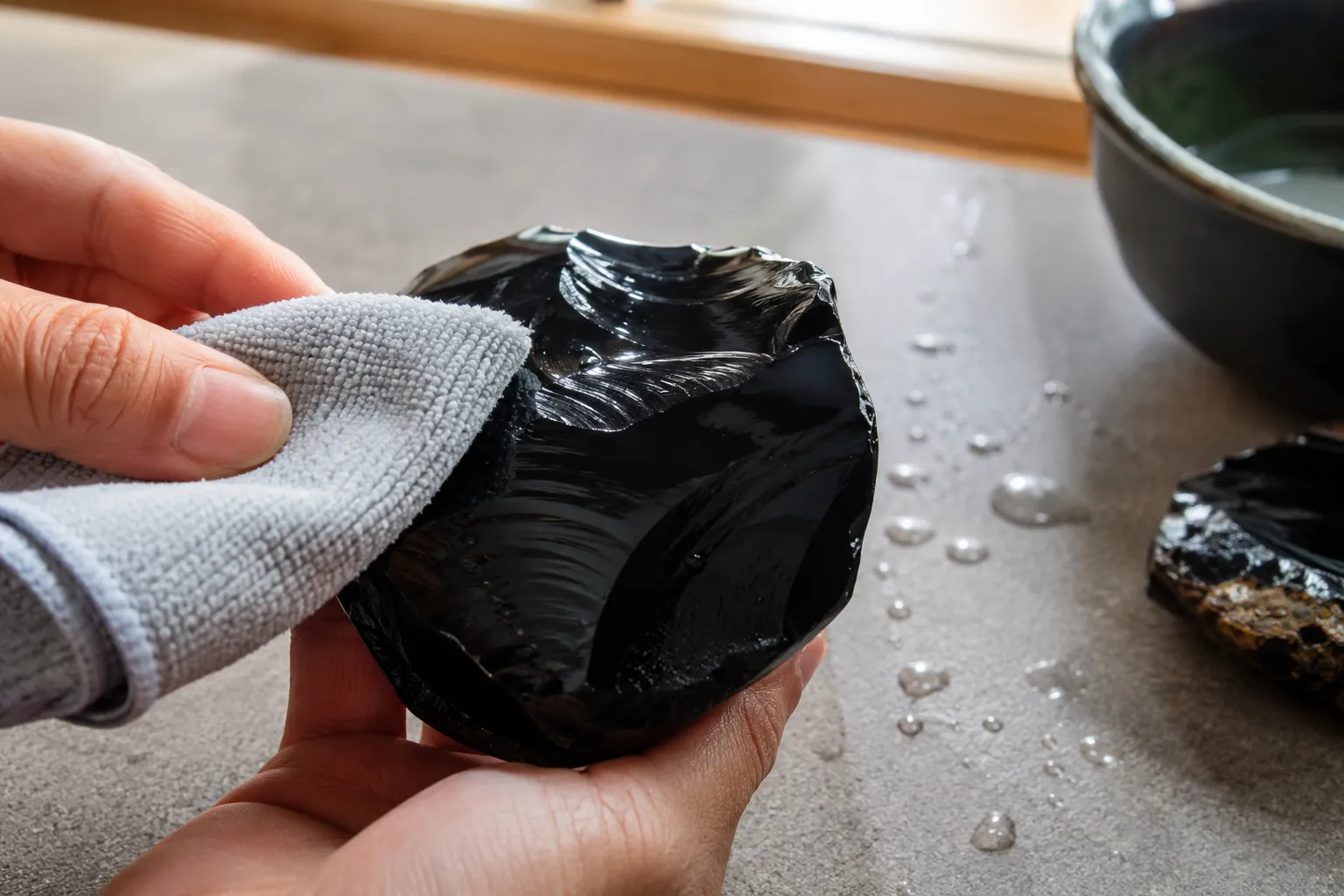
A polished obsidian face shows dried droplets quickly. To dry obsidian after cleaning, remove standing water right away, then wipe the whole piece with a clean, dry microfiber cloth or another soft dry rag. Do not leave it to air-dry if you are trying to avoid visible water spots.
If your tap water often leaves chalky marks on glassware or tiles, a brief final rinse with distilled water can reduce new mineral residue before drying. It helps in that specific situation; it does not guarantee a flawless surface.
upward
Start with the broader guide
Use the broader guide first if you need the full scope before this page.
The Short Answer
Obsidian is volcanic glass, and a glossy surface makes residue easy to see. The practical sequence is simple: rinse only as needed, shake off or blot excess water, dry the piece completely with a soft cloth, then check it under bright indirect light.
If marks remain, do not assume the drying step failed. A white haze or cloudy line may be hard-water minerals, soap film, dust in tiny pits, polish haze, weathering, or a small scratch. Dry promptly, inspect carefully, and treat the mark as a clue.
Why Water Spots Show Up
Water spots are often mineral residue left behind as hard water evaporates. That mechanism is not unique to obsidian, but it matters on a polished black or glassy piece because the contrast is easy to notice.
Obsidian’s collector appeal comes partly from that glassy luster. The same surface that catches light also shows streaks, dried droplets, and thin film. Small pits, fracture lines, drilled holes, or weathered areas can hold moisture a little longer than the open polished face.
The drying step is not a treatment for the stone. It is a way to keep water from drying in place and leaving visible residue.
A Simple Drying Sequence
For a cleaned polished piece, keep the process plain.
1. Remove water as soon as washing is done.
Do not leave the piece wet on a towel, sink ledge, or drying rack if your goal is a clean-looking finish.
2. Use a soft, dry microfiber cloth.
Wipe gently until no water remains. If the specimen has a fresh fracture edge, handle it with care; obsidian can have sharp edges.
3. Dry the back, edges, holes, and settings.
Moisture left around a drilled hole, wire wrap, cord, adhesive, or metal setting can move back onto the polished face.
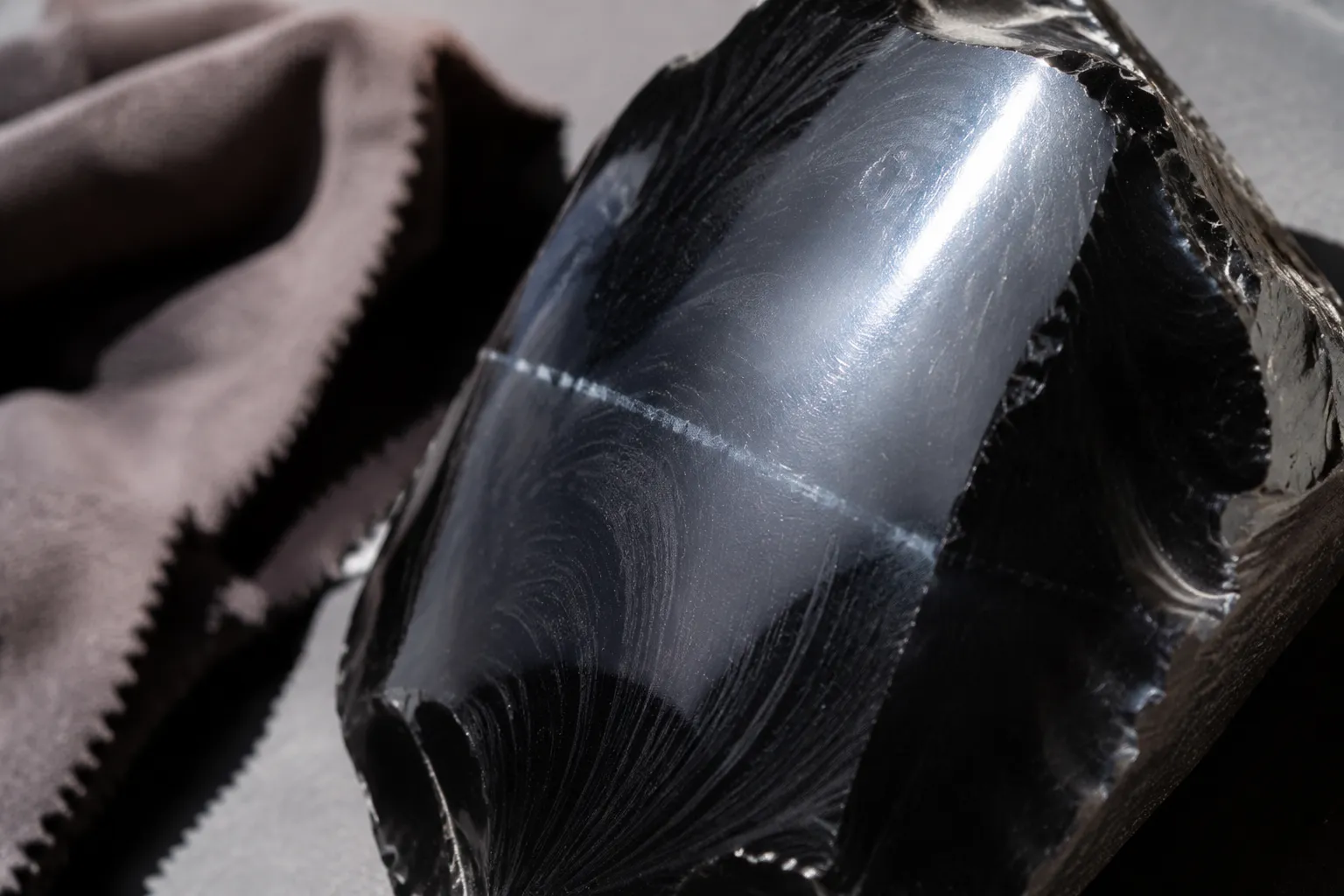
4. Inspect under bright indirect light.
Daylight near a window or a small flashlight at an angle makes streaks, residue, haze, and scratches easier to separate.
5. Use distilled water only when spotting repeats.
If tap water keeps leaving marks, try a quick distilled-water final rinse next time, then dry immediately.
The collector goal is narrow: dry completely, then verify the surface before storing the piece.
What Changes the Answer
Hard water
If your local water leaves pale marks on dishes, air-drying obsidian is more likely to leave visible residue. Drying immediately matters more.
Surface finish
A tumbled or high-polish piece will reveal streaks faster than a rough, weathered, or naturally matte area. The mark may be more visible on the glossiest face, even when the same residue is present elsewhere.
Jewelry construction
Drilled beads, wire-wrapped pendants, glued pieces, and metal settings can trap water in places the cloth does not reach at first. Dry the construction as well as the stone.
Condition
A smooth palm stone and a freshly broken specimen do not feel the same in the hand. The drying method stays gentle, but raw or broken edges deserve slower handling.
If Marks Remain After Drying
A mark after drying is not always a water spot. That is the common misunderstanding.
Possible causes include:
- hard-water mineral residue
- leftover soap film
- dust held in tiny pits or fractures
- polish haze
- small scratches
- natural weathering or surface wear
Wipe the area again with a clean dry cloth and rotate the piece under light. If the mark moves or fades, it was probably on top of the surface. If it stays in the same place and angle, it may be caught in texture or already part of the finish.
Drying reduces new spotting. It cannot correct every old mark, scratch, or polish issue.
What Not to Reach For
Do not turn a simple drying problem into a countertop stain project. Vinegar, baking soda paste, CLR, alcohol sprays, abrasive pads, steam cleaners, ultrasonic cleaners, long soaking, and poultices are not good default answers for drying obsidian after washing.
Abrasives are the clearest concern. A polished glassy surface can pick up dulling or fine scratches from gritty cloths or rough pads, and those marks may stand out more than the original spot.
Long soaking is also a poor fit here. It adds more water to remove and can leave more residue around holes, settings, cords, or surface texture.
Keep the answer small: dry with a soft cloth, inspect under light, and adjust the rinse water only if recurring hard-water spots are the issue.
A Practical Collector Check
Before putting the piece away, check three places.
Main face
Look across the main polished face for streaks or chalky marks.
Edges and construction
Inspect edges, drilled holes, and settings for trapped moisture.
Light angle
Rotate the piece under light to see whether the mark sits on the surface or stays fixed in the finish.
If the stone still looks dull after a careful dry wipe, more drying probably will not help. Separate residue from polish wear before trying anything stronger.
For polished obsidian, that final check is the useful part. Dry the surface, change the light angle, and judge what is actually visible.
Bottom Line
To dry obsidian after cleaning without water spots, remove water immediately, wipe the whole piece with a soft dry microfiber cloth or clean dry rag, and do not rely on air-drying. Check the polished surface under bright indirect light before storing it.
If hard water keeps leaving pale residue, use a brief distilled-water final rinse next time, then dry right away. If marks remain, treat them as possible residue, soap film, dust, polish haze, surface texture, or existing wear rather than assuming the stone is still wet.