
Formation time
How Long Does Obsidian Take to Form
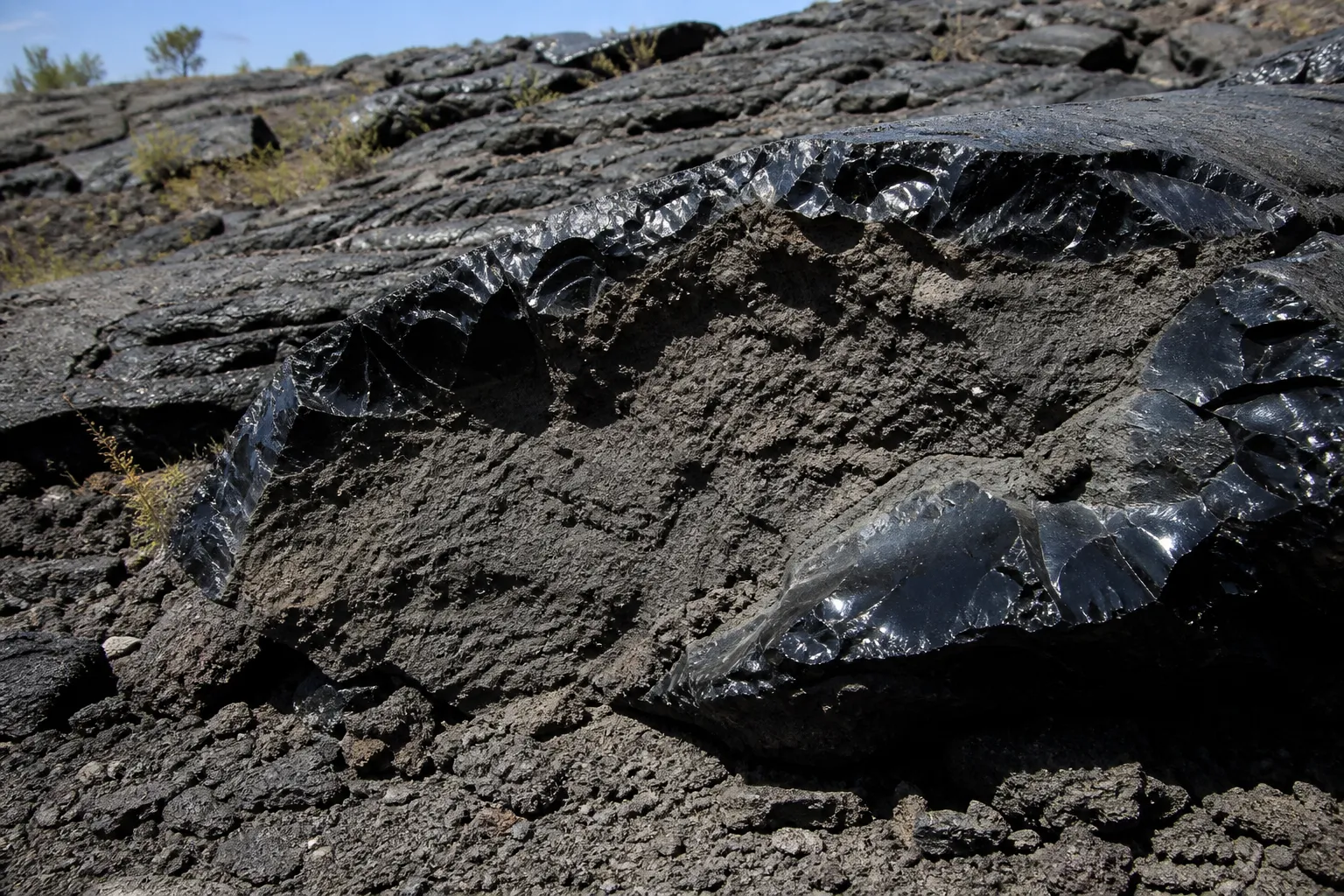
Obsidian can begin forming very quickly when silica-rich lava is cooled fast enough to become glass instead of developing visible crystals. At a thin lava edge, splash, fragment, or outer flow surface in contact with cold air, water, wet ground, or ice, a glassy chilled margin may form within minutes.
That does not mean a whole lava flow cools in minutes. A thick obsidian flow, dome, or interior can stay hot much longer, and its cooling history depends on thickness, temperature, chemistry, gas content, fracturing, and how efficiently heat escapes.
So the practical answer to how long does obsidian take to form is:
The glassy surface of obsidian can form fast under rapid quenching conditions, but the full lava body cools on a longer, variable timescale.
upward
Read the full overview first
Use the broader guide first if you need the full scope before this page.
The short answer depends on what you mean by “form”
Collectors often use one question to mean several different things:
A glassy skin or chilled margin
It can form rapidly, sometimes within minutes when quenching is strong.
A hand-sized piece from the edge of a flow
The outside may become glassy quickly while the interior loses heat more slowly.
A thick lava flow or dome
It can remain hot far longer; there is no single universal cooling time.
A polished collector piece
The volcanic glass formed first; cutting, tumbling, polishing, or natural breakage happened later.
This distinction matters because obsidian is not a crystal slowly growing over long geologic time. It is natural volcanic glass. The key moment is when molten material cools so quickly that atoms do not have enough time to arrange into a regular mineral crystal structure.
That fast cooling is why many obsidian pieces look smooth, glossy, and dark, with no obvious grains. But the rapid formation of a glassy outer surface and the full cooling of a lava body are not the same event.
Why obsidian can form so fast
Obsidian is usually associated with silica-rich volcanic material, commonly rhyolitic or dacitic in composition. High-silica lava is viscous, so it moves less freely than many low-silica lavas. When that kind of molten material loses heat fast enough, it can become glass before visible mineral crystals have time to grow.
A simple cooling-rate comparison helps:
- Slow cooling gives crystals more time to grow.
- Moderate cooling may produce crystals too small to see easily.
- Very rapid cooling can suppress crystal growth enough to make volcanic glass.
That is the basic reason obsidian has few visible crystals. The lava did not need millions of years to become obsidian. It needed suitable chemistry and a fast enough cooling rate.
The fastest glass formation happens at contact zones: the edge of a flow, the outer rind of a fragment, or a margin pressed against colder surroundings. Water, ice, wet sediment, or cooler air can draw heat away quickly. In those places, lava cooling into obsidian may happen at the surface while deeper material remains hot.
This is why “obsidian forming in minutes” is useful only as a narrow example. It can describe a rapidly quenched glassy margin. It should not be treated as a fixed rule for every obsidian deposit.
Surface glass is not the same as whole-flow cooling
A thick obsidian lava body does not cool evenly. The outside loses heat first. The center is insulated by surrounding hot rock and may cool much more slowly.
Think of it as a crust-and-interior problem. The outer rind can become glassy while the inside is still hot enough to deform, release gas, or continue changing texture. Studies of rhyolitic obsidian flows show strong differences between cooling near margins and cooling deeper inside thicker bodies.
For a beginner collector, the important point is straightforward:
Obsidian formation can be fast at the chilled edge, while the volcanic body that produced it has a longer thermal history.
That is why one number is misleading. The answer changes depending on whether the obsidian came from:
- a thin lava edge;
- a flow surface exposed to air;
- a fragment quenched by water;
- a thick rhyolitic lava flow;
- a dome or flow interior;
- a broken, mixed, or reworked volcanic deposit.
The cooling medium matters too. Lava exposed to water or ice can lose heat faster than lava insulated inside a thick flow. Thickness, eruption temperature, gas content, fractures, and ground conditions all affect how quickly glass forms and how long heat remains.
What rapid cooling can leave visible in a specimen
The timing question is not just background geology. It helps explain features collectors often notice in obsidian.
Glassy surface
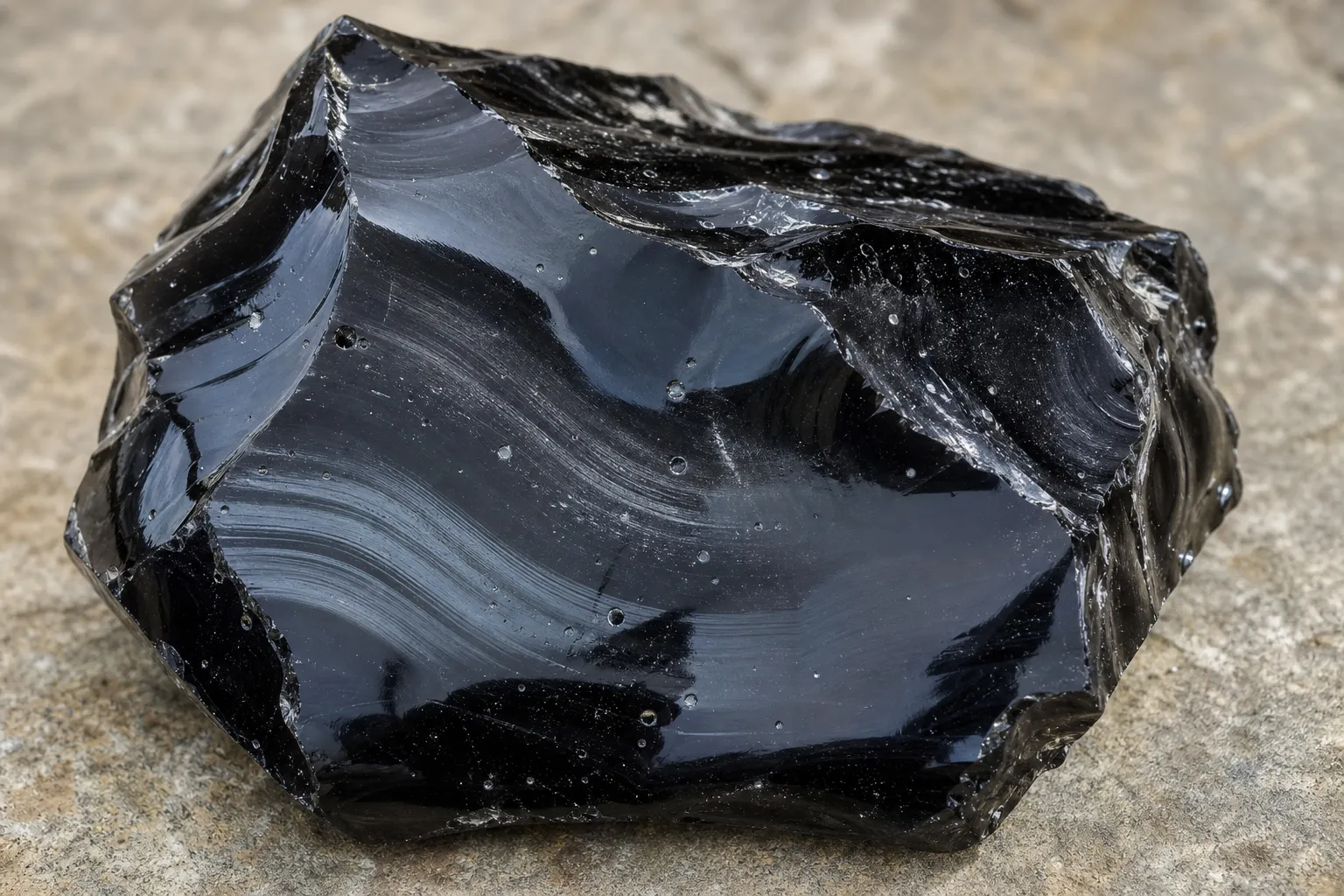
A smooth, glossy surface is the most obvious clue. Obsidian’s glassy appearance comes from its non-crystalline structure. A polished piece may look extra shiny because of lapidary work, but the underlying glassy nature comes from rapid cooling.
Lack of obvious crystals
Most obsidian does not show the grainy crystal pattern seen in rocks such as granite. Rapid quenching limited crystal growth.
Still, “no obvious crystals” does not mean the material is perfectly featureless. Some obsidian contains microlites, tiny bubbles, bands, or later textures that are not easy to interpret without magnification or lab work.
Conchoidal fracture
Freshly broken obsidian often shows curved, shell-like fracture surfaces. This is called conchoidal fracture. It is common in glassy materials because the break can travel through the material without large crystal grains redirecting it.
For collectors, this feature is useful to recognize. It also explains why raw chips and fresh breaks can have extremely sharp edges. Store broken pieces so they do not scrape other stones or fingers.
Flow bands
Some obsidian shows bands, streaks, or folded-looking layers. These can relate to movement, deformation, tiny bubbles or crystals, and changing textures within viscous magma.
Flow bands are not simply painted stripes or polish marks. In natural obsidian, they may record motion and texture changes while the molten material was moving and cooling. They do not provide a stopwatch answer, but they do show that the history was more complex than “lava touched air and instantly froze.”
Bubbles and vesicles
Small bubbles or vesicles can appear where gas was trapped, stretched, collapsed, or partly preserved. Some obsidian is dense and nearly bubble-free; other pieces show scattered bubbles or frothy zones.
Bubbles do not prove an exact formation time. They show that cooling, degassing, and deformation were happening together.
Common misunderstandings about obsidian formation time
“Obsidian forms over millions of years”
Obsidian deposits can be very old, but the glass itself forms by rapid cooling. It is not a slow-growing crystal in the usual collector sense.
Over long periods, obsidian can also change after formation through hydration, cracking, or devitrification. Those later changes are different from the initial creation of volcanic glass.
“Any lava can cool into obsidian”
Not every lava makes obsidian. Obsidian is most commonly linked with silica-rich volcanic material. Many lavas cool into other volcanic rocks because their chemistry, temperature, gas content, and cooling setting are different.
“If it cooled fast, the whole rock formed instantly”
The outside may become glassy quickly, while the interior cools more slowly. A specimen can preserve both a fast-quench surface and signs of a longer cooling or deformation history.
“Named varieties always mean separate formation times”
Variety names can distract from the basic timing question. Snowflake obsidian, for example, is commonly described as obsidian that later developed pale spherulitic patterns as the glass partly changed texture. Rainbow-like effects are often discussed in collector language in relation to microscopic structures and light interaction.
Those visual examples are useful, but they do not replace the central answer: the volcanic glass formed rapidly, while later or finer-scale features may have their own histories.
A careful collector answer
If you need a concise version for a label, note card, or collection journal, use wording like this:
Obsidian is volcanic glass formed when silica-rich lava cools so quickly that visible crystals do not have time to grow. A chilled glassy margin can form within minutes under rapid quenching conditions, but a thick lava flow or dome cools internally over a longer, variable timescale.
That wording avoids the main mistake: turning “fast enough to make glass” into one universal number.
If you are looking at a specimen, connect the timing question to what is visible. Glassy luster, lack of obvious grains, conchoidal fracture, flow bands, and bubbles all fit the story of rapid cooling and volcanic movement. They do not, by themselves, tell you exactly how many minutes, days, or months the original lava body took to cool.
Brief answers to related questions
How long does obsidian take to cool?
A thin glassy margin can cool quickly, but a thick flow or dome cools unevenly and much more slowly inside. “Cooling” is broader than “forming a glassy surface,” so the surface-versus-interior distinction matters.
How long does obsidian take to mine?
That is a mining or game-mechanics question, not a natural formation question. In geology, obsidian forms from rapidly cooled silica-rich lava. Extraction time depends on the deposit, tools, rules, access, and setting.
How long does obsidian last?
Natural obsidian can persist for long periods, but it is not perfectly unchanged forever. Over geologic time it may hydrate, crack, or devitrify. For a collector piece kept dry, stable, and protected from hard knocks, the more immediate concern is chipping rather than rapid decay.