
Collector answer
Does Obsidian Form Above Ground or Underground
Obsidian usually forms above ground or very near the surface when silica-rich volcanic melt cools so quickly that it becomes natural glass rather than a visibly crystalline rock. So if you are asking, “does obsidian form above ground,” the practical answer is: mostly yes, in surface or near-surface volcanic settings.
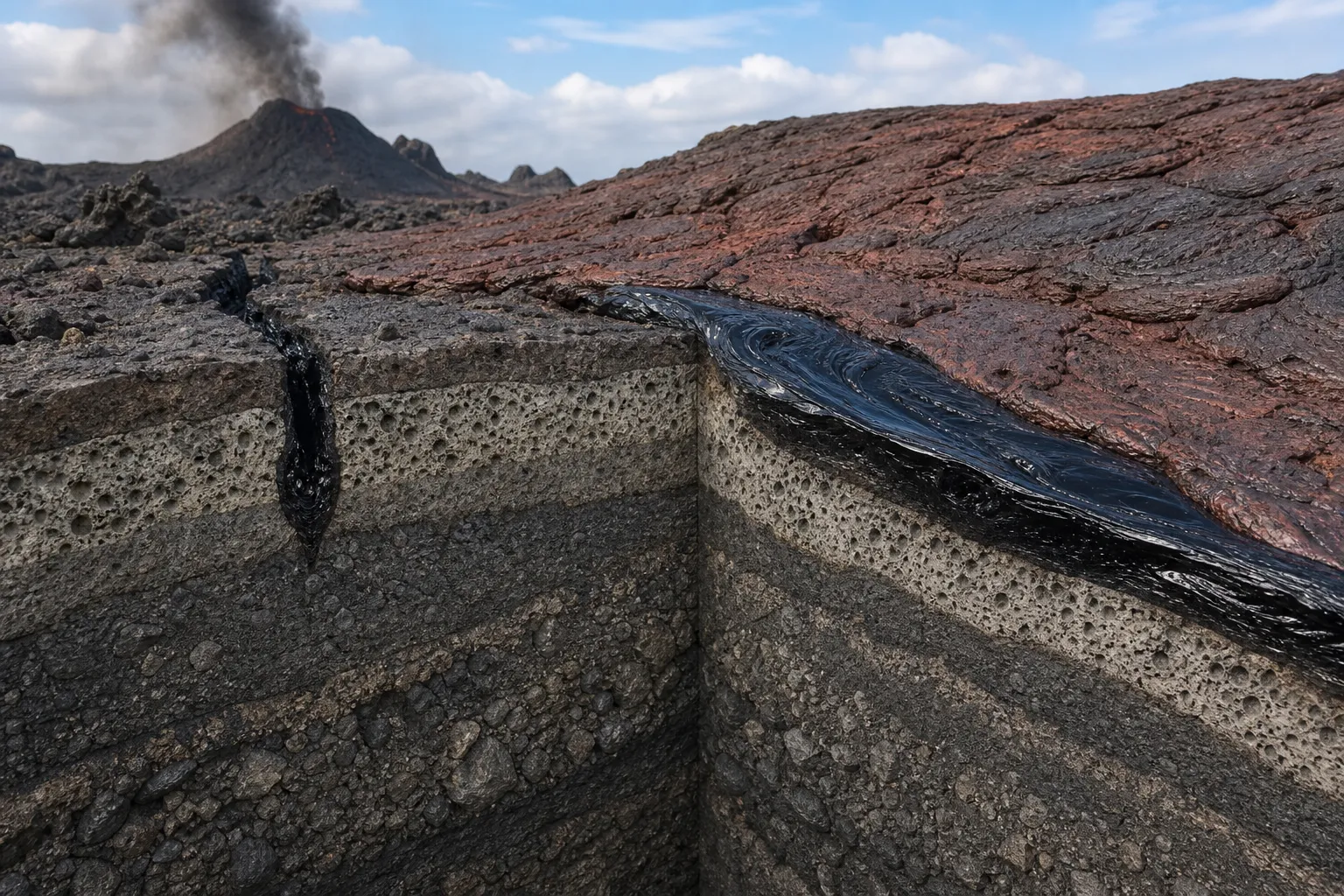
There is one important nuance. Some obsidian can form shallow underground near volcanic vents or fractures, where magma is squeezed into narrow spaces and chills into glassy layers or lenses. That is still a near-surface volcanic setting, not the same as a deep crystal pocket or a slow-cooled granite body.
Practical takeaway
Mostly surface or near-surface formation, with a shallow vent-fracture exception.
upward
Start with the broader guide
Use the broader guide first if you need the full scope before this page.
The short collector answer
For a collector, the cleanest wording is:
Obsidian forms from rapidly chilled, silica-rich volcanic melt, usually at or near Earth’s surface, with some shallow subsurface formation near volcanic vents.
That sentence avoids two common mistakes. Obsidian is not always just the skin of an exposed lava flow, but it also is not a deep-grown crystal. Its glassy character comes from molten material cooling in conditions where large mineral crystals do not have time to develop.
The terminology can make this confusing:
- Lava is molten rock after it reaches the surface.
- Magma is molten rock while it is still underground.
- Obsidian is natural volcanic glass produced when that melt chills quickly enough.
A surface obsidian flow is the straightforward above-ground case. A vent-fracture layer is the shallow underground exception.
What forms obsidian?
Obsidian forms when silica-rich molten rock cools rapidly and solidifies as glass. In many igneous rocks, atoms have time to arrange into visible mineral crystals. In obsidian, that process is largely interrupted, so the finished material is glassy.
A few conditions help explain why:
- Fast cooling limits crystal growth.
- High silica content makes the melt thick and sluggish.
- Near-surface placement lets heat escape much faster than it would deep underground.
- Gas behavior affects whether the material becomes dense glass, bubbly zones, pumiceous textures, or mixed layers.
This is why obsidian is often described as an extrusive volcanic glass when it forms from erupted lava. Still, that label should not be used so rigidly that it ignores shallow vent and fracture settings.
If you are holding a polished black obsidian palm stone, a rough nodule, or a slab with flow bands, you are not holding a crystal that grew slowly in a cavity. You are holding volcanic glass from a fast-chilling volcanic environment.
What “underground” means here
“Underground” can mean very different things. For obsidian, the depth matters.
Obsidian can form below the ground surface where silica-rich magma moves through volcanic vents, cracks, or narrow fractures. In that setting, it may form seams, layers, or lens-like glassy bodies. But this is still shallow and volcanic, tied to eruption pathways or near-surface magma movement.
That is different from granite. Granite is an intrusive igneous rock that cools slowly at depth, giving minerals time to grow into visible interlocking crystals. Obsidian takes the opposite path: it chills quickly and remains glassy.
Obsidian
- Usual setting: Surface or near-surface volcanic setting
- Cooling style: Rapid chilling
- Texture: Glassy, often without visible crystals
- Common confusion: Sold with “crystals,” though it is mainly volcanic glass
Granite
- Usual setting: Deep underground intrusive setting
- Cooling style: Slow cooling
- Texture: Visible interlocking crystals
- Common confusion: Sometimes used as the deep-cooling contrast
So “does obsidian form underground?” should not be answered with a flat no. A better answer is: yes, in some shallow volcanic settings near vents or fractures, but not as a deep slow-cooled crystal rock.
Why obsidian looks glassy
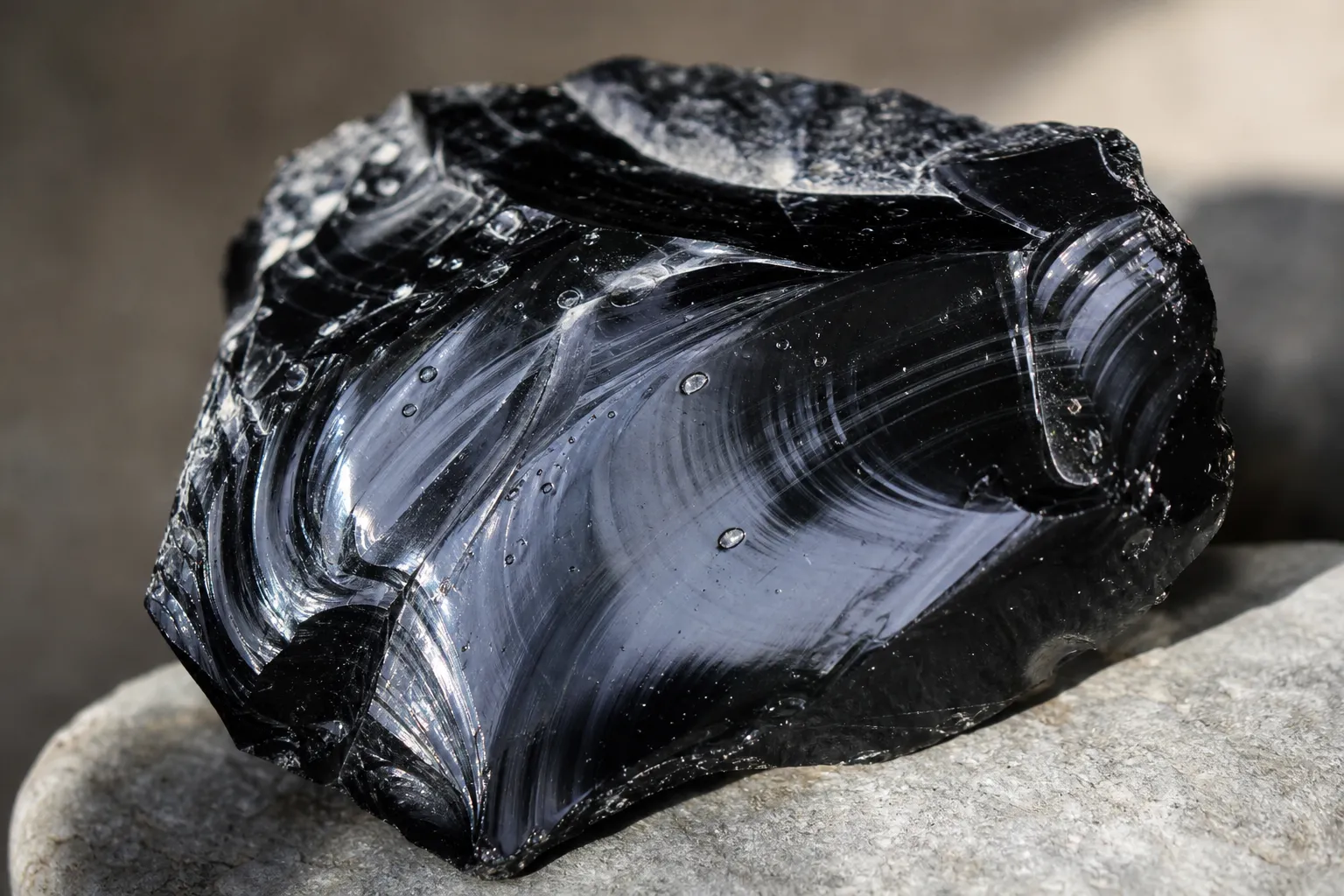
The glassy look of obsidian is not just a polish. Even rough obsidian often breaks with smooth, curved surfaces because the material itself is volcanic glass.
Cooling rate is the key. When molten rock cools slowly, crystals can grow. When it chills quickly, the structure freezes into a glassy state before large crystals form. That is why obsidian may look glossy black, smoky, brown, greenish, banded, or translucent along thin edges without showing the grainy texture of many rocks.
High silica also matters. Silica-rich lava is usually viscous, so it can preserve stretched bubbles, bands, folds, and flow lines as it moves and cools. Those features are useful clues to its volcanic-glass story, but they are not a simple depth label.
Visible traits you may notice
- Glassy luster on fresh breaks or polished faces
- Conchoidal fracture, meaning smooth, curved breaks like glass
- Flow lines or bands from movement and texture differences in the melt
- Small bubbles or bubble trails from gas behavior
- Sheen from microscopic inclusions or flattened internal features, depending on the variety
- Snowflake-like patches from devitrification, where volcanic glass changes over time and crystalline material develops within it
These traits can help you understand why the stone looks the way it does. They cannot, by themselves, prove exact locality, formation depth, authenticity, or value.
Common misunderstandings
Obsidian sits between familiar categories, so the confusion is understandable. It is a rock, but it looks like glass. It is sold in crystal shops, but it is not a crystal in the strict mineral-growth sense. It comes from volcanoes, but it may not look like the bubbly “lava rock” many people picture.
The main distinctions are simple.
Obsidian is natural glass, not ordinary manufactured glass.
“Volcanic glass” means the glassy texture formed naturally from volcanic melt.
Obsidian is usually denser than pumice or scoria.
Gas content, degassing, viscosity, and cooling conditions control whether a volcanic material becomes compact glass, bubbly glass, pumice, scoria, or mixed textures.
Obsidian is not a deep-grown crystal.
It may contain tiny crystals, inclusions, bubbles, or later crystalline patches, but the main material is glassy volcanic material.
Variety names do not prove formation depth.
Snowflake, sheen, rainbow, mahogany, and similar names usually describe appearance or trade categories. A band, sheen, or color pattern does not automatically mean the piece formed underground or above ground.
A small handling note for rough obsidian
Obsidian breaks like glass, and fresh edges can be very sharp. A polished piece may feel smooth, but chipped corners, flakes, and rough fragments can still cut skin. Handle broken or rough pieces carefully, and store sharp fragments so they do not scrape softer stones.
That sharp fracture is part of the same material story: obsidian’s glassy structure affects both how it looks and how it breaks.
Bottom line
Obsidian forms mostly above ground or very near the surface from rapidly chilled silica-rich lava or volcanic melt. The main exception is shallow underground formation near volcanic vents or fractures, where magma can chill into glassy layers or lenses.
It should not be pictured as a crystal growing slowly in a deep pocket. Obsidian is volcanic glass. Its luster, flow lines, bubbles, sheen, curved fracture, and occasional devitrification textures fit that origin, but appearance alone cannot prove the exact source or formation depth of a specimen.