
Collector light check
Is Obsidian Transparent, Translucent, or Opaque
Obsidian is usually opaque-looking in ordinary hand specimens, especially when it is black, thick, tumbled, carved, or polished. More precisely, obsidian can range from opaque to translucent depending on thickness, color density, surface condition, inclusions, and lighting.
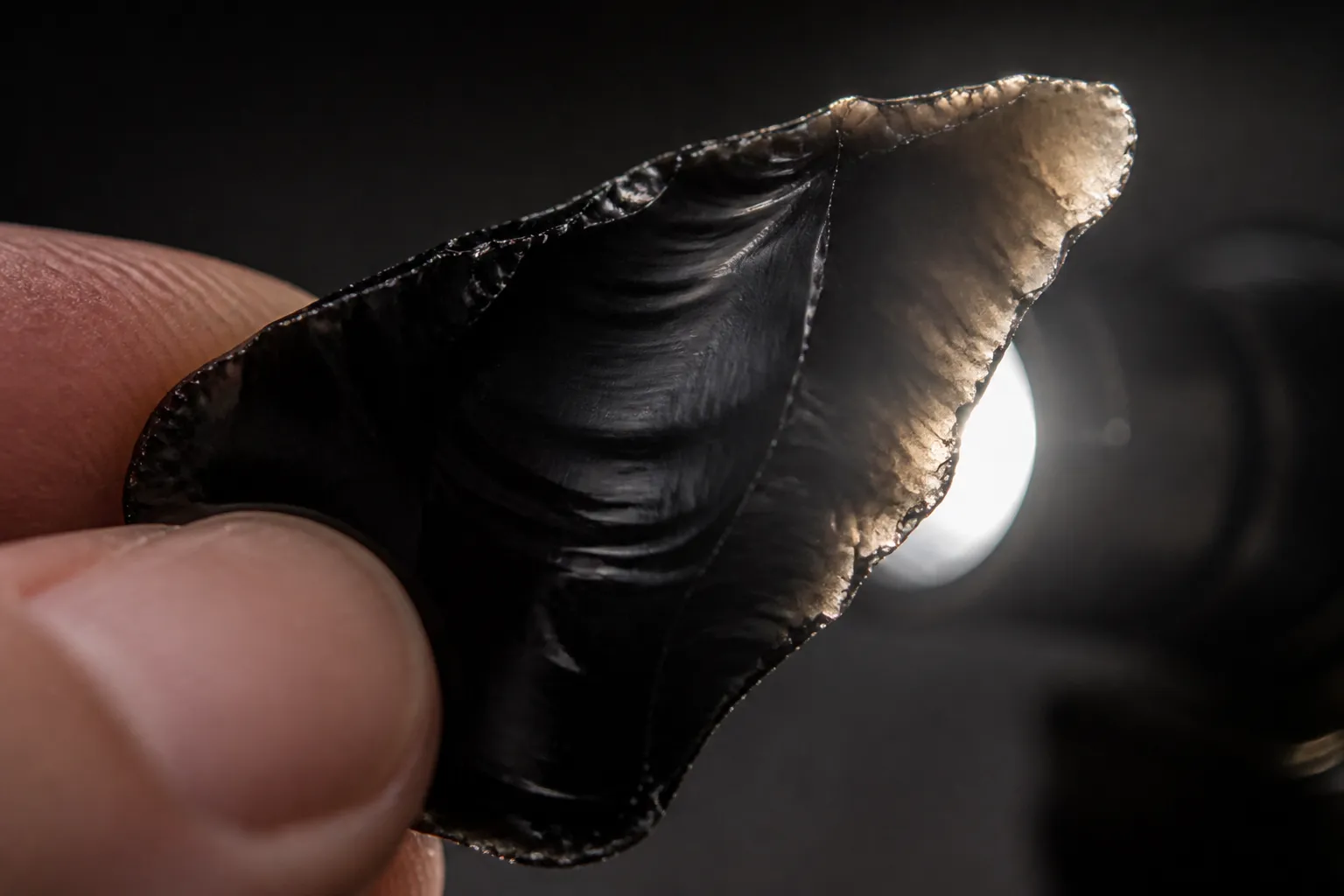
It is not normally transparent in the clear-window sense. For collectors, obsidian translucency is most often seen at thin edges, chips, bead holes, rims, small nodules, or very thin sections held against a bright window or flashlight.
So a black piece can look solid and light-blocking on a table, then show a smoky edge glow when strong light passes through a thin area.
upward
Start with the broader guide
Use the broader guide first if you need the full scope before this page.
Transparent, translucent, and opaque: the practical difference
Transparent
Light passes through clearly enough to see detail.
This is not the normal appearance of natural obsidian specimens.
Translucent
Some light passes through, but detail is blurred, darkened, or not visible.
This is commonly possible at thin edges, chips, small nodules, or thin sections.
Opaque
Light does not visibly pass through in ordinary viewing.
This is common for thick black obsidian pieces.
Obsidian is natural volcanic glass formed from rapidly cooled silica-rich lava. It is known for a glassy texture and conchoidal fracture—the curved, shell-like break seen in many glassy materials. Those traits help explain the mixed answer: the same material can look like a dark solid in one form and like smoky glass at a thin edge.
The key boundary is simple: opaque-looking does not automatically mean “not obsidian,” and a translucent edge does not automatically identify a piece as obsidian. Light behavior is a useful observation, not a final identification test.
What black obsidian looks like in light
When collectors hold black obsidian up to a window or flashlight, they usually see one of three things.
The whole piece stays dark.
A thick tumble, sphere, bead, carving, or palm stone may appear fully opaque because the light path through the material is too long and the color is too dense. This is why many people describe black obsidian as opaque.
A thin rim or chip lets some light through.
This is usually not clear transparency. It may appear as a faint smoky, brownish, grayish, or dark greenish glow, depending on the piece and the light source. Treat those colors as observation language, not a guaranteed feature of every specimen.
A small rounded nodule looks more translucent.
Small obsidian nodules often discussed by collectors as Apache tears can show more visible translucency than a large black chunk. Even then, thickness, polish, surface wear, and internal variation still matter.
A useful collector phrase
Black obsidian is often visually opaque as an object, while thin parts of the same material may be translucent.
Why obsidian can look opaque even though it is glass
“Glass” does not always mean clear. Glass can be dark, reflective, cloudy, scratched, included, or thick enough to block visible light. Obsidian is volcanic glass, not ordinary clear window glass.
Several visible factors affect whether light passes through:
- Thickness: The biggest practical factor. A thin flake edge may transmit light; a thick tumble may not.
- Color density: Black, dark brown, or dark green material can absorb enough light to look opaque.
- Shape: Spheres, beads, carvings, and palm stones give light a longer path through the object than a thin chip does.
- Surface polish: A polished surface can reflect glare and make the stone look darker. A scratched or weathered surface can scatter light.
- Inclusions and internal texture: Snowflake, mahogany, sheen, and rainbow obsidian are named for visible effects or material features, but those names do not create one fixed translucency rule.
- Lighting strength and angle: Room light may show nothing. A bright window or flashlight may reveal a thin-edge glow.
That is why two descriptions can both be fair: one person says “my black obsidian is opaque,” while another says “my obsidian chip is translucent at the edge.” They may simply be looking at different thicknesses.
How to check obsidian translucency without damaging the piece
A light check can help you describe what you see, as long as you keep the result narrow.
Hold the piece near a bright window or place a flashlight behind the thinnest existing edge. Look at rims, chips, bead holes, or naturally thin areas rather than the thick center. If the piece is polished, rotate it slightly so glare does not hide the edge.
Do not break a specimen just to create a thin edge. Broken obsidian can have sharp glass-like edges because of conchoidal fracture, and damaging a collectible piece for a light check is rarely worth it. Avoid pressing chips or flakes against your skin while inspecting them.
It is also better not to use scratch tests on valued, carved, polished, or collectible pieces. Scratching is destructive, and common online shortcuts—weight, temperature, bubbles, or a single beam of light—do not settle the identity of a piece on their own.
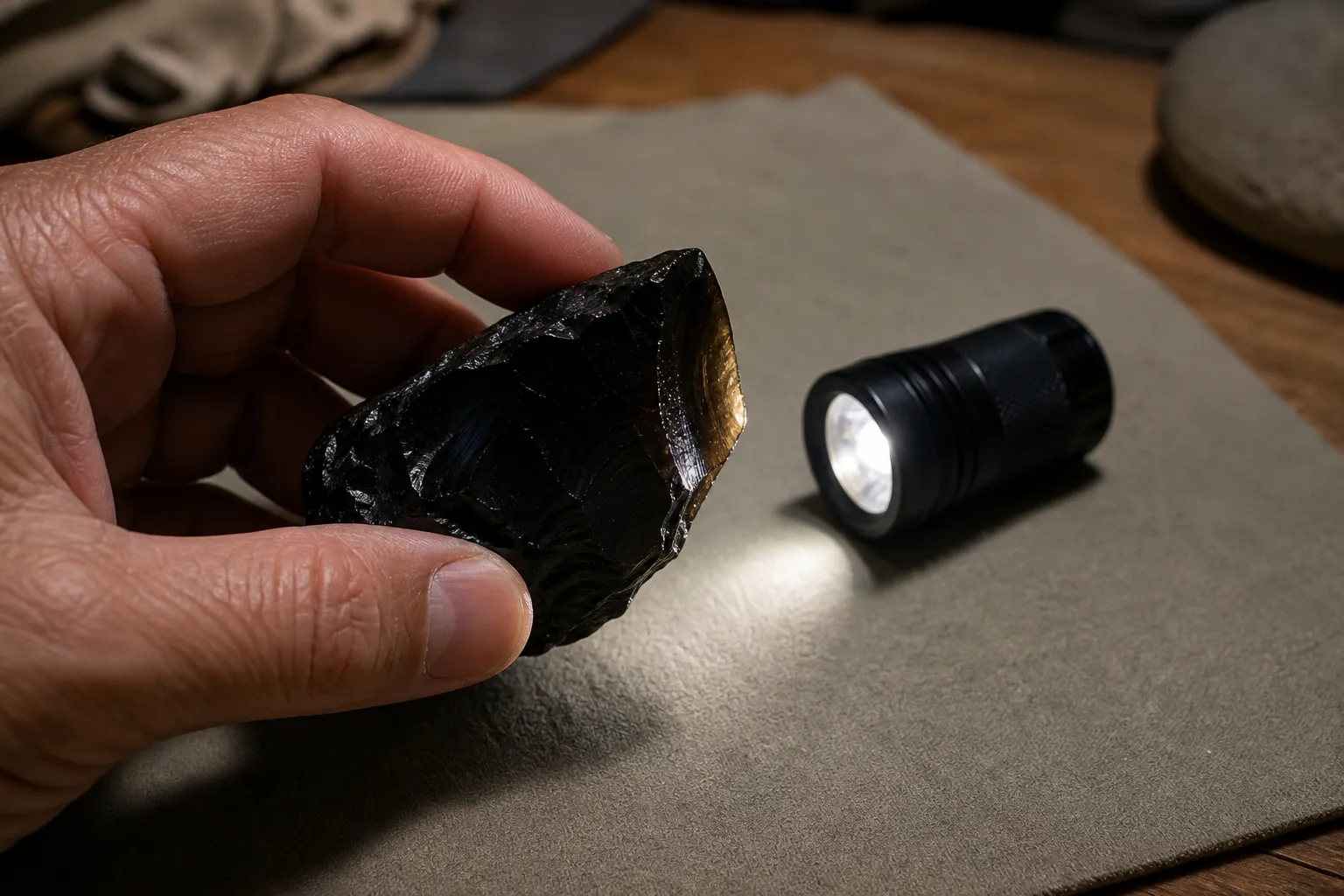
A simple observation routine is enough
- Look at the piece in normal room light.
- Note whether the main body appears opaque or partly light-passing.
- Hold only existing thin edges, rims, or bead holes to a bright light.
- Describe the result plainly: “opaque-looking,” “translucent at the edge,” or “no visible light through this piece.”
- Avoid turning the result into a final real-versus-fake decision.
Is “transparent obsidian” something collectors should expect?
Usually, no. In ordinary collector language, natural obsidian should not be expected to look transparent like clear glass. Some specimens, chips, nodules, or thin sections may transmit light, but “transparent obsidian” is a label that needs careful reading.
If a seller calls a dark piece “transparent” because it glows only at the edge, translucent is usually the more accurate word. If an item is brightly colored and fully clear, the label deserves extra caution, because manufactured glass and loose market names can be confused with natural obsidian.
That does not mean an unusual piece can be judged from one photo or one flashlight check. It means the description should stay tied to what is visible: clear body, smoky edge translucency, opaque black center, colored glassy appearance, inclusions, polish, shape, and thickness.
For a collector’s notebook, this is more useful than forcing one absolute label:
Black obsidian; opaque in room light; faintly translucent along one thin chipped edge under flashlight.
Common confusion around obsidian and light
If it is black obsidian, should it be completely opaque?
Not necessarily. Black obsidian commonly looks opaque in thick hand specimens, but thin edges or chips may pass some light. A dark center and a faintly glowing rim can occur on the same piece.
If light passes through it, is it definitely obsidian?
No. Other glassy materials can also transmit light, and some natural obsidian pieces may show little or no visible translucency in the form you are holding. Light transmission is a clue to describe, not a stand-alone identification method.
Why does my polished tumble show no light at all?
It may simply be too thick, too dark, or shaped so that light has to travel too far through the material. A tumble can look fully opaque even when a thinner flake of similar material would show edge translucency.
Bottom line for collectors
Obsidian is best described as usually opaque-looking in thick black pieces, sometimes translucent in thin areas, and not normally transparent in the clear-window sense.
If you are examining black obsidian in light, focus on existing thin edges, chips, bead holes, or small nodules. A faint smoky glow can fit normal obsidian translucency, but the absence of visible light does not automatically rule out obsidian. Thickness, color, polish, inclusions, shape, and lighting all change what you see.