
Collector rarity guide
Is Plain Black Obsidian Less Rare Than Other Obsidian Varieties
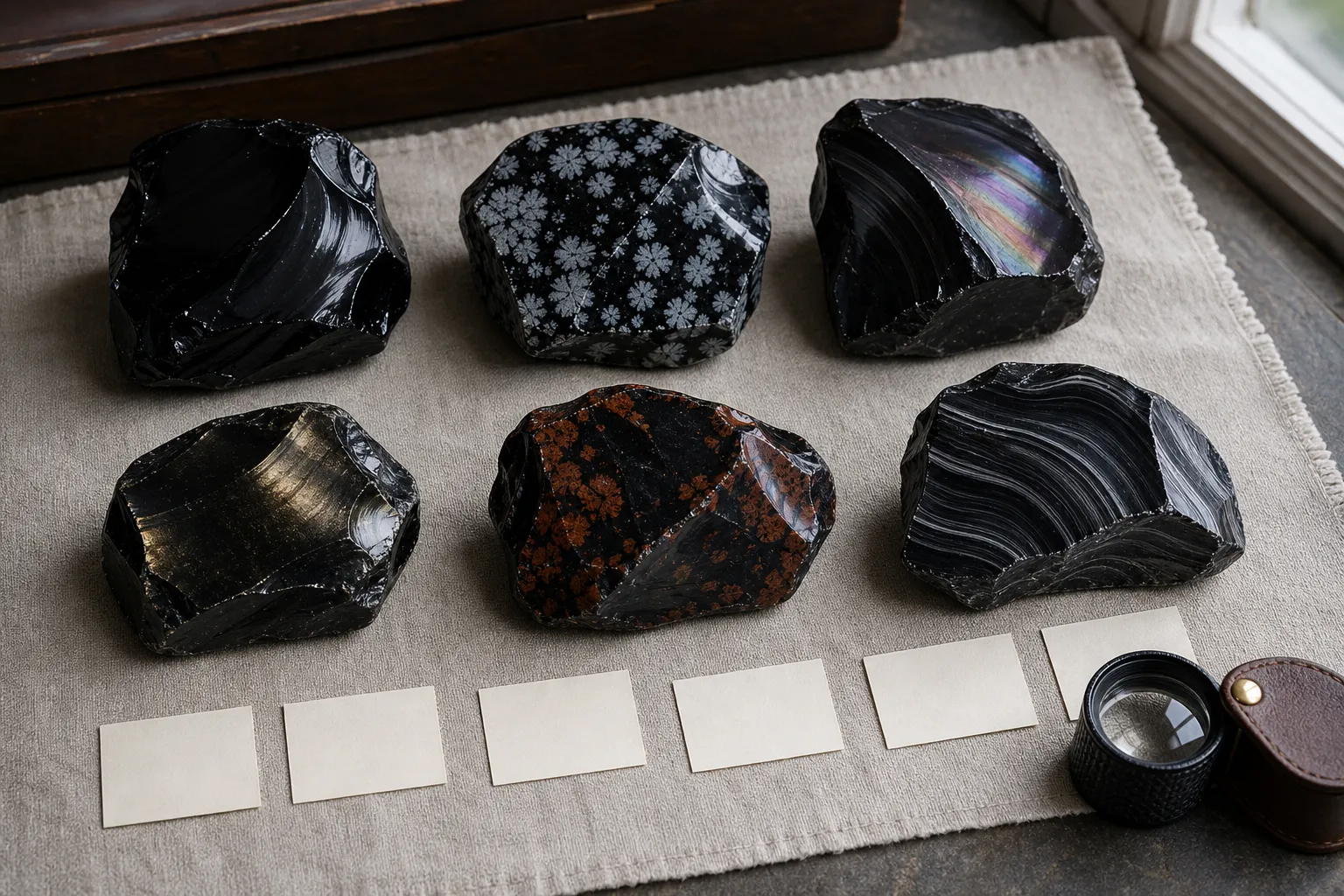
Plain black obsidian is usually treated by collectors as less unusual than many named or patterned obsidian varieties. If you are asking “is black obsidian rare,” the practical answer is: plain black pieces are often easier to find in ordinary crystal listings than pieces sold as rainbow, sheen, snowflake, mahogany, or other visually distinctive varieties.
That answer still has limits. Rarity depends on locality, specimen quality, finish, size, condition, and how carefully a seller is using variety names. A plain black piece can be common as a category and still be desirable as an individual object.
For collectors, the better question is not only “How rare is this?” but “What visible trait makes this piece more specific than plain black glassy obsidian?”
upward
Start with the broader guide
Use the broader guide first if you need the full scope before this page.
Why Plain Black Obsidian Is Often Treated as Less Rare
Plain black obsidian is the baseline in many beginner collections: dark, glassy, mostly uniform, and often polished to a clean shine. Because it does not need a special pattern, color flash, reflective effect, or contrasting inclusion to receive its basic name, it is often presented as the common obsidian variety in shops.
Named varieties usually draw attention because they add something visible to that black base:
- Snowflake obsidian: pale, snowflake-like markings.
- Rainbow obsidian: color bands or reflective play under suitable lighting.
- Gold sheen or silver sheen obsidian: a noticeable surface effect.
- Mahogany obsidian: brownish-red and black color areas.
- Other patterned obsidian varieties: flow lines, mottling, inclusions, or seller naming traditions.
Those traits can make a piece easier to market as special and more interesting in a display tray. But “more visually distinctive” is not the same as “geologically rarer in every case.”
What “Rare” Can Mean Here
The phrase “plain black obsidian rarity” can mean different things, and mixing them together makes the answer muddy.
Material availability
This asks whether plain black obsidian appears in supply more often than other forms. The available source set for this page does not support a precise abundance ranking across localities, so the careful wording is that plain black obsidian is commonly treated as a standard form in collector language, not that it is proven less rare everywhere.
Visual distinctiveness
By that standard, plain black obsidian is usually less distinctive than patterned obsidian varieties because it lacks the extra visible cue that gives a variety its name.
Market scarcity
Sellers may call a piece rare because it has a striking look, a named source, limited stock, a strong sheen, or simply because rarity language makes a listing feel more special. Black obsidian listings can be numerous without proving geological abundance, and seller wording does not prove scarcity on its own.
Specimen quality
A plain black piece with excellent polish, shape, edge translucency, size, or reliable locality information may be more collectible than a weak example of a named variety.
Check the Visible Trait Before the Label
When comparing plain black obsidian with other varieties, start with what you can see. Variety names are often used in a practical collector and marketplace sense, not always as strict scientific categories.
A plain black specimen should look mostly uniform from normal viewing angles. It may reflect light because of polish, but it should not rely on a strong color flash, snowflake-like markings, or red-brown patches for its identity.
Then compare the stone with the trait implied by the label:
- If a listing says rainbow obsidian, the color effect should be visible under reasonable lighting, not only in one dramatic photo.
- If it says sheen obsidian, the effect should look like part of the stone’s appearance, not ordinary polish glare.
- If it says snowflake obsidian, the pale markings should be visible enough to explain the name.
- If it says mahogany obsidian, the brownish-red and black contrast should be apparent.
This matters because rarity language often follows the label. A strong example of a named variety may be more desirable than a plain black piece. A weak, unclear, or lighting-dependent example may not be.
Why Patterned and Sheen Varieties Feel More Collectible
Patterned obsidian varieties often feel more collectible because they give the buyer more to compare. One plain black palm stone may look much like another at a quick glance. Two snowflake pieces can differ in marking density, spacing, and contrast. Two sheen pieces can differ in strength, color, angle, and polish quality.
That is one reason rainbow obsidian collector language can sound more excited than ordinary black obsidian language. The effect changes with angle and light, so a good piece offers a more dynamic viewing experience. Sheen obsidian variety terms work the same way: the named effect becomes the main point of inspection.
Snowflake obsidian rarity language can also be misleading. The name may sound delicate or unusual, but the collector still needs to judge the markings. Are they crisp, balanced, sparse, heavy, or muddy? The name alone does not answer whether the stone is hard to find or especially desirable.
Mahogany obsidian has the same issue. The label points to a recognizable color contrast, but pieces vary widely in balance and visual appeal. A dramatic mahogany pattern may attract more attention than a plain black piece, while a weakly colored piece may not.
Locality, Finish, Size, and Condition Can Change the Answer
A plain black obsidian piece should not be dismissed automatically. Several factors can make it more interesting to collectors.
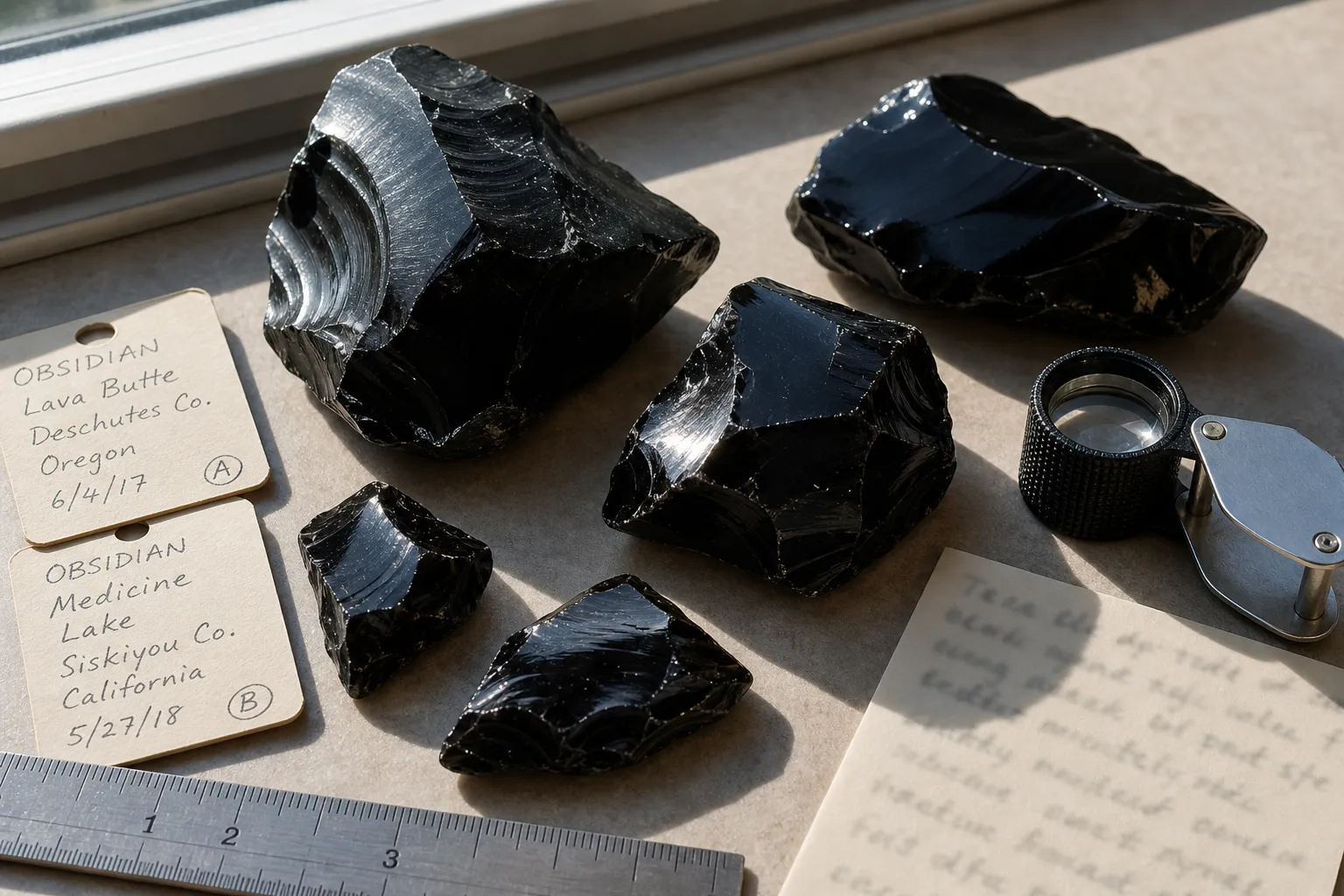
Locality is one. A piece associated with a specific source may matter more to some collectors than a generic variety label. Without reliable locality information, though, a location claim should be treated as unverified.
Finish is another. Polished black obsidian can look deep, mirrorlike, and clean when finished well. Poor polish can make the same material look flat, scratched, or cloudy. A well-cut cabochon, sphere, carving, or display piece may have appeal even if the material is visually plain.
Size also matters. Larger pieces that remain attractive and well finished may stand out more than small chips or common tumbled stones. Condition matters too: chips, scratches, sharp edges, and impact marks can affect how a collector judges the piece.
This is why a cautious answer is more useful than a blanket rule. Plain black obsidian is often the less distinctive category, but individual pieces can still be special.
Where Marketplace Confusion Comes From
Obsidian marketplace confusion often starts with the word “rare.” In listings, it may refer to supply, appearance, a temporary shortage, a locality claim, or promotional wording. Read it as a reason to inspect the piece, not as proof.
Photos can also blur the categories. Strong lighting may create reflections that look like sheen. Low light may hide rainbow effects. High contrast editing may make black surfaces appear deeper or cleaner than they are. The point is not to assume bad intent; it is to remember that photos and listing words are limited evidence.
If rarity affects your buying decision, ask for practical details: natural-light photos, angled views, close-ups of patterns or sheen, size, finish, and any locality information the seller can reasonably support. If those details are missing, treat the rarity claim as uncertain.
A Practical Way to Judge the Claim
Use this short check when plain black obsidian is compared with other varieties:
- 1. Identify the visible feature. Mostly uniform black belongs in the plain black category for practical collecting purposes.
- 2. Separate appearance from rarity. A visible effect can make a stone more distinctive without proving broad scarcity.
- 3. Check quality. Strong pattern, clean polish, pleasing shape, good size, or useful locality information may matter more than the variety name alone.
- 4. Be cautious with seller rarity language. It may describe market presentation more than confirmed scarcity.
- 5. Decide what you are collecting for. Plain black obsidian can work well as a representative starter piece; patterned or sheen pieces add more visual range.
So, Is Black Obsidian Rare?
For most beginner and practical collector conversations, plain black obsidian is not usually treated as the rarest form. It is better understood as a standard reference point against which more visibly distinctive varieties are compared.
The safest final answer is this: plain black obsidian is generally considered less distinctive and often less “rare-sounding” than named patterned or sheen varieties, but a reliable rarity judgment needs more than the color name. Locality, visual strength, finish, size, condition, and listing reliability all affect the answer.
If you are choosing between a plain black piece and a named variety, do not buy the word “rare” by itself. Buy the visible traits you can actually inspect.
FAQ
Is plain black obsidian always common?
No. Plain black obsidian is often treated as a common obsidian variety in collector language, but individual pieces can be more interesting because of size, polish, shape, condition, or locality.
Are rainbow, sheen, snowflake, and mahogany obsidian always rarer?
Not always. They are usually more visually distinctive, which can make them feel more collectible. That does not prove every named variety is rarer than every plain black piece.
Can I judge rarity from a photo?
Only partly. A photo can show color, pattern, polish, and obvious condition issues, but lighting and editing can exaggerate or hide important traits. Ask for natural-light and angled photos when the claim matters.
What should I look for before paying more?
Look for the visible feature that supports the name, the strength of that feature, finish quality, size, condition, and any locality information that can be reasonably supported.