Material classification
Is Snowflake Obsidian a Crystal, Rock, or Glass
Snowflake obsidian is often sold as a “crystal,” but the stricter geological answer is more specific: the dark body of the stone is natural volcanic glass. It is not a true crystal in the mineralogical sense, because the main obsidian material does not have a regular crystal structure. It can also be discussed in an igneous-rock context because it forms from lava.
The pale “snowflakes” are the part that makes the label feel less simple. They are commonly described as crystalline or mineral features associated with cristobalite in a glassy obsidian matrix. So if you are asking is snowflake obsidian a crystal, the practical answer is: in shop language, yes; in geology, the obsidian itself is volcanic glass.
Clean answer
Shop language may call it a crystal, but the obsidian body is natural volcanic glass. Its pale snowflake pattern can involve crystalline or mineral features.
upward
Start with the broader guide
Use the broader guide first if you need the full scope before this page.
Why the labels get mixed up
The same piece can be described differently depending on who is speaking.
Crystal
Where you see it: Crystal shops, collecting, symbolic-use contexts.
What it means: A broad retail category. It does not mean the whole piece has a true crystal structure.
Glass
Where you see it: Geology and material description.
What it means: The main body is natural volcanic glass formed from rapidly cooled lava.
Rock
Where you see it: Broad geology context.
What it means: Obsidian is volcanic and igneous in origin, even though its texture is glassy.
Mineral
Where you see it: Strict mineral classification.
What it means: Obsidian itself is not usually treated as a true mineral because it lacks a regular crystalline structure. The pale features may involve mineral material.
That is why “snowflake obsidian crystal” and “snowflake obsidian is volcanic glass” can both appear in normal use. The first is shop shorthand. The second is the better classification.
Why obsidian is glass, not a true crystal
A true crystal has an orderly internal structure. Obsidian forms when silica-rich lava cools so quickly that large mineral crystals do not have time to grow through the main mass. The result is an amorphous, glassy material.
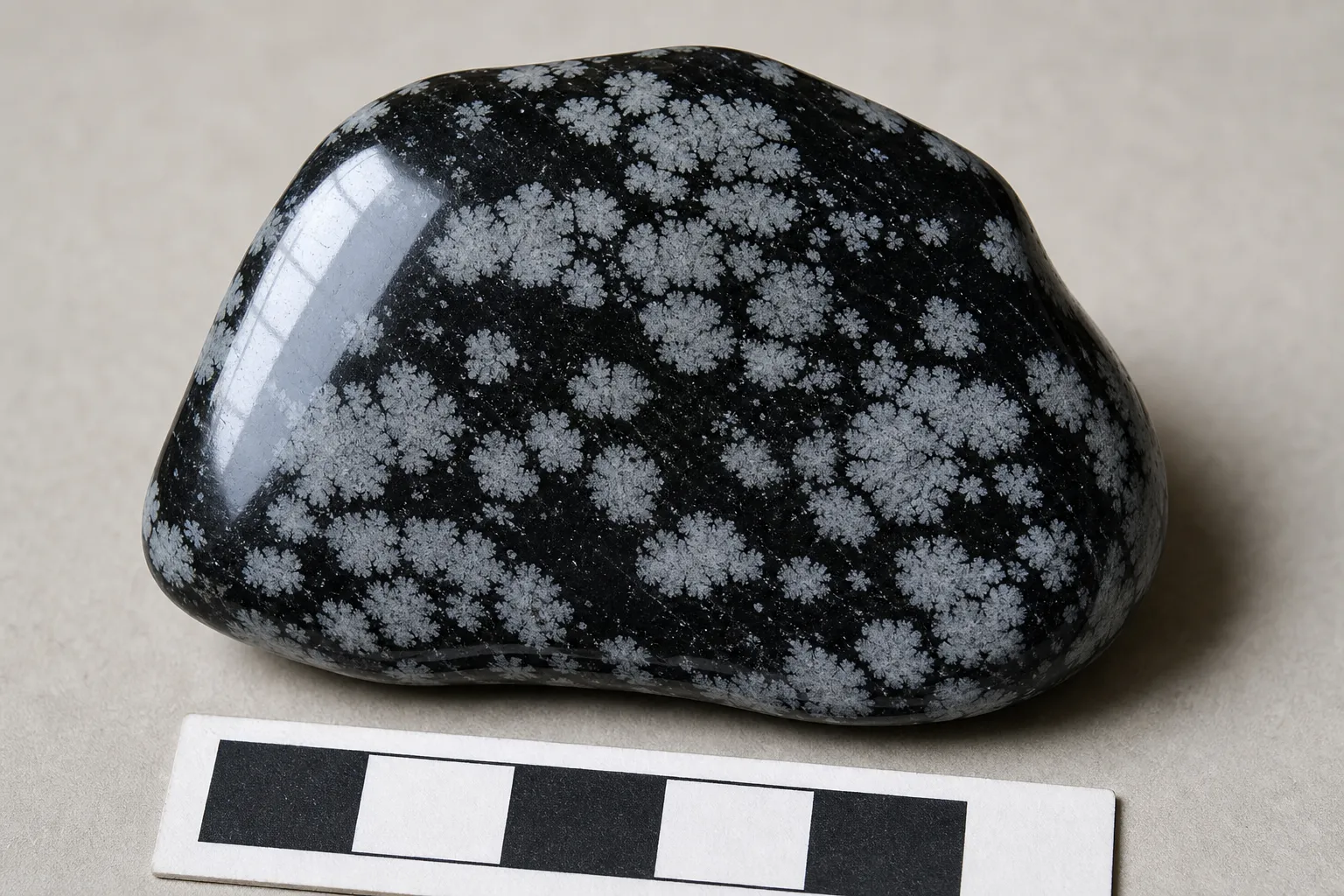
You can often see that glassy character in polished pieces. Snowflake obsidian usually has a smooth, reflective surface rather than a grainy texture. If broken, obsidian may show curved, shell-like fracture surfaces, a typical feature of glassy materials.
Calling it glass does not mean it is artificial. Snowflake obsidian glass is natural volcanic glass, not manufactured window glass and not automatically fake because “glass” appears in the description.
Is snowflake obsidian a rock?
Yes, in a broad geological conversation, it is reasonable to discuss snowflake obsidian as a volcanic or igneous material. It forms from lava, so it belongs in an igneous setting.
The more precise wording is still “natural volcanic glass.” Most igneous rocks are made mostly of interlocking mineral crystals. Obsidian is different because its main texture is glassy.
Useful wording
- Shop wording: snowflake obsidian crystal
- Geological wording: snowflake obsidian is volcanic glass
- Broad rock context: an igneous volcanic material
- Strict mineral wording: obsidian itself is not a true mineral, though it may contain crystalline or mineral features
This also explains why mineral databases may list obsidian and snowflake obsidian even though obsidian is not a strict mineral in the usual sense. Databases often document materials, varieties, localities, and collector names that people actually encounter.
What are the snowflakes in snowflake obsidian?
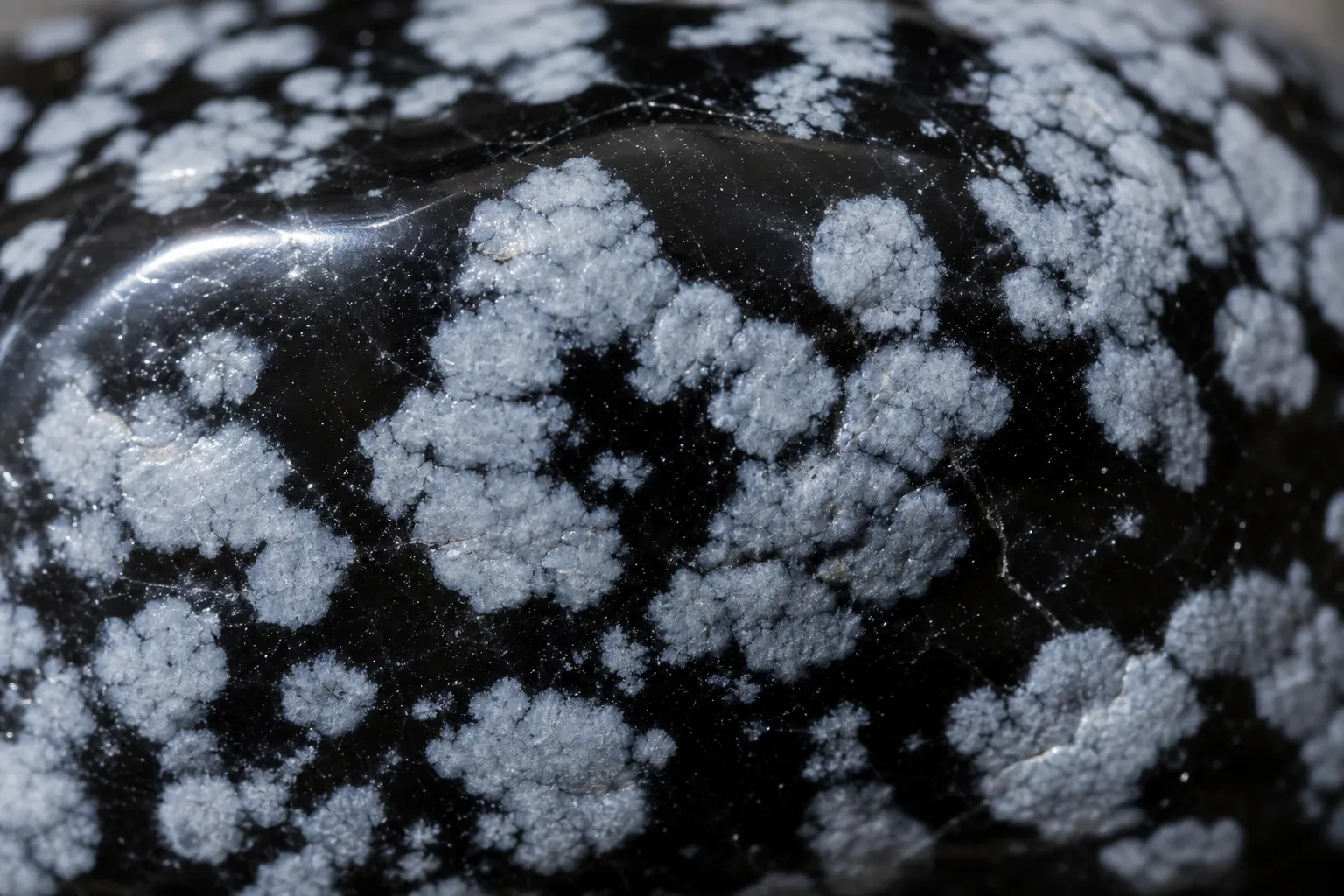
The white or gray spots give this variety its name. In collector language, snowflake obsidian usually has a black to charcoal base with pale flecks, rounded spots, rosettes, or irregular snowflake-like clusters. Some pieces have only a few pale marks; others are densely patterned.
These markings are commonly associated with cristobalite or cristobalite-related crystalline growths within or near the glassy obsidian. Cristobalite is a silica mineral known from volcanic settings. In plain terms, the pale “snowflakes” can be crystalline or mineral features while the surrounding obsidian remains glass.
That distinction matters. The white spots do not turn the whole stone into a crystal. They show that a glassy volcanic material can include crystalline-looking or mineral features.
For a single retail piece, appearance has limits. A black polished stone with pale spots may look like snowflake obsidian, but confirming the exact identity of the pale material may require specialist examination. It is fair to say the pattern is commonly explained through cristobalite-related material; it is too strong to say every seller-labeled piece has confirmed cristobalite.
How to identify snowflake obsidian visually
Visual inspection can help you decide whether a label is plausible, but it is not a laboratory test. Look for the combination of traits rather than one feature alone.
Dark base color
Usually black, charcoal, or very dark gray.
White to gray markings
Pale spots, rosettes, or irregular snowflake-like clusters.
Mostly opaque appearance
Most pieces are not transparent in ordinary handling.
Glassy polish
Tumbled stones, cabochons, beads, and carvings often look smooth and reflective.
Variable pattern density
Some pieces are heavily marked; others have sparse pale areas.
Glassy fracture if chipped or broken
Fresh breaks may look sharp, curved, or glass-like.
Pattern alone is not enough. Other dark stones, dyed materials, or altered pieces can sometimes show similar contrast. Lighting, polish, and photography can also change how the pale markings appear. If a piece is expensive, unusually described, or sold with strong claims about origin or composition, ask for clearer provenance or qualified identification rather than relying only on a product photo.
Why shops still call it a crystal
Crystal shops often use “crystal” as a broad category for minerals, tumbled stones, carved gems, fossils, and natural glass materials such as obsidian. In that setting, “snowflake obsidian crystal” is understandable. It tells you where the object sits in retail and collecting language, not its strict internal structure.
You may also see snowflake obsidian discussed with symbolic meanings or personal practices. Those meanings belong to cultural, spiritual, or individual interpretation. They do not change the material classification. A piece can be personally meaningful and still be volcanic glass in geological terms.
Does the classification affect care?
Yes, in a practical way. Because the main body is glassy, snowflake obsidian can chip or fracture if it is dropped, struck, or stored carelessly. A polished piece may feel smooth and sturdy, but it should still be treated like a glassy volcanic material.
For ordinary collector care:
- Clean with mild soap, water, and a soft cloth when needed.
- Avoid abrasive powders, rough scrubbing, and harsh chemical cleaners.
- Dry the piece after rinsing, especially near drilled holes, wire settings, or display stands.
- Store polished pieces so they do not knock against harder stones, metal jewelry, or hard shelf edges.
- Check chipped or broken edges before handling closely, because fractured obsidian can be sharp.
This does not mean snowflake obsidian is unusually difficult to keep. It simply means hard impacts and abrasive treatment are poor choices for a polished glassy stone.
The cleanest short answer
Snowflake obsidian is a natural volcanic glass commonly sold as a crystal, discussed in an igneous-rock context, and marked by pale snowflake-like features commonly associated with cristobalite-related crystalline material.
That sentence keeps the labels separate. It respects crystal-shop language without calling the whole obsidian body a true crystal or a strict mineral.
FAQ
Is snowflake obsidian a crystal or glass?
In retail language, it is often called a crystal. In geological terms, the obsidian body is natural volcanic glass.
Is snowflake obsidian a mineral?
Obsidian itself is not usually classified as a true mineral because it lacks a regular crystalline structure. Snowflake obsidian may contain crystalline or mineral features, especially in the pale markings.
Are the white spots cristobalite?
They are commonly explained as cristobalite or cristobalite-related crystalline growths. For an individual piece, visual appearance alone may not confirm the exact mineral identity.
Is snowflake obsidian an igneous rock?
It forms from lava and belongs in an igneous volcanic setting. More precisely, it is natural volcanic glass rather than a fully crystalline igneous rock.