Material explanation
Why Is Obsidian Called Glass If It Comes from a Volcano
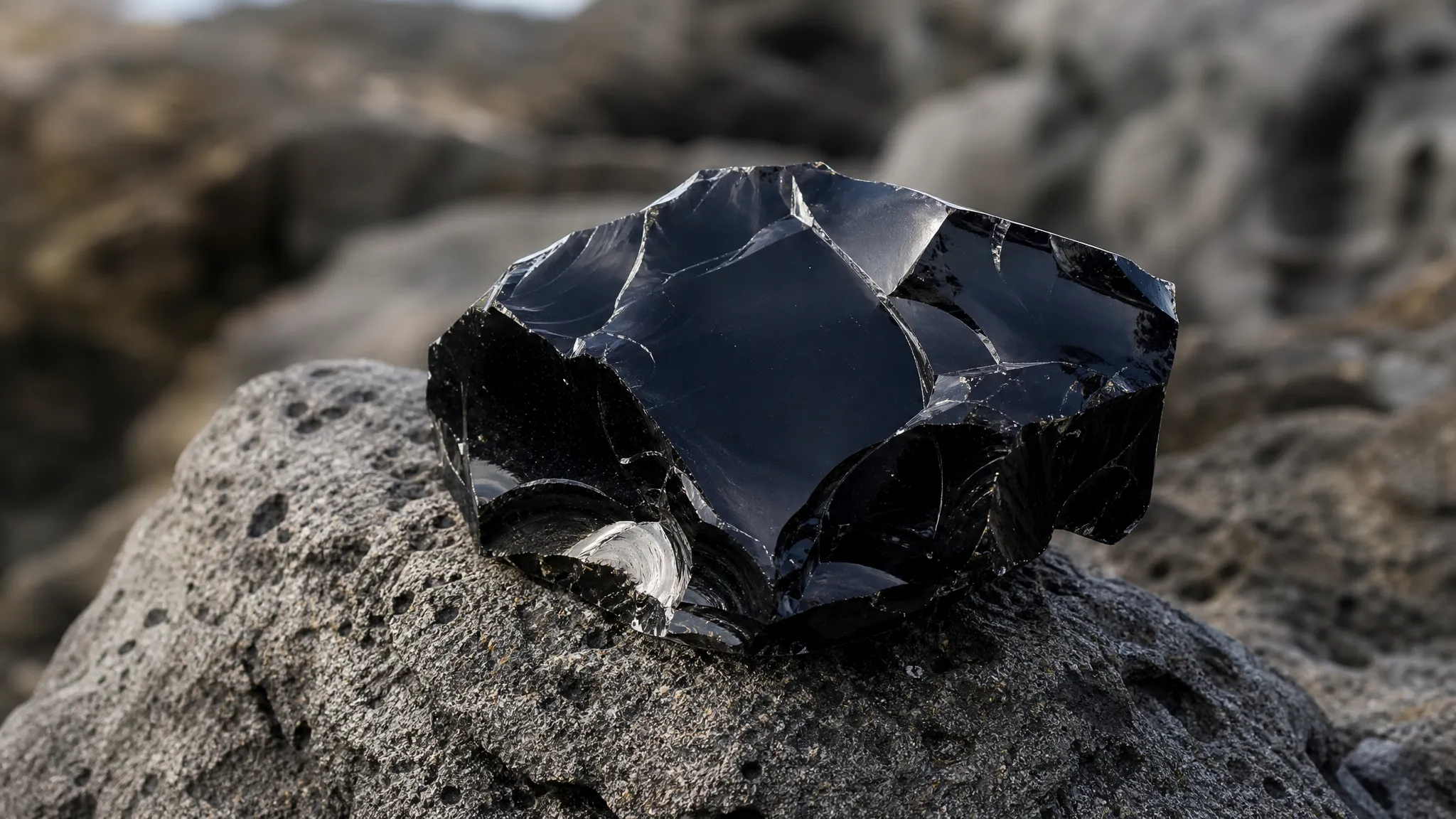
Obsidian is called glass because “glass” describes its structure, not a factory origin. The direct answer to why is obsidian called glass is that obsidian forms when molten volcanic material cools quickly enough that large crystals do not have much time to grow. The result is a natural volcanic glass: lava-derived, glossy, brittle, and largely non-crystalline.
So obsidian can be volcanic and glass at the same time. “Volcanic” tells you where the material came from. “Glass” tells you how the cooled material is arranged and how it tends to look and break.
It is not the same thing as window glass. But it shares the glassy, non-crystalline character that gives obsidian its smooth shine, dense texture, and curved fracture.
upward
Start with the broader guide
Use the broader guide first if you need the full scope before this page.
“Volcanic” Names the Origin; “Glass” Names the Structure
The confusion usually comes from treating “glass” as if it only means something made by people. In geology, glass can also form naturally. Obsidian is one of the easiest collector examples to recognize: it comes from volcanic melt, but it cools into a glassy material rather than a rock full of visible interlocking crystals.
A simple way to read the name:
Volcanic
The material came from molten volcanic rock.
Glass
The cooled material is largely non-crystalline and glassy.
Obsidian
A specific natural volcanic glass, often dark and glossy.
That is why the phrase natural volcanic glass is not a contradiction. It is a compact description of obsidian’s origin and structure.
Many familiar rocks are made of minerals with ordered crystal structures. Granite, for example, often shows visible mineral grains. Obsidian is different. Its material cooled in a way that did not allow crystal growth to dominate, so collectors often see a smooth, continuous-looking surface instead of a grainy one.
This is also why obsidian is often called a mineraloid rather than a true mineral in the strict mineralogical sense. A mineral normally has a defined crystalline structure. Obsidian is natural and mineral-like, but its glassy structure does not fit that strict crystal requirement.
How Obsidian Becomes Glass
Obsidian begins as molten volcanic material. When that material cools rapidly, atoms do not have enough time to arrange into large, orderly crystals. The cooled mass becomes amorphous, or non-crystalline in the broad glass sense.
The process can be simplified like this:
- Volcanic melt reaches or nears the surface.
- The melt cools quickly compared with the time needed for crystal growth.
- The structure solidifies into a glassy arrangement.
- The finished material shows glass-like surface and fracture behavior.
“Lava cooled quickly” is a useful beginner answer, but a slightly more careful version is better: rapid cooling limits crystal growth. Some natural specimens may contain tiny crystals, bubbles, inclusions, flow lines, or later alteration features. So it is too absolute to say every piece contains no crystals at all. For the everyday naming question, the key point is that obsidian is dominated by a glassy, largely non-crystalline structure rather than visible mineral grains.
What the Glassy Structure Looks Like
You do not need lab equipment to understand why the word “glass” fits. Obsidian’s structure often shows up in the way a piece looks, feels, and breaks.
Vitreous luster
A polished or freshly broken obsidian surface commonly has a vitreous luster, which simply means a glass-like shine. On a tumbled stone, bead, palm stone, or polished slab, that shine may look smooth and reflective rather than sparkly or grainy.
Smooth, dense texture
Obsidian often feels smooth because it does not have the same visible grain structure as many crystalline rocks. A broken surface may look dense and continuous, not sandy or granular.
Natural pieces still vary. Obsidian can show banding, smoky areas, bubbles, cloudy patches, or inclusions. Some collector names are based on sheen or visible patterns. Those details can change the look, but not the basic reason obsidian is called glass.
Conchoidal fracture
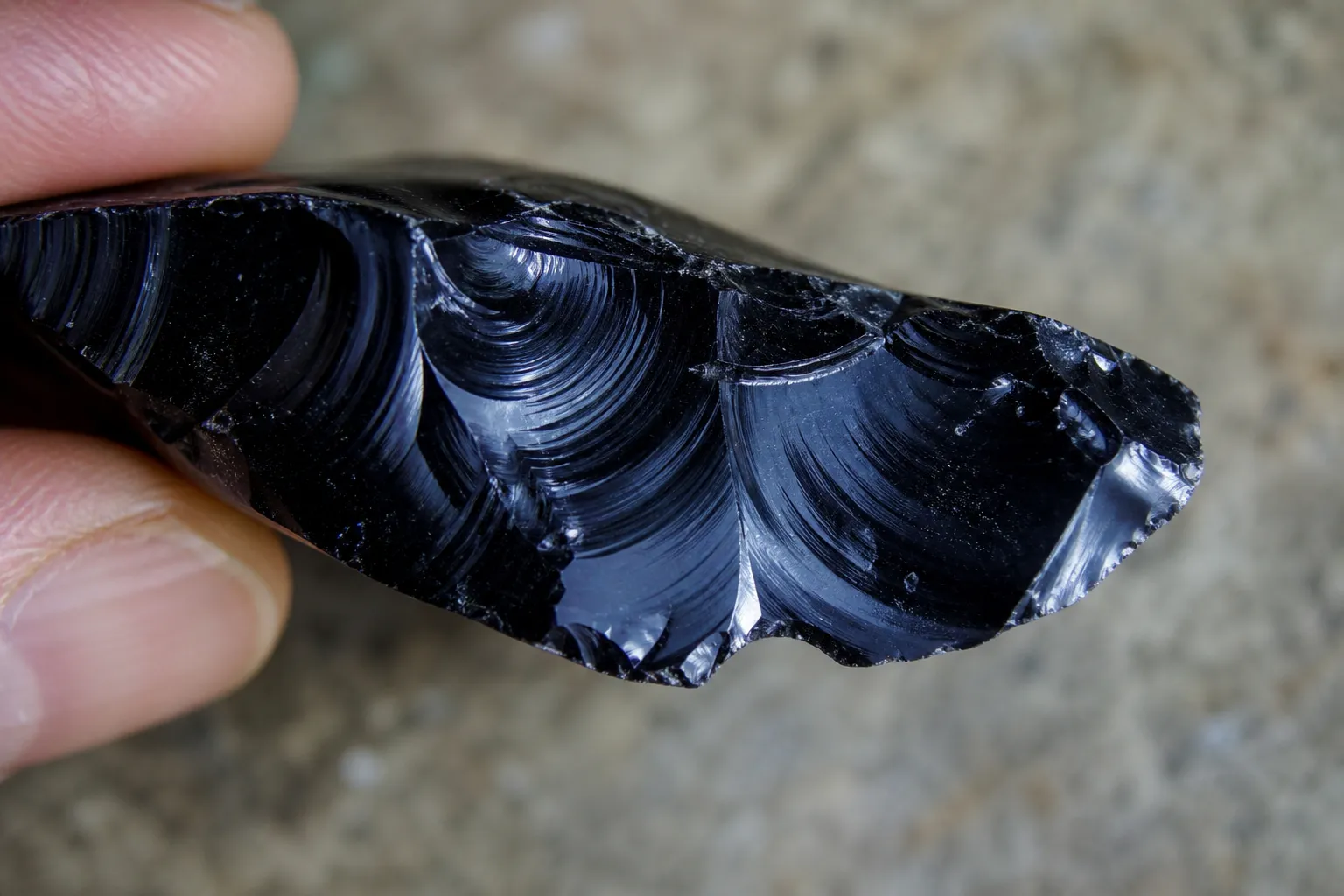
A very useful term here is conchoidal fracture. It means a curved, shell-like break, the kind often seen in glassy materials. When obsidian chips, the break may form sweeping curves instead of flat cleavage planes.
That break behavior is why damaged obsidian can have sharp edges. If a piece is chipped, avoid sliding your fingers along the broken area. Store sharp fragments separately or wrap them so they do not scratch other stones in a tray or box.
Is Obsidian a Crystal?
In crystal shops and jewelry listings, obsidian is often grouped with crystals. That is common marketplace language, not a strict mineralogical description.
If someone asks, “Is obsidian a crystal?” the careful answer is: not in the strict structural sense. Obsidian is collected alongside crystals, carved into crystal-like shapes, and sometimes discussed in symbolic contexts. But the material itself is glassy and largely non-crystalline. It does not have the regular crystal lattice that defines a true crystal or mineral.
That distinction helps with labels. Calling a polished black stone an “obsidian crystal” may be normal in a shop display, but if you are describing the material accurately, natural volcanic glass is the better phrase.
Obsidian Glass Is Not Window Glass
Calling obsidian “glass” does not mean it is identical to manufactured glass.
Window glass, bottle glass, and laboratory glass are made under controlled human conditions. Obsidian forms naturally from volcanic melt. Their compositions and formation settings are not the same. The shared word “glass” points to the structural idea: a non-crystalline solid with glass-like properties.
Obsidian
- Origin: Natural volcanic material.
- Structure: Largely non-crystalline glass.
- Common appearance: Glossy, dark, smooth, sometimes patterned.
- Break behavior: Brittle, curved fractures, sharp chips possible.
Manufactured window glass
- Origin: Human-made material.
- Structure: Non-crystalline glass.
- Common appearance: Clear or tinted flat sheet.
- Break behavior: Brittle, curved fractures, sharp chips possible.
So the obsidian glass meaning is not “ordinary factory glass.” It means a natural volcanic material that cooled into a glassy state.
What Can Complicate the Simple Answer?
The main answer stays the same, but real specimens are not always as simple as the phrase “black volcanic glass” suggests.
First, obsidian is not always perfect black glass. It may be dark brown, smoky black, grayish, banded, or patterned. Some pieces show inclusions, bubbles, or internal flow features.
Second, “non-crystalline” is a collector-level structural description. Obsidian is glassy overall, but technical studies of natural samples may discuss tiny crystals or later changes. That level of detail matters in petrology; it does not change the everyday explanation of the name.
Third, surface condition matters. A fresh break may show stronger glassy luster than a weathered surface. A polished cabochon may look more mirror-like than a rough nodule. Lighting can also change how much gloss or transparency you notice.
Fourth, not every glossy black object is obsidian. Slag glass, dyed glass, some dark rocks, and other materials can be confused with it. Color alone is not enough. For collecting, a label is stronger when it is supported by context, locality when available, reliable sourcing, and physical inspection.
Why the Name Matters for Collectors
Understanding why obsidian is called glass makes labels easier to read.
If a listing says “obsidian natural volcanic glass,” that phrase describes a real geological category. If it says “obsidian crystal,” it may be using casual shop language. If it says “obsidian glass,” that does not automatically mean fake; “glass” is part of the correct explanation.
The name also gives you a practical handling clue. Because obsidian breaks like glass, chips and fractured edges deserve care. A polished palm stone may be comfortable to hold, while a broken edge may be sharp enough to scratch skin or nearby polished pieces. Do not test an edge with your fingertip.
Obsidian’s glass-like fracture is also why it appears in historical discussions of sharp tools and ornaments, but that is only background here. For a modern collector, the useful takeaway is simpler: obsidian’s glassy structure affects how it looks, how it breaks, and how you should handle damaged pieces.
Common Wording You May See
These phrases all point back to the same idea:
- Natural volcanic glass means glass formed by volcanic processes, not by manufacturing.
- Obsidian amorphous structure means its atoms are not arranged in a regular crystal lattice like a true crystal.
- Obsidian non crystalline is a plain-language version of the same point.
- Obsidian vitreous luster means a glassy shine.
- Obsidian conchoidal fracture means curved, shell-like breakage.
- Obsidian mineraloid means it is mineral-like but not a true mineral under the strict crystal-structure definition.
Different terms, same core answer: obsidian is volcanic in origin and glassy in structure.
Short Answers to Related Questions
Why is obsidian called volcanic glass?
Because it forms from volcanic melt and cools into a glassy, largely non-crystalline material. “Volcanic” names the origin; “glass” names the structure.
Why is obsidian glassy?
Obsidian is glassy because rapid cooling limits crystal growth. That produces a smooth, glossy, brittle material rather than a visibly grainy crystalline rock.
Why is obsidian sometimes called dragonglass?
“Dragonglass” is a popular fantasy term commonly associated with obsidian. In geology and collecting, the accurate terms are still obsidian or natural volcanic glass.
The Bottom Line
Obsidian is called glass because it cooled into a glassy, largely non-crystalline structure. It comes from volcanic material, so it is volcanic. It lacks the regular crystal structure of true minerals, so it is glass in the geological sense.
For collectors, the visible clues match the name: glossy surface, smooth texture, brittle chips, curved shell-like fracture, and potentially sharp broken edges. Obsidian is not factory-made window glass, and it is not a crystal in the strict structural sense. It is natural volcanic glass—and that phrase explains the apparent contradiction.