Formation answer
What Kind of Lava Forms Obsidian
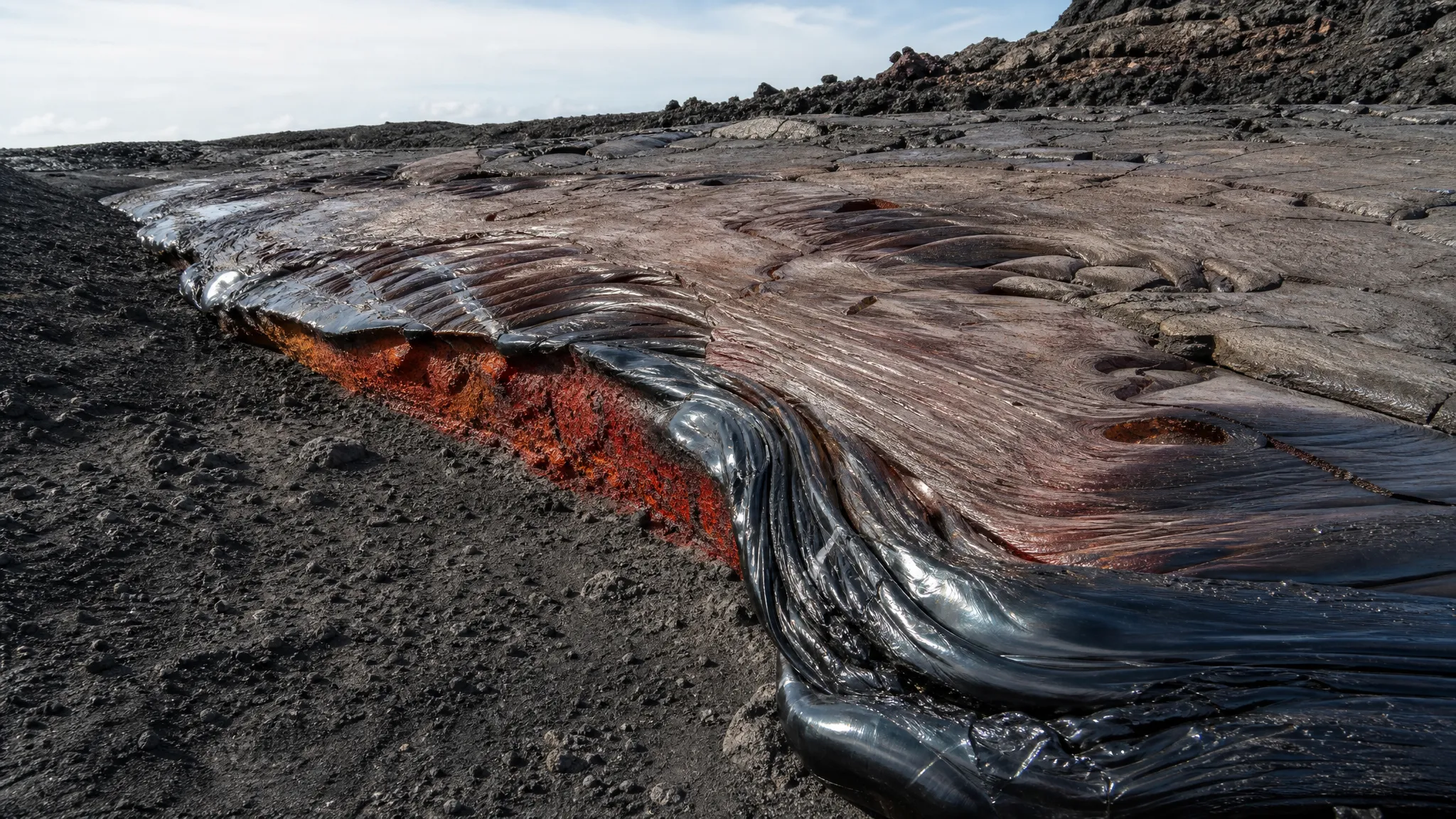
Obsidian forms from silica-rich felsic lava, most commonly rhyolitic lava, when the molten material solidifies with little crystal growth. In collector terms, the answer to “what kind of lava forms obsidian” is not ordinary dark basaltic lava. It is high-silica lava that becomes volcanic glass instead of a visibly crystalline rock.
Two things matter together: composition and cooling or emplacement history. Rhyolitic lava is thick and viscous compared with basaltic lava, which makes it harder for atoms in the melt to arrange into larger crystals. When cooling, flow movement, gas loss, or contact with colder surroundings further limits crystal growth, the result can be obsidian.
upward
Start with the broader guide
Use the broader guide first if you need the full scope before this page.
The short answer: silica-rich rhyolitic lava
The clearest named lava type for obsidian is rhyolitic lava. More broadly, geologists describe the parent material as felsic, meaning it is rich in silica and chemically closer to rhyolite or granite than to basalt.
That can feel surprising because many collectors first meet obsidian as a black stone. Black volcanic rock is often associated with basalt, but obsidian’s dark appearance does not mean it is usually basaltic. Its color comes from the glassy material and minor components, inclusions, or microscopic features, while its broader composition is typically silica-rich.
Material
Usual composition category
Typical texture result
Rhyolitic or felsic lava
High silica
Can become obsidian if crystal growth is limited
Similar rhyolitic material with more crystal growth
High silica
Rhyolite or related crystalline volcanic rock
Basaltic lava
Lower silica, mafic
Usually basalt, scoria, or other basaltic volcanic rock, not typical obsidian
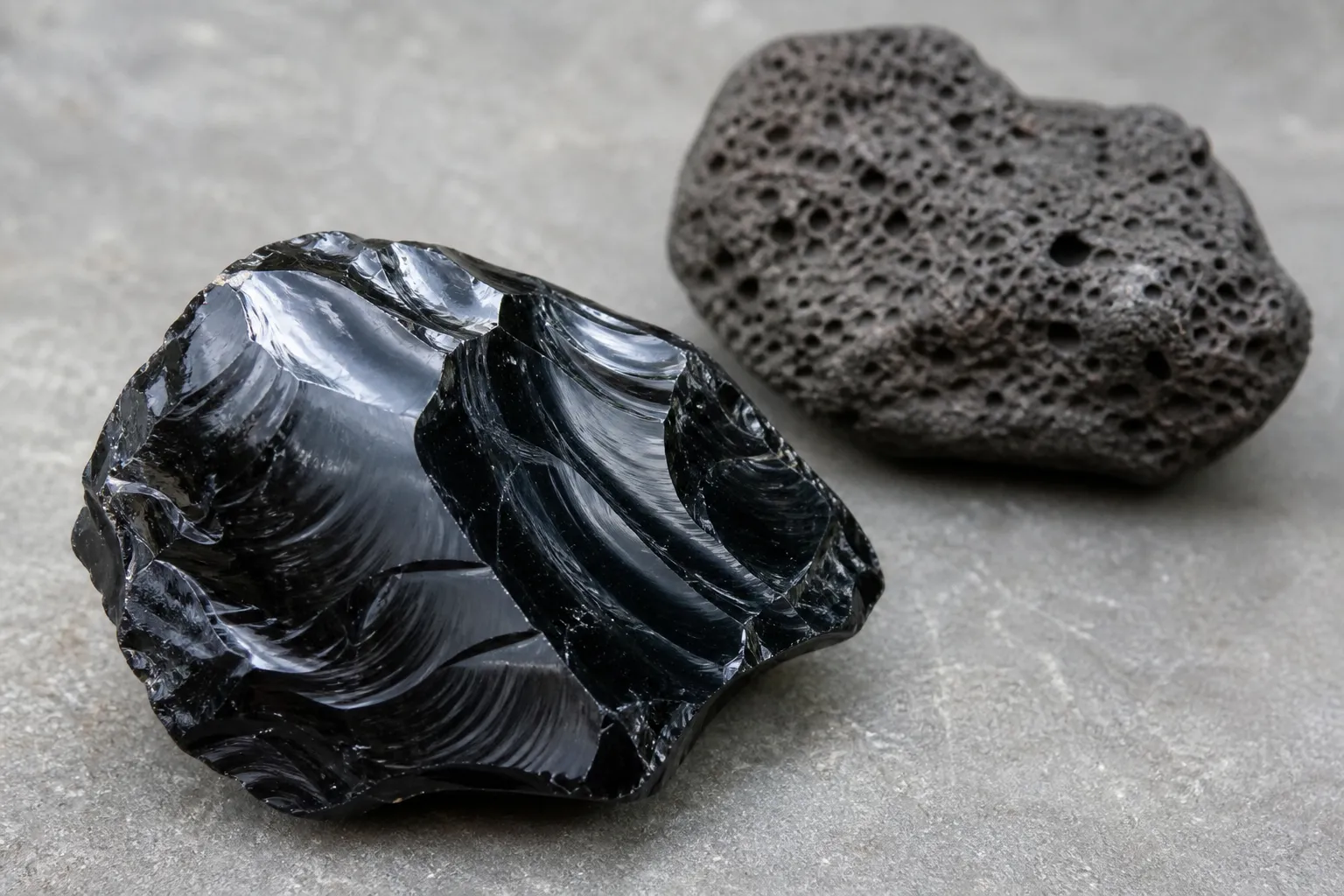
Color alone is not enough to verify a specimen. Better collector clues include glassy luster, smooth curved fracture surfaces, little or no visible crystal texture, and the brittle shell-like break known as conchoidal fracture.
Why high-silica lava can become glass
Obsidian is often called volcanic glass because it does not have the orderly crystal structure seen in most minerals. It is an igneous material, but its internal structure is mostly glassy rather than neatly crystalline.
Silica-rich melts tend to be viscous. “Viscous” means thick or resistant to flow. Honey is more viscous than water; rhyolitic lava is more viscous than basaltic lava. In molten rock, that thickness affects how easily atoms can move into stable mineral crystals.
Two conditions usually work together
- The lava is silica-rich and felsic. This gives the melt its thick, high-viscosity character.
- Crystal growth stays limited. Cooling, degassing, flow movement, or contact with colder material can keep crystals from growing much before the melt solidifies.
Beginner explanations often say obsidian forms when lava cools “very rapidly.” That is useful, but incomplete. Fast cooling helps because crystals have less time to grow. Still, the silica-rich composition is part of the answer too. Quick cooling by itself does not automatically create the kind of obsidian collectors recognize.
A better wording is: obsidian forms when silica-rich lava solidifies with minimal crystal growth. That leaves room for the real variation inside lava flows, where cooling rate, gas content, flow banding, and microscopic texture can change from one zone to another.
Is obsidian made from lava?
Yes, obsidian is made from volcanic material and can form from lava. But calling it simply “lava rock” can blur an important distinction.
In shops and casual use, “lava rock” often means porous black basalt or scoria: the lightweight-looking stone with small holes used in beads, landscaping, grills, or decorative pieces. Obsidian is different. It is dense volcanic glass, usually with a smooth vitreous shine and a sharp glassy fracture.
How the phrase depends on context
- If “lava rock” means any rock or glass formed from lava: obsidian can fit that broad idea.
- If “lava rock” means porous basaltic scoria or basalt beads: obsidian is not the same material.
- If a seller label is the only proof of origin: treat it as a clue, not confirmation.
The useful distinction is texture plus composition. Obsidian is not just “black volcanic stone.” It is glassy volcanic material, usually tied to rhyolitic or felsic lava.
Where obsidian forms in a lava body
Obsidian is commonly associated with parts of silica-rich lava where the melt chills or changes texture before obvious crystals can grow. Possible settings include:
- Margins of rhyolitic lava flows
- Edges of volcanic domes
- Outer zones exposed to air
- Places where hot lava contacts water or wet ground
- Chilled margins of shallow intrusions or dikes in some settings
These are formation settings, not a checklist for proving where a loose specimen came from. A polished palm stone, bead, cabochon, or tumbled piece has already been removed from its geological setting, and polishing can erase many surface clues.
For collectors, the formation setting mainly explains what can be seen in the stone. A glassy surface, smooth curved break, and lack of visible grains all point back to molten material that solidified before ordinary crystals became obvious. Flow bands, cloudy patches, and snowflake-like patterns can appear in some pieces, but those features are texture details or later changes; they do not change the basic lava type behind obsidian.
Why black obsidian is not basaltic lava
The common shortcut is: black volcanic stone equals basalt. That works for many volcanic rocks, but not for obsidian.
Basalt is typically dark because of its mafic composition, often involving iron- and magnesium-rich minerals. It comes from lower-silica lava. Obsidian, by contrast, is generally felsic volcanic glass. It can look black even though its overall composition is silica-rich.
Better questions than color alone
- Does it have a glassy or vitreous luster?
- Does a broken area show curved, shell-like fracture?
- Are visible mineral grains absent or very limited?
- Is it dense rather than highly bubbly or lightweight?
- Is there locality or geological context beyond a dramatic “lava” description?
Even then, a photo has limits. Strong lighting can make polished stones look glassier than they are, and many dark materials photograph similarly.
What “obsidian crystal formation” really means
Collectors often say “obsidian crystal,” but geologically, obsidian is not a crystal in the same way quartz or feldspar is. It is usually described as volcanic glass or a mineraloid because its structure is mostly amorphous rather than regularly crystalline.
The everyday phrase is still understandable in shops and collections, where “crystal” is often used broadly for display stones. But when the question is formation, the distinction matters: obsidian’s defining feature is that it did not develop a visible crystalline texture.
A simple formation sequence
- Silica-rich magma reaches the surface or a shallow volcanic setting.
- It erupts or is emplaced as rhyolitic or felsic lava.
- Cooling, viscosity, gas loss, and movement limit mineral crystal growth.
- The material solidifies as volcanic glass.
- Later hydration, weathering, devitrification, or inclusions may change the appearance of some pieces.
This is why “rapid cooling obsidian” is only part of the explanation. The fuller answer is high-silica composition plus conditions that keep crystals from growing much.
What a specimen can and cannot tell you
A hand specimen can suggest obsidian, but it usually cannot prove the exact lava flow, eruption history, or source locality by sight alone. For everyday collecting, visible clues may be enough for sorting, comparison, and care. For geological sourcing or scientific classification, context and testing matter more.
Useful visible clues
- Glassy shine: a vitreous surface rather than a grainy rock surface.
- Conchoidal fracture: curved break lines like thick glass.
- Dense feel: not the same texture as highly porous lava rock.
- Few visible crystals: a smooth, glass-like body rather than obvious mineral grains.
- Brittle edges: chips can be sharp, so broken pieces should be handled carefully.
That last point is a handling note, not a use suggestion. Obsidian can fracture into sharp edges, so chipped pieces should be stored where they will not scratch softer stones, fabric pouches, or skin.
Bottom line
Obsidian forms from silica-rich felsic lava, especially rhyolitic lava, when conditions limit crystal growth and the material solidifies as volcanic glass. Its black color can be misleading: common black obsidian is not normally basaltic lava. Glassy texture, curved fracture, dense feel, and lack of visible grains are better clues than color alone.
For a collector, the main takeaway is simple: obsidian’s lava story is about composition plus cooling history. High-silica lava provides the thick melt; cooling and emplacement conditions help preserve the glassy structure. That combination is what turns rhyolitic lava into obsidian rather than an ordinary crystalline volcanic rock.