
Buying checklist
How to Evaluate a Mixed Obsidian Lot Before Buying
A mixed obsidian lot is worth considering when the listing shows the actual pieces clearly, not just a dramatic pile of dark shine. Start with the full-lot photo, then check close-ups, size range, quantity, finish, broken edges, and how confidently the seller uses variety names.
If the obsidian lot listing depends on vague labels, cropped photos, heavy filters, or claims that cannot be checked from the images, treat it as a more uncertain buy. Photos can help you judge visible traits; they cannot confirm every variety, origin, value, or hidden condition detail. Ask before paying.
upward
Start with the broader guide
Use the broader guide first if you need the full scope before this page.
First decision
Buy the lot you can inspect, not the mood of the photo.
Start With the Whole Lot
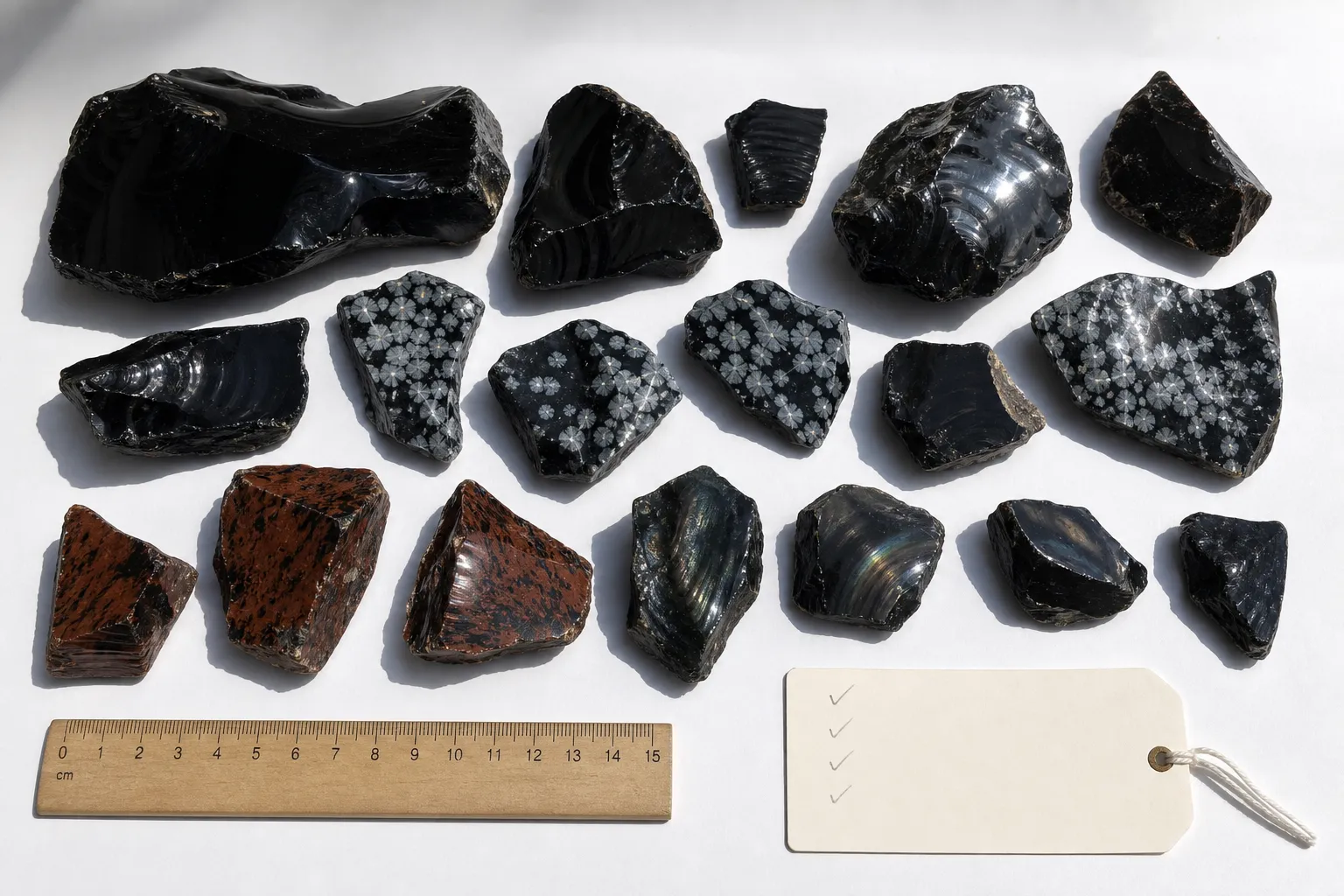
The first useful photo is the one that shows all pieces together. A mixed obsidian lot listing should make the lot contents easy to count or estimate: how many pieces are included, whether the photo shows the exact lot, and whether any stones are hidden under others.
Look for pieces spread out on a plain background. Overlapping stones, heavy shadows, wet surfaces, or bright filters can make a lot look richer than it is. Obsidian can have a glassy luster, but shine is not the same as clarity. You still need enough light and focus to see chips, scratches, cloudy patches, uneven polish, and broken edges.
Quantity matters because bulk obsidian crystals are often bought for sorting, display bowls, craft practice, jewelry projects, resale grouping, or collection filling. A lot of twenty tiny chips is different from a lot of six larger palm pieces, even if the total weight sounds similar. If the listing gives only weight, ask for a size range. If it gives only a count, ask for approximate dimensions.
The simplest pre-purchase question is still the strongest: “Does the photo show the exact lot I will receive?”
Buy the lot you can inspect, not the mood of the photo.
Read Variety Names as Seller Labels
Mixed obsidian lots often use variety names because names help buyers sort what they hope to receive: black obsidian, snowflake obsidian, mahogany obsidian, rainbow sheen, gold sheen, silver sheen, or other trade-style labels. These names can be useful starting points, but they should not be treated as final identification from photos alone.
Visible variety cues are what you can check before buying. Pale gray or whitish patches may suggest a snowflake-style appearance; reddish brown areas may be presented as mahogany; a colored flash may be described as sheen. Each cue depends on lighting, angle, polish, and how much of the surface is shown.
Be cautious when every piece is given a high-interest name but the photos do not show the matching features. A mixed tray described with many variety names should show enough individual surfaces for comparison. If a listing says the lot includes sheen pieces, ask for angled photos under plain light. If it says there are several varieties, ask which pieces correspond to which names.
A variety name is a clue. The surface still has to support it.
Check Polish, Breakage, and Edges
Condition is one of the most practical parts of evaluating mixed obsidian lots. Before buying, inspect polish and breakage as carefully as color. A glossy surface may still have scratches, flat scuffs, cloudy areas, small chips, or bruised-looking edges. A rough piece may have sharp fracture edges or unstable points.
None of this automatically makes the lot unusable, but it changes what the lot is good for. For display, look for clean faces, pleasant shapes, and pieces that can sit without constantly rolling or hiding their best side. For jewelry or wrapping practice, look for stable shapes, drilled holes if needed, and edges that will not snag easily. For sorting, tumbling, or craft practice, rougher material may be acceptable, but the listing should still show the kind of breakage present.
Polish also affects variety cues. Sheen may appear strongly at one angle and disappear at another. Snowflake-like patterns can look clearer on a polished face than on a rough edge. Dark stones photographed under intense light may show reflections that are easy to mistake for internal flash. Ask for plain, dry photos if the existing images look too glossy or stylized.
Full-lot visibility
Helps you judge whether the listing shows the actual group.
Edge condition
Chips and fracture edges affect handling, display, and craft use.
Polish
Scratches, dull patches, and uneven shine change visual appeal.
Size range
Prevents surprises between tiny chips and larger specimens.
Individual close-ups
Lets you compare named pieces against visible traits.
Lighting angle
Helps separate surface features from reflection.
If the lot looks attractive only in one dramatic photo, ask for another view.
Match the Lot to Your Use
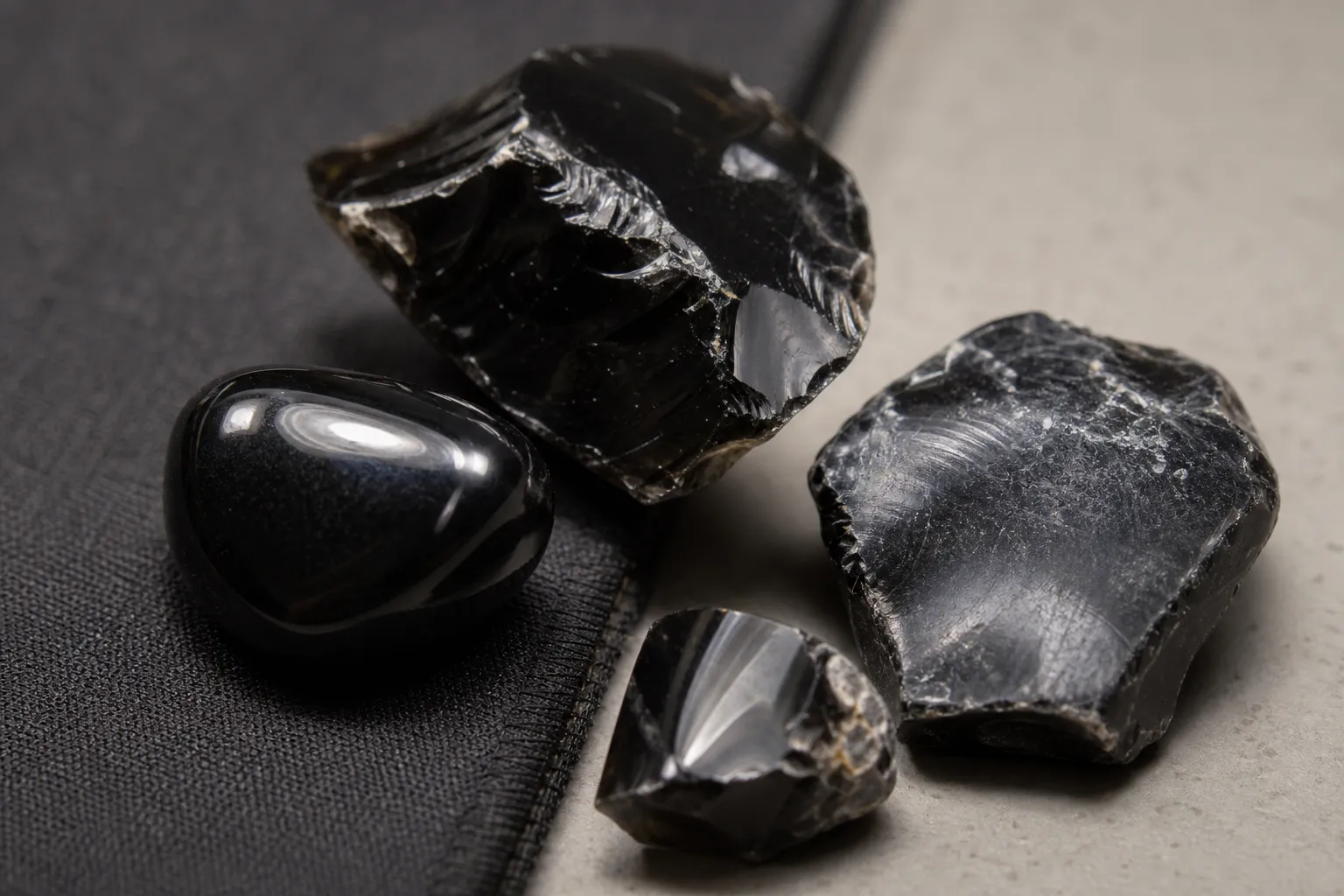
A mixed obsidian lot can be a good choice when you want variety, practice material, or a starter tray. It is less ideal when you need one specific appearance. Buying obsidian lots for a targeted variety is harder because the seller controls the mix, and the photos may not show every face of every piece.
If you want one strong rainbow sheen piece, a clearly photographed individual stone may be a better fit than a mixed group where one flash appears in the corner. For a beginner collection, a mixed lot can work well if it shows several visible appearances and the seller is clear about size and count. For decor, consistency may matter more than named variety; evenly sized black or patterned stones may serve the purpose better than a chaotic mix.
Do not let “bulk” distract from the decision. Bulk obsidian crystals are not automatically better value because the lot is larger. A smaller lot with sharp photos, clear size information, and honest condition notes may be easier to judge than a heavier group with unclear contents.
The practical question is not “How much material is there?” It is “Can I tell what I am actually receiving?”
Treat Big Claims as Questions
Obsidian lot claims can drift beyond what a buyer can verify from a listing. Some claims are about variety, origin, rarity, value, symbolic meaning, or the supposed effect of owning the stones. Without stronger documentation, treat these as seller language or cultural framing rather than settled facts. This matters even more with mixed lots, where individual pieces may not be photographed or described in detail.
For collector purposes, the useful claims are tied to visible evidence: exact lot, number of pieces, approximate size range, finish, whether pieces are polished or rough, and whether close-up photos are available. Claims about rare varieties, special selection, or unusual origin need more than a broad label. If the listing cannot show which pieces support the claim, do not pay as if the claim has been confirmed.
Symbolic meaning may be part of how some sellers describe obsidian, and buyers may collect stones for personal or cultural reasons. Keep that separate from the purchase check. A meaning statement does not replace clear photos, condition notes, or return terms. It also should not be treated as a measurable result from the lot.
Useful seller questions
- Are the photos of the exact lot being sold?
- How many pieces are included?
- What is the approximate smallest and largest size?
- Are the pieces polished, rough, tumbled, drilled, or mixed finish?
- Can you show the backs, edges, or pieces with visible chips?
- Which pieces are being labeled as specific varieties?
A clear answer does not remove all uncertainty, but it gives you a better buying basis.
Mixed Obsidian Lot Checklist
Use this checklist before you decide:
- Can you see the full lot in one clear photo?
- Are individual pieces visible enough to judge color, sheen, pattern, and finish?
- Does the listing give quantity and size range, not just attractive wording?
- Are chips, broken edges, scratches, or rough areas visible or described?
- Do variety names match visible surfaces, or are they mostly unsupported labels?
- Are photos plain enough to separate real features from reflections?
- Are the seller’s claims limited to what the listing can show or explain?
- Do the return terms make sense for a lot where photos may miss some condition details?
- Does the lot fit your actual purpose: display, collecting, craft practice, comparison, or sorting?
- If one claim matters most, have you asked a direct question about it?
A mixed lot is easiest to evaluate when the seller gives you a boring, useful listing: clear photos, count, size, finish, condition, and modest labels. It is hardest to evaluate when the listing leans on mystery, glow, rarity language, or cropped beauty shots.
The best buying decision is not perfect certainty. It is knowing which details you can inspect, which labels remain uncertain, and which questions need an answer before the lot belongs in your tray.