Collector identification
Is Blue Obsidian Natural or Usually Colored Glass
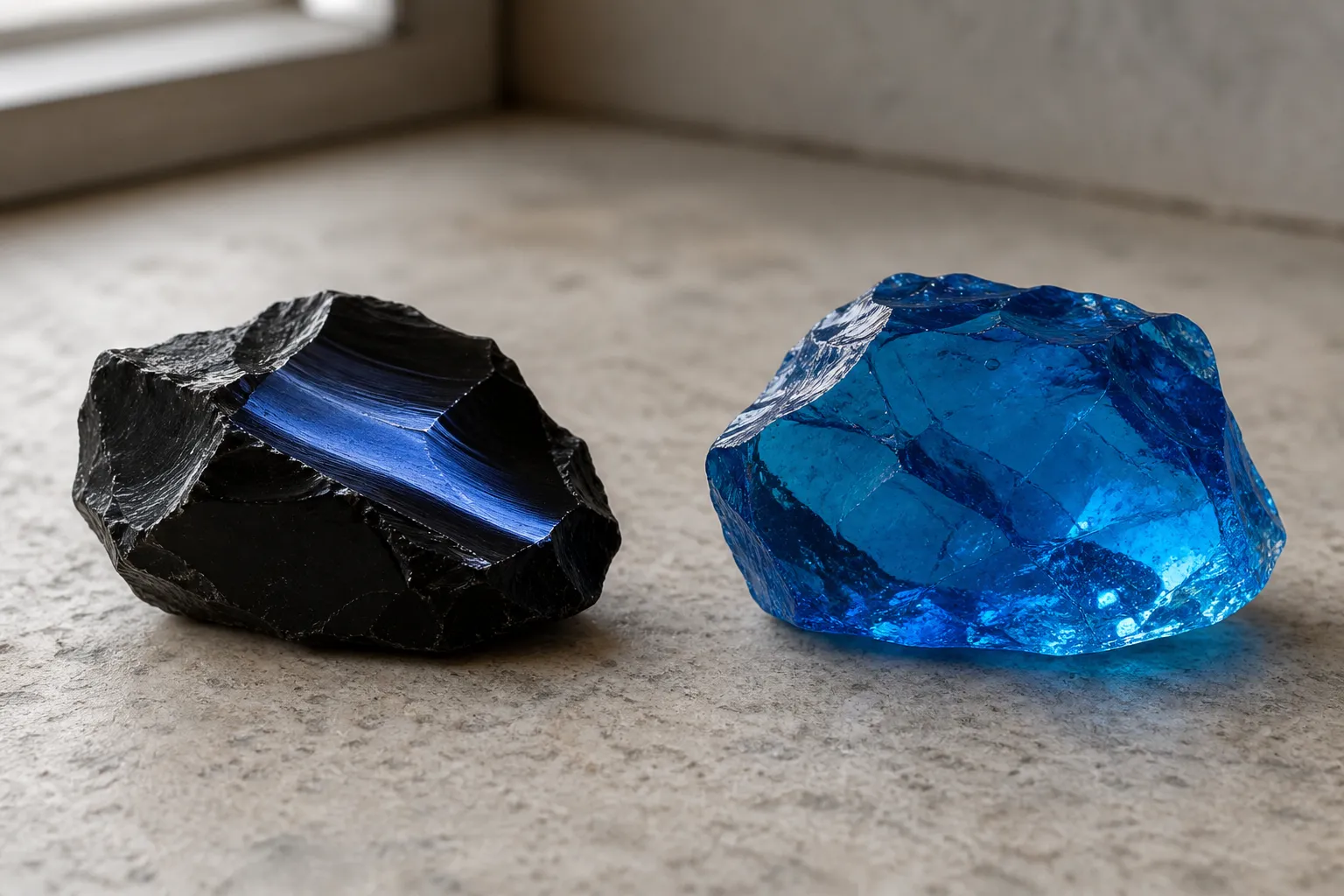
A blue flash on a glassy surface does not prove a volcanic origin. In collector use, natural blue obsidian may mean a dark piece with a bluish sheen, a grey-green volcanic glass that reads blue in certain light, or a bright transparent blue object sold under an obsidian name. Those are different cases.
The short answer: natural obsidian can look bluish in limited ways, especially through sheen, lighting, or dark body color. Vivid transparent blue “obsidian” is much more suspicious. If a piece is candy-blue, aqua, emerald, amber, purple, or evenly colored through the body, treat it as colored or manufactured glass unless the seller can support the name with credible locality, disclosure, or testing information.
upward
Start with the broader guide
Use the broader guide first if you need the full scope before this page.
Blue Appearance Is Not the Same as Blue Body Color
Obsidian is natural volcanic glass. It forms when molten volcanic material cools so quickly that large mineral crystals do not develop, which is why a real obsidian edge, bead, or polished surface can look plainly glassy.
The problem starts when “blue” is used too loosely. A specimen may look blue because of reflected light, camera white balance, a polished sheen, or a thin optical effect across a dark base. That is not the same as a piece that is transparent blue all the way through, like bottle glass, art glass, or slag glass.
Mineral references leave room for color variation in obsidian. Black and dark tones are common, but bluish, grey-green, brown-green, mahogany, golden, and peacock-like descriptions also appear in mineral contexts. Some color and sheen effects can be tied to fine internal features, including tiny bubbles or structures that affect how light moves through the glass.
First Inspection Question
Are you seeing dark volcanic glass with a bluish reflection, or a bright blue glass body?
Natural remains possible
Dark base, smoky depth, grey-green cast, or bluish reflection that changes with light.
Needs stronger support
Transparent bright blue body color that stays even through the whole piece.
Clues That Fit Natural Bluish Obsidian
A natural bluish piece usually does not look like a perfect transparent blue marble. It is more likely to have a dark base, smoky depth, grey-green cast, uneven tone, or a blue-looking sheen that appears only from certain angles.
Look for a cluster of clues, not one magic sign:
Dark base with blue reflection
This may suggest a sheen or lighting effect. The “blue” may be optical, not body color.
Color shifts as you rotate it
This may suggest angle-dependent sheen or polish. Natural-looking effects often depend on light.
Glassy luster and curved fracture
This is consistent with glassy material, but obsidian and manufactured glass can both show it.
Slight flow-like variation or uneven tone
This is more plausible than perfect uniform color because natural volcanic glass may show internal variation.
Locality or collection context
This gives stronger support for the name. A color label alone is weak evidence.
Conchoidal fracture means a curved, shell-like break. Obsidian often breaks this way because it is glassy, but manufactured glass can do the same. This clue supports the material family; it does not settle the origin.
The stronger natural case is built from several points together: dark or smoky body color, angle-dependent bluish sheen, non-uniform appearance, believable locality, and a seller who distinguishes “bluish sheen” from “transparent blue obsidian.” One attractive photo is not enough.
Clues That Point Toward Colored or Manufactured Glass
The most suspicious examples are bright, transparent, evenly colored pieces sold as blue obsidian. The same caution applies to retail names such as aqua obsidian, emerald obsidian, amber obsidian, purple obsidian, or broad “colored obsidian” when the object looks more like decorative glass than natural volcanic glass.
A piece is more likely to be colored glass, or obsidian only by trade name, when several of these traits appear together:
- It is transparent blue, aqua, green, amber, or purple through the whole body.
- The color is very even, with no dark base or natural-looking variation.
- It resembles bottle glass, sea glass, art glass, or industrial slag glass.
- The listing gives a dramatic color name but no locality or geological context.
- The seller uses “blue volcanic glass” and “blue obsidian” as if they mean the same thing.
- The only support is a polished shape, a bright photo, or a shop label.
Use Bubble Clues Narrowly
Visible round bubbles can raise concern, especially in a vivid transparent piece. Natural obsidian can contain microscopic bubbles and fine internal features; the issue is not “any bubble means artificial.” Large, round, obvious bubbles in a uniformly bright glassy object make a manufactured-glass explanation more plausible.
Many “blue obsidian real or fake” debates get tangled because people mix body color, reflection, transparency, and bubbles into one quick verdict. Separate them first. A blue reflection on dark obsidian is a different question from a transparent blue object sold as natural obsidian.
Why the Seller Name May Not Be Enough
“Blue obsidian” is not a stable collector label in the way a beginner might expect. It can be used for natural bluish obsidian, dark obsidian with blue-looking sheen, artificial blue glass, slag glass, or another colored glass object marketed with an obsidian name.
Market use does not make a term geological. A seller may call an object “obsidian” because it is glassy, attractive, and familiar to crystal buyers. That does not show it formed as natural volcanic glass.
A better listing explains the basis for the name. Is it a natural locality? A sheen effect? A body color? A trade name? A decorative glass product? If the description avoids those distinctions, read the label as incomplete.
This does not mean every seller is acting badly. Loose names often pass through bead strands, carvings, tumbled stones, and resale listings. For the collector, the practical question stays the same: what supports the name?
Phrases That Need Context
- aqua obsidian
- emerald obsidian
- amber obsidian
- transparent blue obsidian
- colored obsidian
- dyed glass obsidian
- slag glass obsidian
A Quick Inspection Path
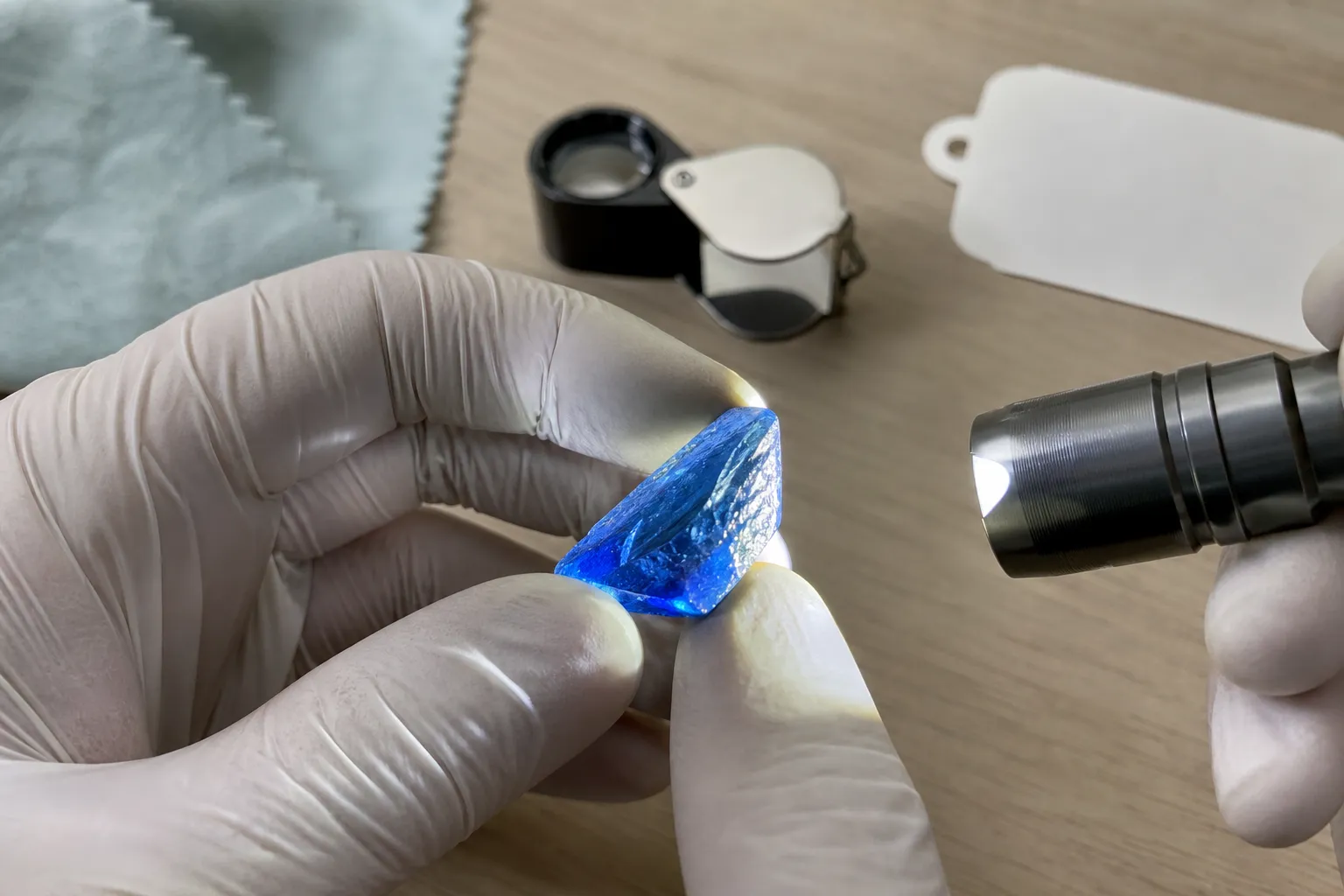
Use a short decision path rather than a single trick. Home inspection can flag concerns, but it cannot certify a specimen.
1. Check body color
Hold the piece against a neutral background and look through the thinnest edge if it is translucent. A dark, smoky, black, grey-green, or uneven body with bluish reflection is more plausible than a bright transparent blue body.
2. Change the light
Rotate the piece under daylight and a plain indoor light. If the blue appears only as a flash, sheen, or surface reflection, describe it that way. If the whole piece stays evenly blue from every angle, the colored-glass possibility becomes stronger.
3. Inspect the surface and edge
Obsidian often has glassy luster and may show a sharp fracture edge when broken. Polished carvings and beads hide many useful clues, so they are harder to judge than rough or lightly worked pieces.
4. Look for bubbles and internal features
Large round bubbles in bright transparent material are a warning sign. Fine internal features are not automatically a problem, because natural volcanic glass can contain microscopic structures.
5. Ask for context
A credible locality, collection history, lapidary disclosure, or testing information carries more weight than a color name. If the answer is only “it is natural because it is blue obsidian,” the claim is weak.
A careful label may be modest: “dark obsidian with bluish sheen,” “blue-looking glass sold as obsidian,” “possible colored glass,” or “needs testing before calling natural.” A modest label is better than a confident wrong one.
What Photos Cannot Settle
Photos can show obvious red flags, but photos cannot certify obsidian. Lighting, polish, white balance, background color, and image editing can all shift a piece toward blue. A dark black specimen may look navy in sunlight. A transparent blue glass piece may look more natural in a shadowed photo. A sheen may disappear from one angle and flare from another.
This matters because many online disputes about blue glass sold as obsidian rely on one or two pictures. A comment thread may notice bubbles, color, or shine, but without physical inspection, locality, or testing, the conclusion remains limited.
If the piece is inexpensive and you like it as decorative glass, the label may matter less. If you are collecting natural obsidian varieties, paying for rarity, or recording a specimen, the label matters more. In that case, bright transparent blue material should not be accepted as natural blue obsidian from photos alone.
Where Symbolic Meaning Fits
Some shops attach symbolic meaning to blue obsidian, especially when selling polished stones or crystal items. Treat that as cultural, personal, or seller language, not as evidence of geological identity. A meaning description cannot verify whether the material is natural volcanic glass, colored glass, dyed glass, sea glass, or slag glass.
For this question, keep the order practical: visible traits first, naming support second, symbolism last if it matters to you personally. A belief-based description does not solve an identification problem.
Bottom Line for Collectors
Natural bluish obsidian is possible, especially as a dark piece with a blue-looking sheen, grey-green cast, or lighting-dependent optical effect. Bright transparent blue obsidian, aqua obsidian, emerald obsidian, amber obsidian, and other vivid uniformly colored “obsidian” labels deserve caution.
Use a probability rule: if the piece looks like vivid colored glass, assume the obsidian label needs support. Ask for locality, disclosure, or testing before calling it natural. If all you have is a photo and a seller name, keep the label tentative: colored glass or obsidian is still an open question.