
Naming caution
What Does Aqua Obsidian Mean and Why the Name Needs Caution
A blue-green glassy surface can look persuasive when it is polished into a bead, palm stone, tower, or cabochon. The practical answer is this: aqua obsidian is best treated as a seller or market label, not as a confirmed mineral or variety name by itself. It may describe a blue, aqua, sea-glass-colored, or symbolically themed piece, but the name alone does not prove natural origin, material identity, treatment history, rarity, value, or any promised effect.
That is why the name needs caution. Start with the visible traits, then ask what the label can actually support.
upward
Start with the broader guide
Use the broader guide first if you need the full scope before this page.
Fast collector read
- Use the name as a clue: it may describe color and seller language.
- Do not use it as proof: it does not confirm origin, treatment, value, or effects.
- Inspect before accepting: color behavior, surface, edges, and disclosures matter.

What “Aqua Obsidian” Usually Means
In collector language, “aqua obsidian” usually signals color first. “Aqua” points to a blue-green, watery blue, or pale turquoise look. “Obsidian” places the object near the obsidian category, often because the surface looks glassy.
The problem is that the combined label does not explain how the color formed. It does not tell you whether the piece is natural volcanic glass, altered material, manufactured glass, or a decorative object using an obsidian-style name.
A careful reading is: aqua obsidian may be sold as an obsidian-like crystal with blue-green color, but the label is not enough for identification.
The same caution applies to “aqua blue obsidian.” It sounds more specific, but it still functions as descriptive seller language unless the seller provides stronger material information. A listing title, product tag, or meaning caption can describe the look of a piece; it cannot confirm what the piece is.
That separation keeps the aqua obsidian meaning useful without letting the name carry more than it can support.
Why the Name Needs Caution
The issue is not that every aqua-colored piece is automatically wrong. The issue is that the name can do too much work. A useful label should help a collector understand the object; “aqua obsidian” can blur color, material, marketing, and meaning into one attractive phrase.
Aqua is a color description. Obsidian is commonly discussed as volcanic glass. A polished blue-green object may have a glassy luster, but a glassy surface alone does not settle the material question. Many objects can look smooth, reflective, or translucent at the edges. Shop photos can also shift color through lighting, background, saturation, or backlighting.
That matters more when the piece is being bought as a collectible rather than a decorative item. If value, origin, or variety status matters, the aqua obsidian label needs more support than a product title. Ask for the seller’s basis for the name: source information, treatment disclosure, material description, and clear photos in neutral light. If those details are missing, treat the name as a visual or commercial label.
Phrases like “colored glass obsidian” can also create confusion. They often appear when collectors are trying to sort unusual blue, green, or bright glassy pieces. Without reliable source information, testing, or disclosed production history, handle those phrases as questions, not verdicts. A cautious collector can ask, “Could this be colored glass?” without claiming certainty from a photo.
The short collector rule: the brighter and more unusual the color, the more carefully the name should be checked.
Visible Traits to Inspect Before Accepting the Label
Inspection cannot prove everything, but it can tell you whether the name deserves confidence, doubt, or follow-up questions. Look at the piece in daylight or consistent white light. Do not judge only from a saturated product image.
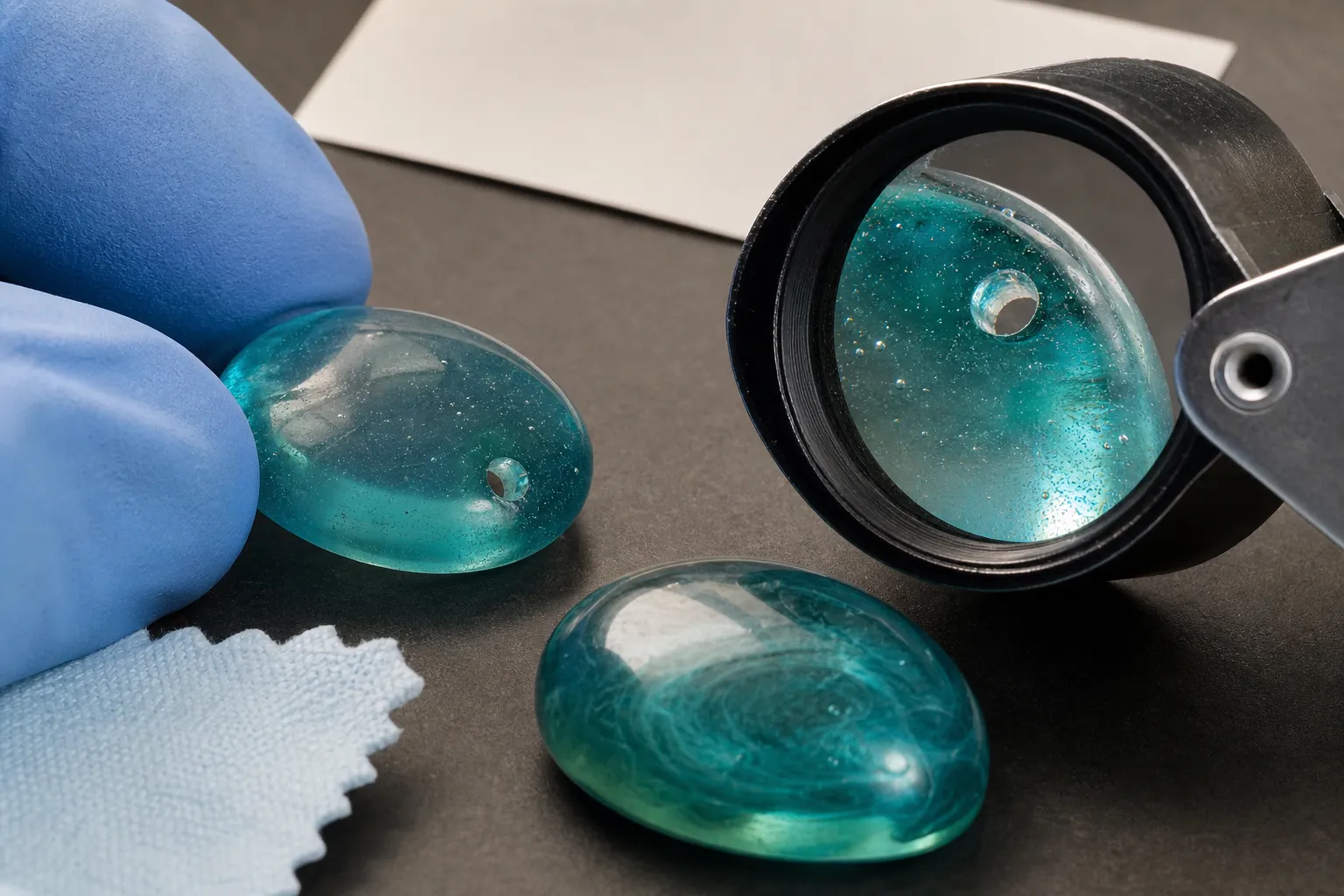
Start with the surface. Is the luster glassy and even, or does it look coated? Does the color appear throughout the material, or is it strongest near the surface, cracks, drilled holes, or edges? Do you see bubbles, swirls, mold-like shapes, or unusually uniform color zones that make the piece feel more like manufactured decorative glass? None of these clues gives a final answer by itself, but each one is a reason to ask for better information.
Then check the edges. Obsidian and other glassy materials may show sharp fracture behavior when broken, though polished objects often hide that clue. A smooth bead or tower may reveal very little about the original material. A rough specimen with visible fracture edges and unpolished areas usually gives more to inspect.
Also watch the seller language. If the same item is described across listings as aqua obsidian, aqua blue obsidian, synthetic glass, man-made glass, and natural crystal, that mixed wording deserves caution. It does not automatically prove bad intent; sellers may reuse broad tags. It does mean the label is not doing reliable identification work.
Practical inspection checklist
- View the piece under neutral light, not only edited product photos.
- Look for color concentration around cracks, holes, edges, or surface areas.
- Compare polished faces with any unpolished edge, chip, or fracture clue.
- Ask whether “aqua” is being used as color language or as a claimed variety.
- Request disclosure if the piece is dyed, coated, treated, manufactured, or otherwise altered.
- Treat photo-only certainty as weak when the purchase depends on material identity.
These steps do not turn a buyer into a laboratory. They simply keep the decision tied to visible traits and seller accountability.
What the Symbolic Meaning Can and Cannot Do
Searches for aqua obsidian meaning often come from the symbolic side of crystal collecting. In that setting, aqua may be associated with water imagery, calm color language, communication themes, or personal reflection. Those meanings can matter to someone choosing a piece for color, display, or personal symbolism.
But symbolic meaning is not material identification. A seller can describe an aqua-colored stone with ocean-like language; that does not verify that the object is natural obsidian. A meaning page can assign themes to a blue-green crystal; that does not establish origin, rarity, or physical properties. Keep the meaning after the visible traits.
A careful phrasing is: aqua obsidian may carry a personal or seller-given meaning connected to its blue-green appearance, but that meaning is interpretive. It should not be treated as proof that the material has a special status or will produce a specific result.
This boundary matters when commercial claims are attached to the piece. If a product description moves from color and appearance into strong outcome promises, read that as marketing language, not identification evidence. You can still enjoy a piece for its look or personal symbolism; just do not let symbolism answer material questions.
For collecting purposes, meaning is optional. Identification is not.
Questions to Ask Before Buying or Labeling It
If you already own a piece labeled aqua obsidian, you do not have to discard the name entirely. Record it as the seller label while keeping your own notes more cautious: “sold as aqua obsidian; blue-green polished glassy material; identity not independently verified.” That preserves the purchase history without overstating certainty.
Before buying, match your questions to the claim. A decorative bead strand does not need the same scrutiny as an expensive specimen. If the price, rarity claim, or collecting value depends on the name, the burden should rise.
Useful questions
- Label role: Is “aqua obsidian” being used as a variety name, a color description, or a shop label?
- Disclosure: Does the seller disclose whether the material is natural, treated, dyed, coated, or manufactured?
- Photos: Are there photos in neutral light, including close views of edges, holes, chips, or unpolished areas?
- Source details: Is any source, locality, or production information provided?
- Price basis: Is the price based on appearance, size, carving work, or a claimed identity?
- Cautious wording: Would the seller accept a cautious label such as “sold as aqua obsidian”?
The point is not to interrogate every small purchase. It is to match the claim to the evidence. If the listing only supports a color description, buy it as a blue-green decorative piece, not as a confirmed variety.
When value matters, stronger verification is needed. That may mean choosing a seller who gives clear disclosure, comparing the piece with better-documented specimens, or seeking qualified material identification outside the listing itself. A name alone is not enough.
A Practical Way to Use the Label
The most balanced use of the aqua obsidian label is as a note, not a conclusion. It can describe how a piece was sold or how it appears in a collection tray. It should not stand alone as proof of origin, treatment status, or effect.
Cautious collector label
Aqua obsidian — seller label; blue-green polished glassy piece; material identity not confirmed from label alone.
That wording is plain, but it avoids two common mistakes. One is rejecting every unusual color too quickly without looking. The other is accepting an attractive name as fact. Good collecting sits between those extremes.
If you compare several pieces, keep the same standard for each one. Record visible traits first: color, transparency, luster, sheen, banding, bubbles, fracture clues, polish quality, and any seller disclosures. Then record the name. That order keeps the label in its proper place.
Bottom Line
Aqua obsidian meaning starts with appearance and seller language: a blue-green, glassy-looking piece being presented with an obsidian name. The caution is that the label cannot confirm natural origin, treatment history, recognized variety status, value, or symbolic outcome.
Use the name as a clue. Inspect the surface, edge, color behavior, and listing details. Ask for disclosure when the claim matters. If the evidence remains thin, the most accurate label is still a careful one: sold as aqua obsidian, not confirmed by the name alone.