
Collector Surface Guide
How Polish Quality Affects Obsidian Price and Display Value
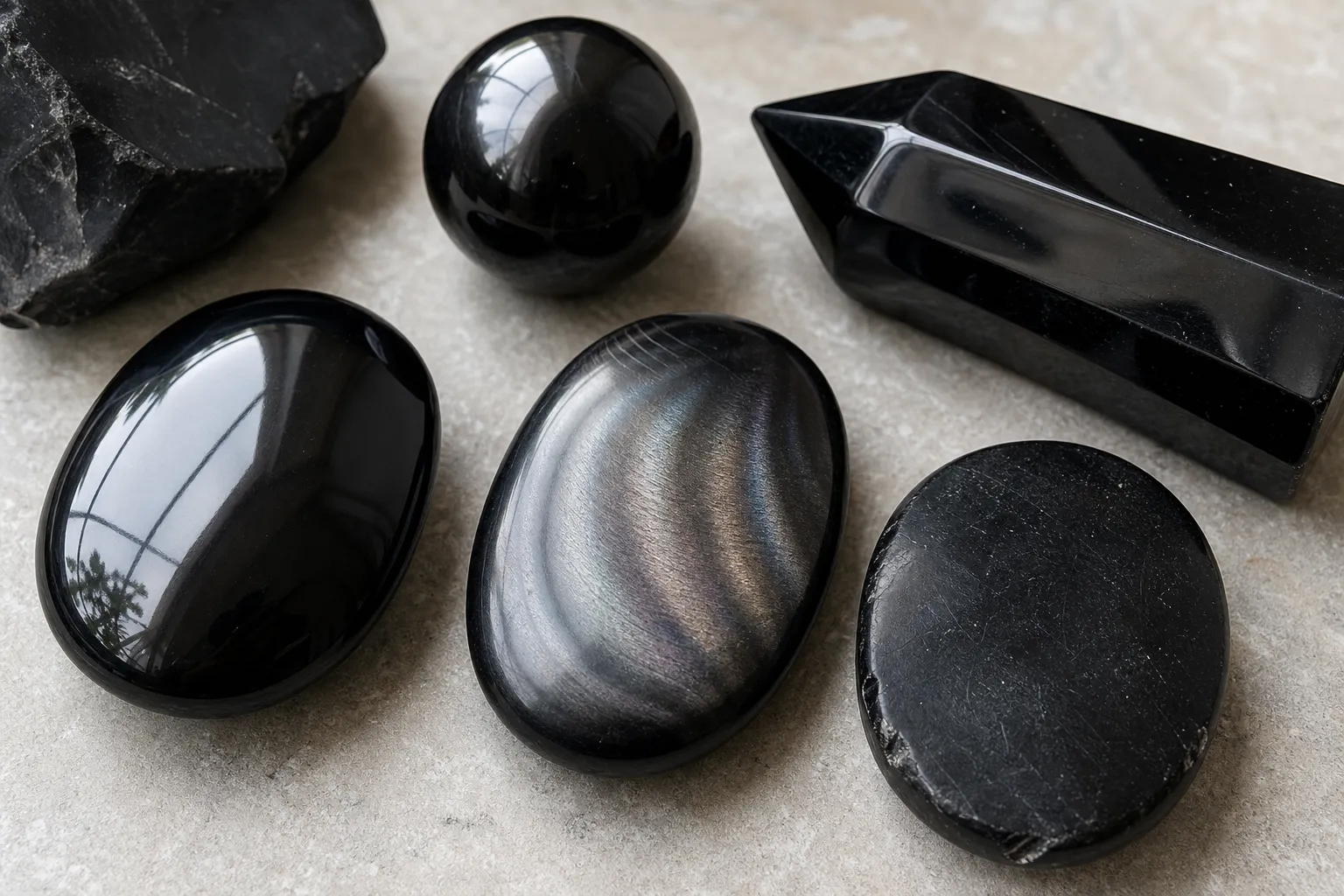
A polished obsidian piece usually earns more attention when the surface is even, glossy, and easy to read in ordinary light. That can support higher polished obsidian value in a collector’s eyes, especially when the finish helps sheen, color bands, carving lines, or shape stand out clearly.
Polish quality is not a price formula. A bright surface does not establish authenticity, rarity, origin, grade, or resale value. It mainly affects what a viewer can see: gloss, reflectivity, scratches, dull patches, chips, and whether the piece displays well without special lighting.
upward
Read the full overview first
Use the broader guide first if you need the full scope before this page.
The Short Answer: Polish Improves Presentation, Not Proof
Good obsidian polish quality improves display appeal because it gives the surface a cleaner visual field. On black obsidian, that may mean a deeper mirror-like look. On sheen varieties, it can help the moving glow appear more clearly as the piece turns. On banded or patterned pieces, an even finish makes the visual structure easier to inspect.
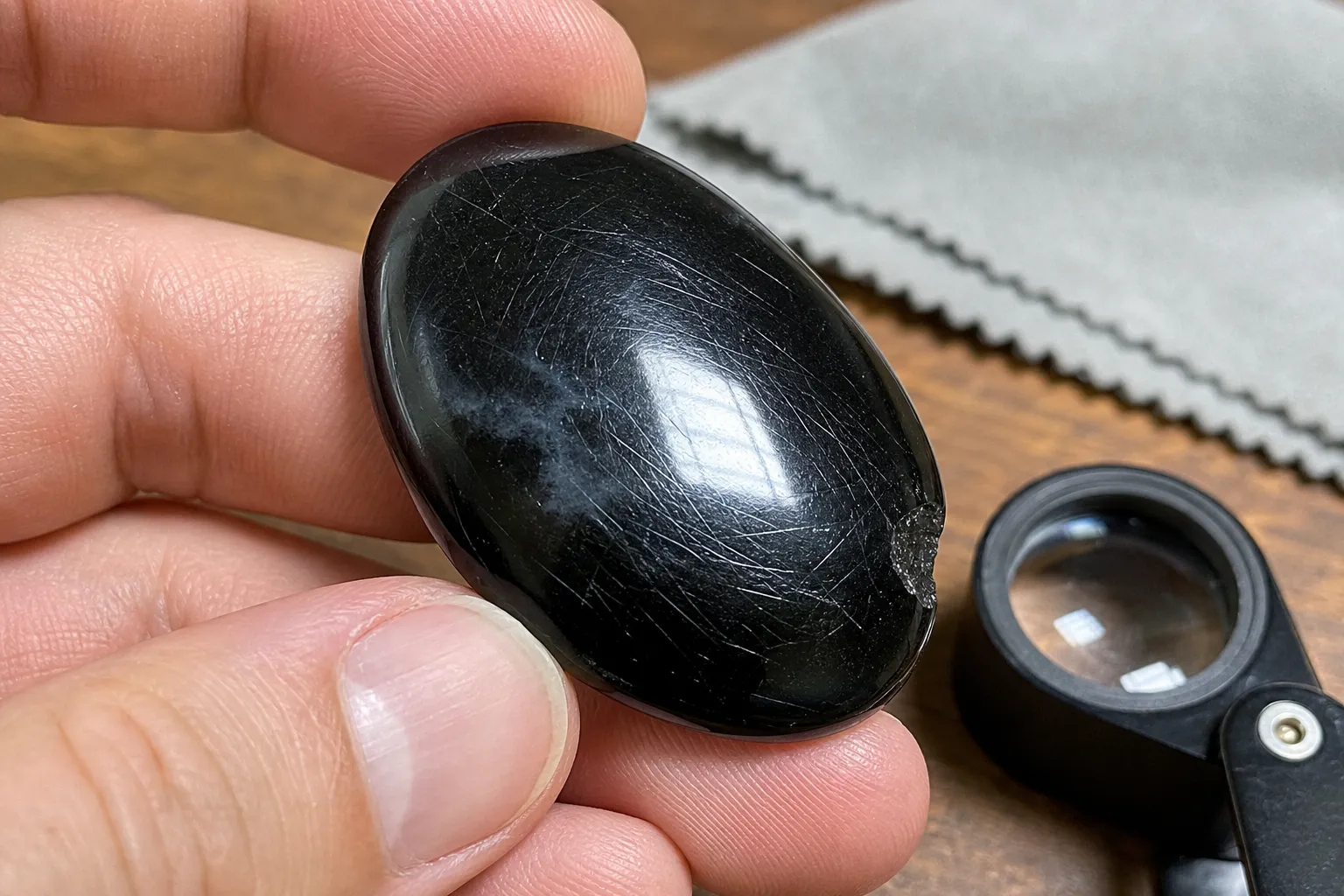
Poor polish works the other way. Fine scratches scatter light. Dull patches interrupt gloss. Uneven finish can make a palm stone, tower, carving, or cabochon look less careful even when the underlying material is still interesting. Chips on front edges draw the eye away from the main display face.
The price point needs more caution. Visible polish quality may influence perceived price because collectors often respond to clean surfaces and strong presentation. But price also depends on size, variety name, pattern, cutting quality, seller context, condition, and buyer preference. Treat polish as one visible price factor, not the deciding rule.
What to Look For on a Polished Surface
Read the Display Face First
Start with the face that will be displayed. Hold the piece under soft light, then tilt it slowly. You are not trying to force a dramatic photo effect; you are checking whether the surface stays readable as the angle changes.
Check Gloss Consistency
A strong polish usually has steady gloss across the main face. The reflection does not have to look like a manufactured mirror, but it should feel intentional rather than cloudy.
Separate Haze From Smudges
If a shiny area breaks into gray haze, the finish may be uneven, worn, or dirty. If the whole surface looks muted, the piece may still be collectible, but its display value will lean more on shape, pattern, or personal meaning than on polish.
Notice Where Scratches Sit
Scratches matter most when they cross the main viewing area. A few faint handling marks may be minor on a large specimen, while one bright scratch can dominate a small heart, pendant, palm stone, or cabochon.
Direction matters too: scratches across a sheen or banded area can make the feature harder to enjoy.
Dull patches deserve a second look. They may come from uneven finish, residue, fingerprints, abrasion, or ordinary handling. A soft, clean cloth can help separate surface smudges from actual finish issues. Do not judge a cloudy spot from one light source only.
Edges and points affect presentation as much as the face. Obsidian is volcanic glass and can chip at rims, tips, carved high points, or exposed fracture edges. A small chip on the back may not matter much for display. A chip on the front edge can change the whole impression.
How Polish Affects Display Value
Display value is not the same as market value. Display value asks a simpler question: does the piece look good where it will be seen?
For a shelf, cabinet, desk, altar, or collection tray, polish controls how the stone catches light. A glossy face can give black obsidian visual depth. A clean curve can make a sphere or palm stone feel finished. A smooth carved surface helps the silhouette read from a short distance.
Lighting dependence is part of the decision. Some pieces look striking only under a narrow beam or at one exact angle. That is not automatically a flaw, especially with sheen varieties, but it changes how useful the piece is for everyday display. If the effect appears only under strong directional light, it may look quieter in a dim room or enclosed case.
For rainbow, gold sheen, silver sheen, and other visually responsive pieces, polish can help or hinder the effect. An even surface gives the moving sheen a clearer path. Scratches, haze, or a lumpy finish can break up the view. Still, sheen is not created by polish alone; a shiny black surface should not be treated as proof of a special variety name.
Shape also changes the polish question. A flat face shows scratches and cloudy finish quickly. A rounded palm stone hides some marks but reveals uneven reflectivity when turned. Carvings add grooves, corners, and recessed areas that may not have the same finish as the raised surfaces. Judge the whole piece, not just the brightest face in a seller photo.
Where Polish Fits Among Obsidian Price Factors
What Polish Can Show
Clean surface, visible gloss, readable shape, strong presentation, scratches, cloudy areas, chips, and consistency.
What Price Also Depends On
Size, weight, shape, carving detail, visible pattern, variety name, condition, provenance claims, selling setting, and buyer preference.
What Polish Cannot Prove
Authenticity, rarity, origin, formal grade, provenance, resale value, or special variety status.
Polish is a visible condition factor. It can support buyer interest when the surface looks clean, the shape is well presented, and the main visual traits are easy to see. It can weaken interest when the finish looks rushed, scratched, cloudy, chipped, or inconsistent.
Other obsidian price factors sit outside the polish. A collector may also consider size, weight, shape, carving detail, visible pattern, variety name, condition, provenance claims, and the selling setting. Some of these can be inspected directly. Others need caution because labels and stories can be difficult to verify from photos or short descriptions.
That is why polish should be read as presentation evidence, not appraisal evidence. A highly polished common black piece may look elegant without carrying rare-material pricing. A less glossy specimen with strong patterning may still attract interest. A damaged piece may remain meaningful to its owner even if the display face is less clean.
Seller photos can distort the question. Strong lighting can hide fine scratches or exaggerate reflectivity. Dark backgrounds can make black obsidian look deeper. Angled photos can make a small sheen appear more dramatic than it looks in a room. If price matters, ask for plain-light photos from several angles, including close views of edges, backs, and high-contact areas.
Let polish influence how much you like the piece. Do not let it carry the whole value judgment.
Common Confusions About Polish and Value
Gloss Is Not Authenticity
A glassy luster fits obsidian’s visual character, but shine alone does not establish what the material is, where it came from, or how it should be classified. Identification needs more context than a reflective surface.
Dullness Is Not Always Low Value
A dull patch on the main face may reduce display appeal, but not every matte or uneven area matters equally. Some pieces are kept for shape, color contrast, visible pattern, or personal association.
Higher Shine Is Not Always Better
Overly bright photos can make a surface look flawless until it is handled in normal light. The better collector question is: does the polish help me see the feature I care about?
Polish Does Not Create the Label
Terms such as rainbow obsidian, gold sheen obsidian, silver sheen obsidian, and snowflake obsidian are often used as variety names in collector and seller settings. Polish can make those traits easier or harder to see, but it does not create the label.
A variety name is a claim to inspect, not a conclusion made by the finish.
Symbolic meaning should stay separate from price. Some people choose polished obsidian because it feels visually calm, dramatic, protective, or grounding within a personal or cultural practice. Those interpretations can matter to the owner, but they should not be used as evidence of material value or physical effect.
A Practical Inspection Path
Use a short sequence rather than a single glance.
1. Look in Ordinary Room Light
Check whether the gloss is even and whether the shape reads clearly. If the piece needs a flashlight to look appealing, decide whether that suits your display setting.
2. Tilt the Stone Slowly
Watch for scratches, dull patches, fingerprints, cloudy zones, and uneven finish. A mark that appears only at one angle may be minor. A mark that catches the eye from every angle will matter more.
3. Inspect the Edges
Chips, bruised points, and rough rims can reduce display appeal, especially on carved forms or polished slabs. If the piece will be handled often, edge condition matters more than it would inside a closed cabinet.
4. Match Polish to the Main Trait
For black obsidian, that may be depth and reflectivity. For sheen obsidian, it may be the movement of light. For snowflake obsidian, it may be contrast between the dark base and pale pattern. The polish should serve the feature, not distract from it.
5. Separate Display From Price
If the surface looks beautiful to you, that is a valid collecting reason. If the price is being justified by rarity, origin, or special status, polish alone is not enough support.
Care Choices That Preserve Display Appeal
Handling can change how a polished piece looks. Fingerprints, dust, grit, and contact with harder objects can make the surface look less crisp. A soft cloth is usually the most conservative first step for removing smudges. Avoid abrasive pads, aggressive scrubbing, and storage against rough materials.
Display placement matters. A polished face that rubs against metal, rough stone, or gritty shelving can pick up marks. If several pieces sit together in a tray, give polished surfaces enough separation so edges do not knock against each other. A cloth lining or individual pouch can reduce contact during storage.
Keep cleaning gentle unless you have better material-specific guidance. The goal is not to improve the polish at home; it is to avoid making the surface worse. If a scratch, chip, or dull area is part of the finish rather than surface residue, casual cleaning will not turn it into lapidary-quality polish.
For display, choose lighting that shows the piece honestly. Soft side light often reveals shape and sheen without making every fingerprint glare. Direct, harsh light may look dramatic, but it can also exaggerate scratches. The best display setup lets the stone look good without hiding obvious condition issues.
Evidence Limit
The Evidence Limit
The available research pack for this page did not include usable public sources, market examples, lapidary references, or attributable firsthand reports. That limits how strongly this article can speak about pricing rules, polish standards, buyer behavior, or appraisal outcomes.
So the practical answer stays narrow: visible polish quality can affect display appeal and may influence perceived price because it changes what a collector can see on the surface. It does not establish authenticity, rarity, formal grade, provenance, or resale value.
Inspect gloss, reflectivity, scratches, dull patches, uneven finish, visible sheen, and edge condition. Then treat price claims as separate questions that need stronger support.
A polished surface is a clue. It is not the whole verdict.
FAQ
Does better polish always make obsidian worth more?
No. Better polish can improve display appeal and may support perceived value, but it does not override size, pattern, condition, variety name, seller context, or buyer preference.
Can polish prove that obsidian is real?
No. A glossy surface fits the look many people expect from obsidian, but polish alone does not establish material identity, origin, or variety.
What polish flaws matter most?
Scratches across the main display face, cloudy patches, uneven reflectivity, chips on front edges, and finish problems that distract from sheen or pattern usually matter most.
Should I pay more for a highly polished piece?
Only if the polish supports the traits you value and the overall price still makes sense. If the price depends on rarity, origin, or special status, ask for stronger support than surface shine.