
Collector shipping check
What Shipping Details Matter When Buying Raw Obsidian
A glassy fracture edge can look sharp, clean, and collectible in a listing photo; it can also be the part most affected by poor packing. When shipping raw obsidian, the details that matter most are the form of the piece, the size description, edge and point protection, individual wrapping, cushioning or void fill, outer package strength, damage-handling terms, and what you should inspect before handling the stone closely.
None of those details makes breakage impossible. They help you decide whether a raw obsidian listing is clear enough to order with reasonable expectations, especially when the piece has sharp edges, brittle-looking points, loose chips, or a surface you want to keep recognizable.
upward
Read the full overview first
Use the broader guide first if you need the full scope before this page.
First Check What Is Being Shipped
Raw obsidian is not one shipping problem. A single rough specimen, several raw obsidian chunks, loose chips, and thin flakes all need different buyer questions. Before judging the packaging, make sure the listing describes the object itself.
Useful raw obsidian listing details include:
- Form: one rough piece, multiple chunks, loose chips, flakes, gravel-like material, or mixed rough.
- Size: measurements, weight, or a photo with scale; vague words like “medium” are easy to misread.
- Surface condition: glassy faces, dusty areas, chipped edges, rubbed corners, or fresh-looking breaks.
- Fragile features: thin points, narrow protrusions, attached flakes, or delicate fracture edges.
- Quantity: one selected specimen versus a random scoop, mixed lot, or weight-based order.
Raw obsidian size descriptions matter because photos can flatten scale. A piece held close to the camera may look larger than it is, while a heavy chunk may still have thin breakable edges. If the listing says “similar to photo,” ask whether the shipped piece will match the shown size range and form. That clarifies the order; it does not prove value, origin, or variety.
For chips and small fragments, the concern is not only cosmetic damage. Loose pieces can shift, create dust, or hide sharp slivers inside wrapping. That may be acceptable for tumbling, craft sorting, or study material. It is a different purchase if you want one displayable specimen.
Know whether you are ordering a specimen, a chunk, or loose material.
Packaging Details Worth Asking About
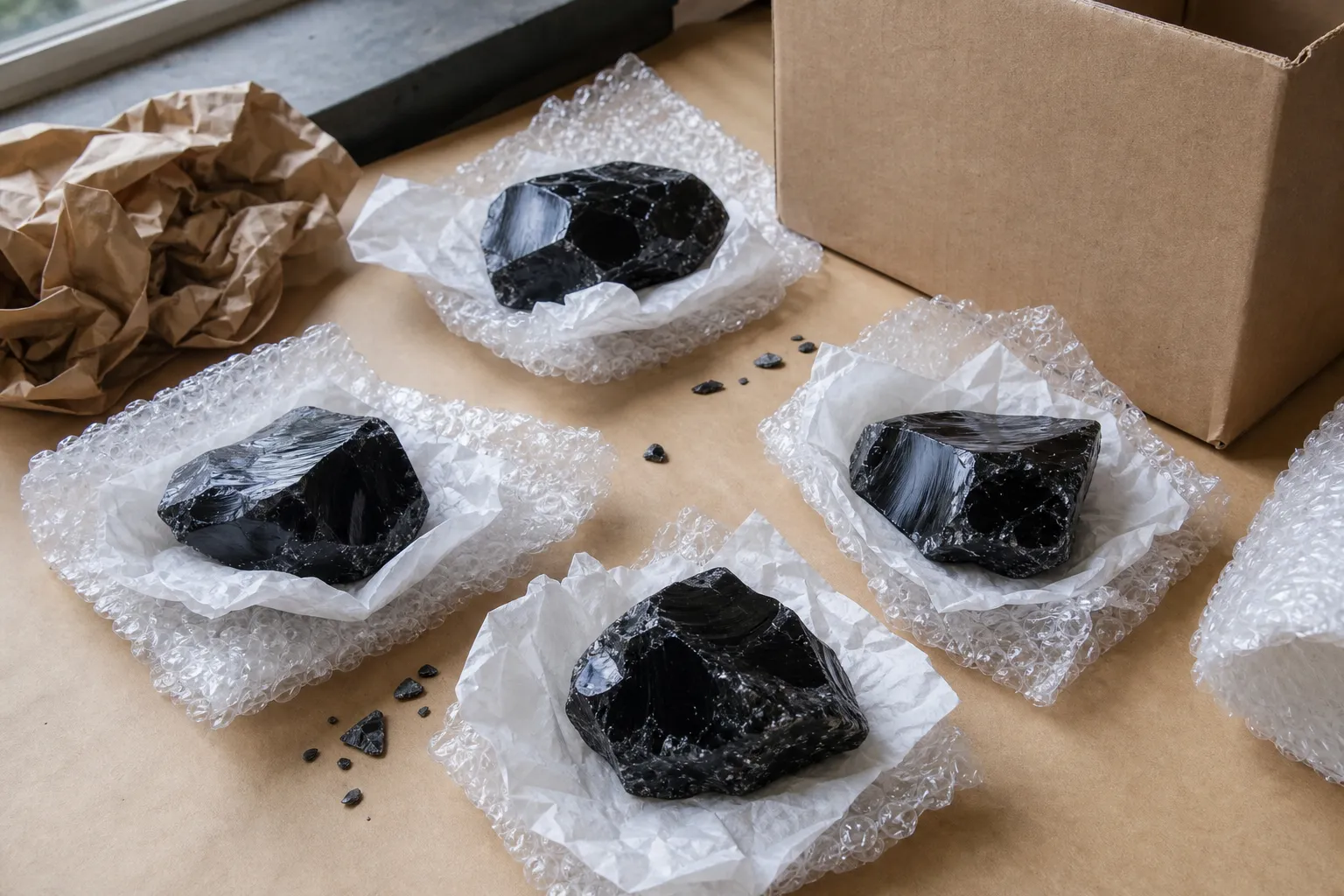
Obsidian packaging should be described in physical terms. Look for language that explains how the piece is separated, cushioned, and kept from moving. Decorative phrases such as “carefully packed” are not enough by themselves.
Individually wrapped obsidian
Helps keep pieces from striking each other in the parcel.
Edge or point covering
May reduce rubbing, chipping, or puncturing of softer wrapping.
Void fill for obsidian
Limits empty space so the stone is less likely to shift.
Inner bag or wrap for chips
Keeps small fragments and dust more contained during opening.
Rigid outer package
More relevant for heavy chunks, pointed pieces, or display specimens.
Damage-handling terms
Tells you what photos or contact steps the seller expects if something arrives damaged.
Individually wrapped obsidian is worth asking about when a listing includes more than one piece. Rough chunks can have uneven edges, and chips can act like loose grit against smoother surfaces. Separate wrapping does not promise perfect condition, but it gives you a clearer picture of the packing plan.
Protecting obsidian edges is a separate question from wrapping the whole parcel. A rough piece may have one sharp fracture edge, a thin glassy point, or a protruding corner. If that feature is why you want the specimen, ask whether it will be cushioned directly rather than only placed inside a mailer.
Void fill matters because a heavy object can still move inside a box if empty space surrounds it. If a listing only says “ships in a padded envelope” and the piece looks dense, pointed, or sharp, treat that as a reason to ask a follow-up question.
Good packaging language is specific. Vague reassurance is not the same as a clear packing plan.
Questions To Ask Before Ordering
When shipping details are unclear, ask short practical questions before buying. The goal is not to make the seller prove expertise; it is to learn whether the shipped object matches your collecting purpose and whether the packaging sounds reasonable for raw glassy material.
Useful questions include:
- “Is this the exact piece shown, or a similar raw piece?”
- “Are the measurements for the piece in the photo or for the general lot?”
- “Will each piece be wrapped separately?”
- “How are sharp edges or fragile points covered?”
- “Is loose chip material bagged before cushioning?”
- “Is the stone packed so it cannot move freely inside the parcel?”
- “What should I photograph if the package arrives damaged?”
A seller who answers with measurements, packing steps, and damage-handling instructions gives you more to evaluate than one who only repeats that the item will be packed well. A seller may still ship successfully with a short listing, but you have less information to rely on.
Raw obsidian damage handling should be clear before payment when the piece is expensive to you, unusually sharp, or meant for display rather than bulk use. Look for whether the seller asks buyers to keep packaging, photograph the box, photograph the stone before handling closely, or contact them within a stated time. Do not assume every marketplace, carrier, or shop handles damage the same way.
Also separate shipping detail from identity claims. A careful packing description does not prove the variety name, origin, or authenticity of a piece. Shipping details answer a handling problem; visible traits and cautious naming language answer a different question.
Ask before ordering if the edge, form, or condition matters to you.
Common Misunderstandings
The first misunderstanding is treating “raw” as one condition. Raw can mean a large rough chunk, a fresh-looking broken fragment, small chips, or an unpolished piece with smoother natural faces. Those forms do not have the same shipping concerns.
The second is assuming that more wrapping always means better packing. Heavy stones need cushioning and limited movement. Small chips need containment. A delicate point may need direct protection. The useful question is not “How much packaging?” but “What part of the stone is being protected, and from what movement?”
The third is reading dust or tiny fragments as automatic proof of poor packing. Raw stone parcels may contain loose grit, especially when chips or broken-looking pieces are involved. Still, new loose fragments, torn wrapping, a crushed box, or a visibly changed edge are reasons to pause, photograph the condition, and contact the seller before cleaning or sorting everything.
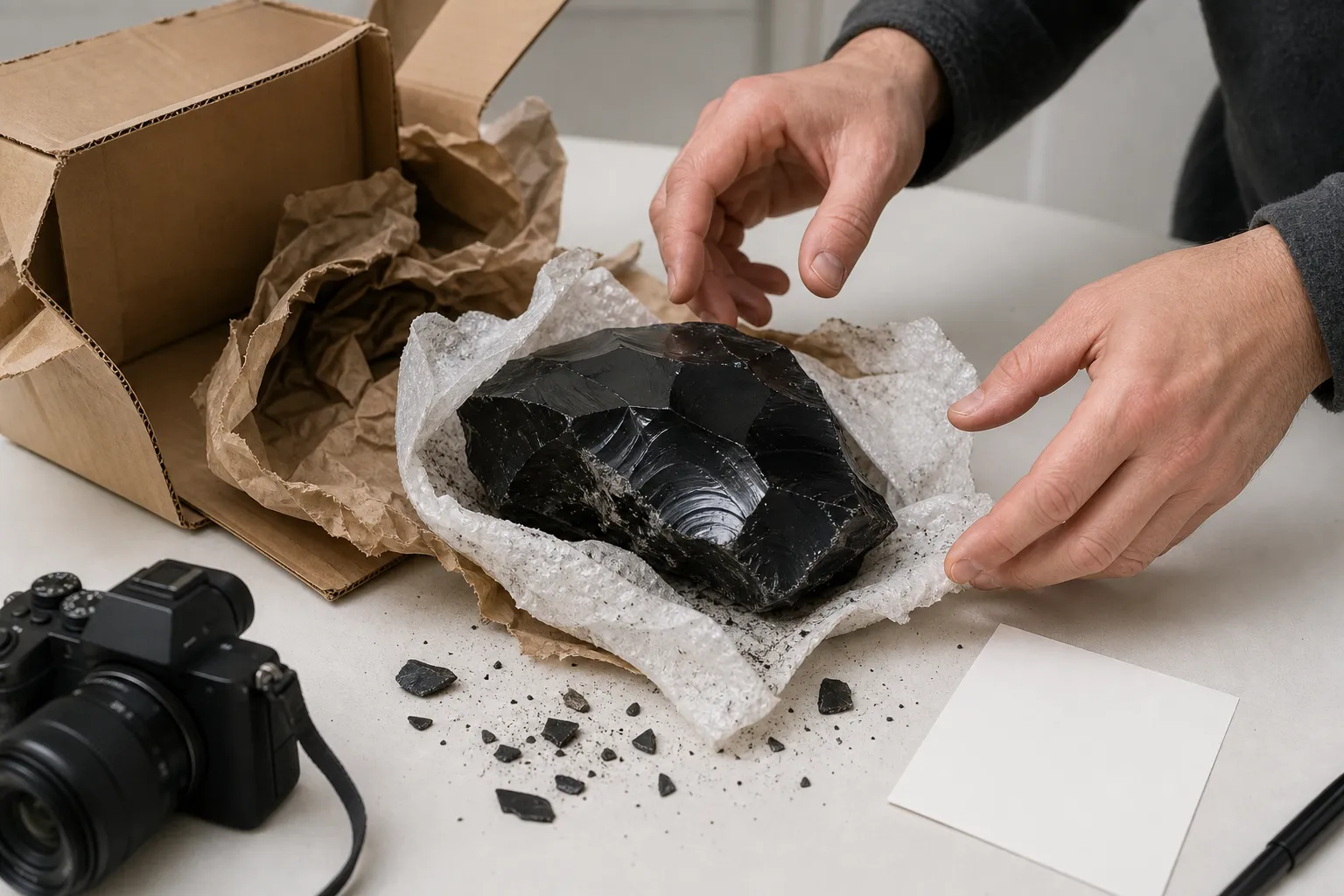
Raw obsidian may have sharp edges or small chips, so unpack slowly, keep your face away from loose fragments, and avoid sweeping glassy pieces with bare hands. This is general handling caution, not a tested protocol or a promise that one method fits every parcel.
Packaging protects the shipment. Careful unpacking protects your hands and your ability to document condition.
Inspecting Obsidian After Delivery
Open raw obsidian over a clear surface where small chips can be seen. Do not press through wrapping to feel the shape before you know where the edges are. If the parcel looks crushed, wet, torn, or leaking small fragments, photograph it before removing everything.
A simple receiving sequence:
- Check the outer parcel for dents, tears, punctures, or loose material.
- Photograph the unopened package if anything looks damaged.
- Open slowly and look for loose chips or dust before touching the main piece.
- Remove wrapping from the dullest-looking side first, if you can identify one.
- Compare the delivered piece with the listing photos and size description.
- Keep damaged packaging until any seller conversation is finished.
Inspecting obsidian after delivery is not about proving every tiny mark is new. Photos, listing descriptions, and lighting can make surfaces look different. Focus on clearer changes: missing points, fresh-looking breaks, crushed corners, detached fragments that match a broken edge, or a piece count that does not match the listing.
If the piece arrived in acceptable condition, clean it only according to the care approach you already use for raw stones, and avoid aggressive cleaning around fragile edges. If it arrived damaged, do not discard the box, wrap, bags, or loose fragments until you have contacted the seller through the purchase channel.
The best inspection happens before the stone is mixed into your collection.
Raw Obsidian Shipping Checklist
Use this checklist when the listing looks appealing but the shipping details are thin:
- Does the listing show whether the order is one piece, several chunks, or loose chips?
- Are size and weight described clearly enough for your expectations?
- Are fragile edges, points, or protrusions visible in the photos?
- Does the seller mention individual wrapping for multiple pieces?
- Is there a plan for containing chips, dust, or tiny fragments?
- Does the packaging description include cushioning and limited movement?
- Does the outer package sound suitable for the weight and shape?
- Are damage-handling steps explained before purchase?
- Do you know what to photograph before unpacking if the parcel arrives damaged?
If several answers are missing, ask before ordering. If the seller cannot clarify, decide whether the uncertainty is acceptable for the price, purpose, and condition you expect.
Shipping details do not turn an online listing into a certain outcome. They help you judge whether the raw piece, its edges, and the seller’s packing description match the way you plan to collect, sort, display, or handle the stone. For raw obsidian, the useful question stays practical: can you understand what is being shipped, how it will be separated and cushioned, and what you should check before touching it closely?