
Collector identification note
Why Black Obsidian Can Show Brown or Gray Edges in Light
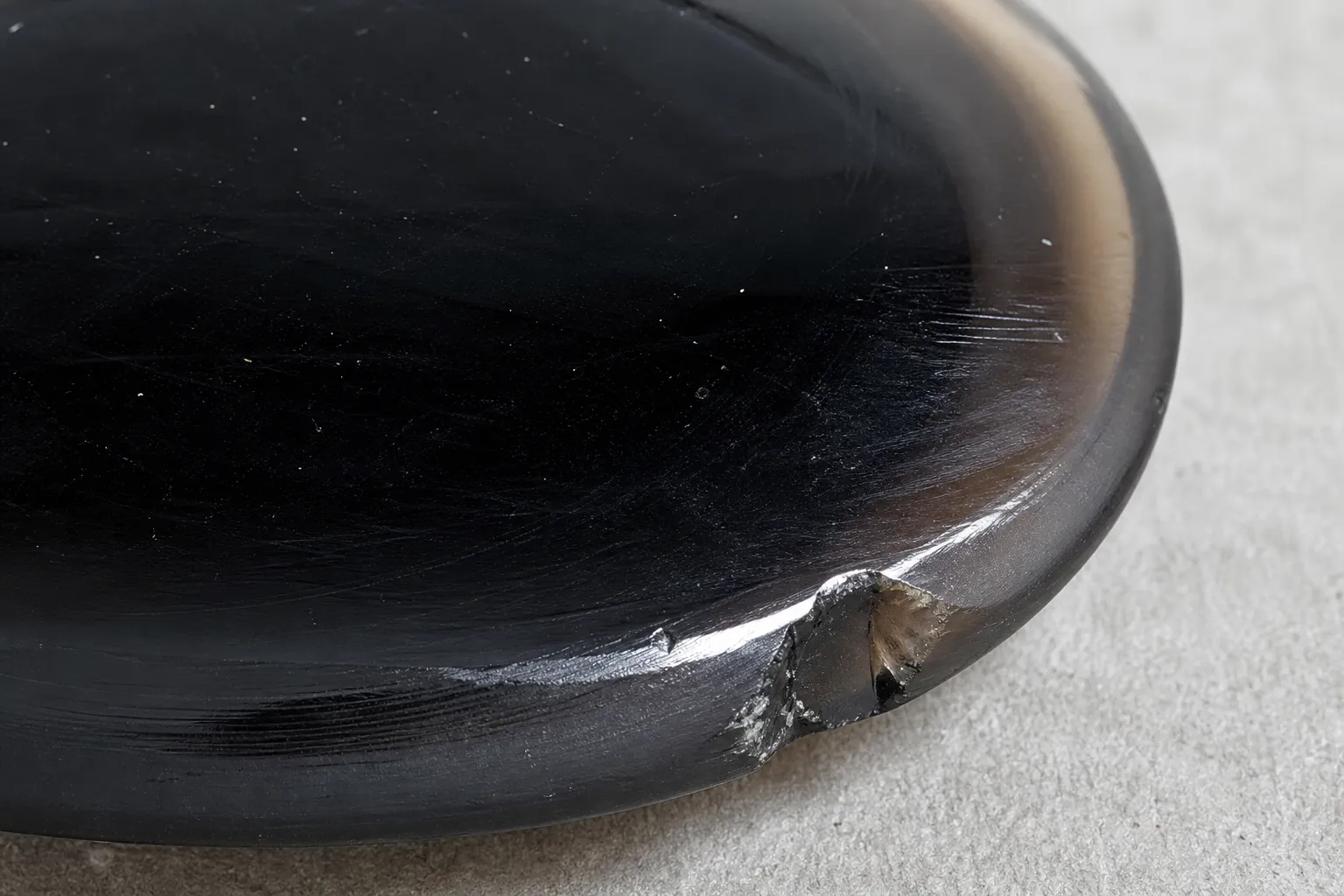
A brown or gray edge on black obsidian in bright light does not automatically mean the piece is fake. Black obsidian is volcanic glass, and a thin edge, chip, bead hole, polished curve, or shallow scratch can handle light differently from the thicker black body. That is why black obsidian edges in light may look smoky gray, brownish, or slightly translucent while the stone still looks black overall.
The key is scale. A small edge tint is a viewing clue, not a verdict. Lighting angle, thickness, surface polish, background color, camera exposure, and seller naming can all change what you see.
upward
Start with the broader guide
Use the broader guide first if you need the full scope before this page.
The short answer: the edge is thinner and more exposed to light
Most polished black obsidian pieces look darkest through the thickest part. A palm stone, bead, cabochon, chip, or tumbled piece may appear deep black in the center because light is mostly reflected from the glossy surface or absorbed before you can see into the material.
At the edge, the material is thinner and the surface angle changes. Under a strong lamp, window light, or phone flashlight, that narrow margin may look:
- dark gray instead of black;
- warm brown or smoky brown;
- slightly translucent at the thinnest point;
- lighter along a chip, bevel, or bead hole;
- different in a photo than it looks in hand.
This does not prove the piece is natural obsidian, but it also does not disprove it. Obsidian edge color depends too much on viewing conditions to settle identity by itself.
Why gray edges happen
Gray is often the easiest edge color to explain. Obsidian is glassy, so polished surfaces can reflect light sharply. Where a smooth black curve catches a lamp at a shallow angle, the edge may look pale, silvery, or smoky gray.
A gray edge can come from several overlapping conditions:
Pale gray line on a polished curve
Common collector-level explanation: Strong reflection from a smooth surface.
What it does not prove: It does not prove the piece is imitation glass.
Smoky gray at a thin rim
Common collector-level explanation: Light passing through or around a thinner area.
What it does not prove: It does not identify the source or exact variety.
Gray on a chipped edge
Common collector-level explanation: Fresh fracture, roughness, tiny breaks, or scattered light.
What it does not prove: It does not explain the full damage history.
Gray only in a photo
Common collector-level explanation: Exposure, background, lamp color, or camera processing.
What it does not prove: It does not settle identity from the image alone.
Small scuffs can also make a black edge look dusty gray. A mirror-like polish reflects light differently from an abraded rim or tiny chip. If the gray line changes, moves, or disappears when you rotate the stone, it is probably tied to light and surface angle rather than a stable body color.
Why brown edges happen
A brown tint can feel more surprising because many buyers expect black obsidian to look perfectly black in every condition. In practice, dark obsidian can sometimes show a smoky, gray, or brownish cast where light passes through a thin area.
A brown edge may come from one or more of these factors:
- Thin-edge transmission. The edge is thin enough for light to pass through a short path in the glassy material, revealing a smoky brown tone.
- Natural undertone. Some dark obsidian may have a subtle brownish cast that is hidden in the thicker center.
- Material variation. Inclusions, mineral content, and tiny internal differences can affect color, although the exact cause of one edge cannot be confirmed by sight alone.
- Surface condition. A chip, worn bevel, rough patch, or polish difference can alter how the edge reflects and scatters light.
- Background and lamp color. A warm bulb, wooden table, skin tone behind a bead, or camera white balance can push a smoky edge toward brown.
So a black obsidian brown edge is not automatically a sign of fraud. It may simply be the part of the stone where the glassy body is thin enough for its undertone to show.
The better question is not “Is any brown bad?” but “Where is the brown, and does it stay there under normal light?”
Edge tint versus a different variety name
A small brown line at the rim is different from a piece that is broadly reddish-brown, streaked, spotted, or patterned through the body.
Mahogany obsidian is the comparison many collectors think of first. That name is generally used for obsidian with larger areas of red-brown or brown coloration, often associated with iron-rich material. But a tiny brown translucent obsidian edge on an otherwise black bead or palm stone is not enough to rename the whole piece mahogany obsidian.
A practical distinction:
Likely still within ordinary black-obsidian observation
Black body, with brown or gray only at the thinnest edge, bead hole, chip, or strongly backlit area.
Worth comparing with mahogany obsidian
Visible red-brown patches, streaks, swirls, or mottled areas across the face in normal light.
Needs more caution before naming
The entire piece looks transparent brown, evenly smoky, or unlike the seller’s description under ordinary daylight.
Apache tears are another useful comparison, but only as a comparison. These small obsidian nodules can look black overall while showing brownish or reddish tint when strong light passes through them. That does not mean every black obsidian piece with a brown rim is an Apache tear; it only shows that dark obsidian can reveal warmer tones in transmitted light.
How to inspect the edge without overtesting it
You do not need to scratch, strike, heat, or chemically test a stone because one edge looks gray or brown. Obsidian is glassy and brittle, and chipped or broken margins can be sharp. For this question, a careful visual check is usually the better first step.
Try this routine:
- Look first in diffuse daylight. Place the piece near a window, out of direct glare. Note the main body color before focusing on the edge.
- Check the thickest part. Does the center still look black, or is the whole piece smoky brown or gray?
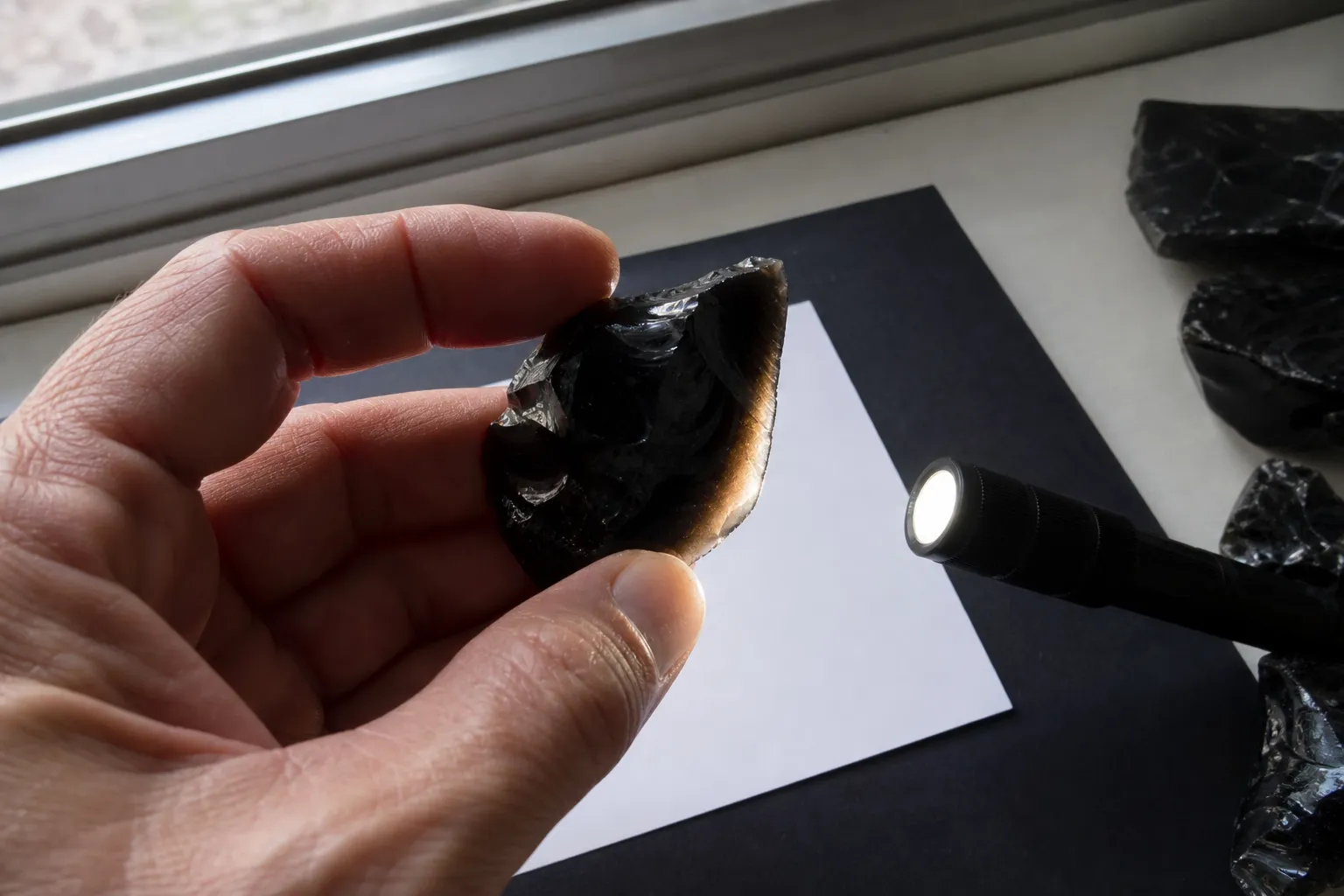
- Inspect only the thinnest edge with a small light. Hold the light behind the edge rather than blasting through the whole stone.
- Rotate the piece slowly. If the gray line moves or disappears, reflection and polish are probably involved.
- Look at chips and bead holes separately. A hole, notch, or broken spot can reveal a different look from the polished face.
- Change the background. Compare against white paper, neutral gray, and your hand. Background color can shift how a translucent edge appears.
- Do not rely on one photo. Phone cameras often brighten edges, exaggerate warm tones, or turn glossy black surfaces gray.
What stays consistent across several lighting setups matters more than one dramatic bright-lamp moment.
When edge color deserves more caution
Most small gray or brown edge effects are not alarming by themselves. Still, the question changes if several other clues point in the same direction.
Take a slower look if:
- the whole piece is evenly transparent brown rather than black with a tinted edge;
- the surface looks plasticky rather than glassy;
- there are obvious molded seams or repeated manufactured shapes;
- bubbles look large, round, and artificial;
- color appears concentrated in cracks in a dye-like way;
- the piece feels unusually lightweight for its size;
- the seller makes strong variety or origin claims but shows only dramatic lighting photos;
- the listing leans on symbolic promises while giving little material description.
These signs still do not let you identify the material with certainty at home. They simply justify asking for clearer photos in neutral light, comparing the piece with reliable examples, or consulting a qualified local mineral or gem professional if value or collection records make the answer important.
What edge color cannot tell you
Edge color cannot confirm authenticity, exact variety, geological source, treatment history, or value.
A thin gray or brown rim can fit natural black obsidian, but similar appearances can occur in other dark glassy materials. The reverse is also true: a piece that looks perfectly black in one seller photo is not automatically better or more genuine. Lighting can hide translucency just as easily as it can exaggerate it.
For everyday collecting, combine several visible clues instead of relying on one edge: glassy luster, overall body color, fracture or chip behavior, polish quality, pattern distribution, seller description, and whether the observation stays consistent under neutral light.
A brown or gray edge is one clue in that group. It should not be treated as the whole answer.
Bottom line
If your black obsidian shows brown or gray only along a thin edge, chip, bead hole, or polished curve in bright light, that can be a normal visual effect of volcanic glass, thinness, reflection, and surface condition. It is not enough to call the piece fake.
If the color spreads through the whole stone, appears strongly red-brown in ordinary daylight, or appears alongside other signs of manufactured glass or weak seller description, take a more careful look. The practical next step is not destructive testing. It is better lighting, several viewing angles, and professional identification when the answer matters.
FAQ
Is black obsidian supposed to be completely black in every light?
Not necessarily. It may look black through the thicker body while showing gray, smoky brown, or slight translucency at a thin edge or chip under strong light.
Do brown edges mean my black obsidian is mahogany obsidian?
Not by themselves. Mahogany obsidian usually shows broader red-brown patches, streaks, or mottling across the stone. A small brown rim on an otherwise black piece is only an edge observation.
Why do polished obsidian edges look gray in photos?
Glossy black surfaces are difficult for cameras. Exposure, glare, background color, and automatic processing can make polished or chipped edges look lighter than they appear in hand.
Can I test obsidian by scratching or breaking it?
Avoid destructive home testing. Obsidian is brittle volcanic glass, and broken edges can be sharp. For a collector-level check, use lighting, rotation, background comparison, and clear photos before considering professional identification.