
Visual identification
Why Mahogany Obsidian Is Red Brown Instead of Plain Black
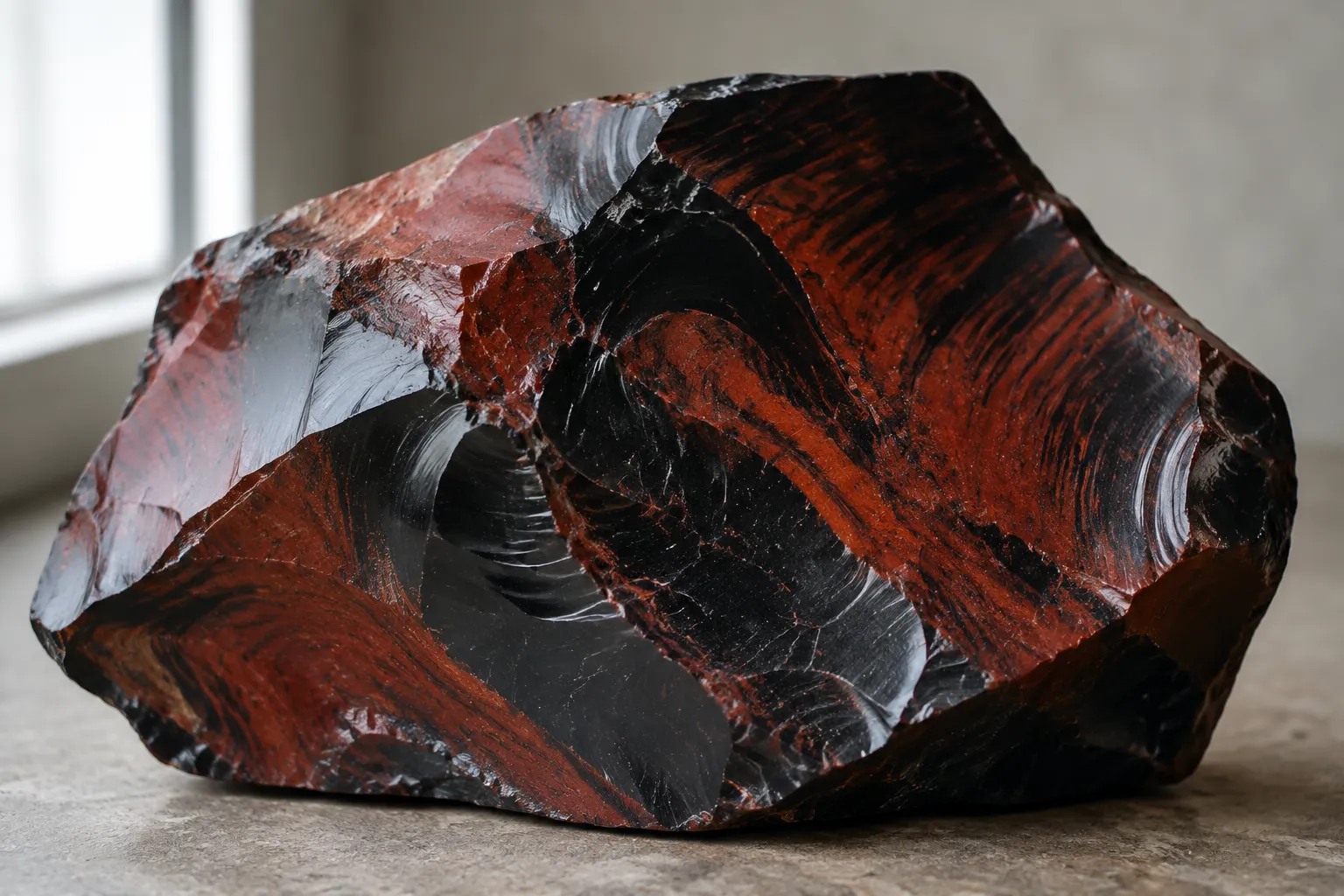
Mahogany obsidian looks red brown because the glass is not uniformly black. The reddish brown patches, streaks, clouds, or bands are commonly explained as color variation within the volcanic glass, often described in collector language as iron-related coloring, trace materials, or inclusions. That is the direct answer to why is mahogany obsidian red brown.
The limit matters: the color explains the variety name, but it does not prove exact chemistry, source locality, quality, or authenticity by itself. Read the red-brown areas together with the glassy luster, pattern depth, fracture clues where visible, and the seller's description.
upward
Read the full overview first
Use the broader guide first if you need the full scope before this page.
The Red-Brown Color Is the Variety Cue
Plain black obsidian is the version many people picture first: dark, glassy, and smooth when polished. Mahogany obsidian keeps that glassy character but adds brownish red areas against black, dark gray, or smoky-looking zones. The pattern may look like soft clouds, uneven patches, thin streaks, or broad bands.
That red brown obsidian color is why collectors and sellers use the mahogany name. It is a descriptive variety label, not a promise that every piece will look the same. One specimen may be mostly black with a few rusty streaks. Another may show large red-brown fields with only small dark islands. Both can fit the collector use of mahogany obsidian if the material still reads as obsidian-like volcanic glass.
Do not treat the color as damage by default. A scratch, coating, stain, or residue can change a surface, but mahogany coloring is usually discussed as patterning within the material. If the brownish red appears only as a loose film, paint-like layer, or crust sitting on top, that is a different inspection question.
Look for glassy luster before the label. The red-brown areas explain the variety name; the glassy body keeps the identification anchored.
What Likely Causes the Mahogany Coloring
Obsidian is natural volcanic glass formed from rapidly cooled lava. Because it is glass rather than a visibly crystalline rock, it can look very uniform in some pieces and strongly patterned in others. Public geology references support the broader point that obsidian color can vary with composition, trace elements, and inclusions.
For mahogany obsidian, the careful explanation is that the red-brown or brownish-red areas are commonly associated with iron-colored material, trace elements, or inclusions in the glass. This is why phrases such as iron colored obsidian, mahogany obsidian iron coloring, and obsidian inclusions color appear in collector discussions. They are describing a visible effect: dark glass with warm, rusty, reddish brown patterning.
Visible trait
Patch, streak, cloud, band, or mottled area.
Likely explanation
Color variation tied to material differences within volcanic glass.
Identification limit
The eye cannot fully separate trace chemistry, inclusions, surface changes, and specimen history.
The wording should stay narrow. It is reasonable to say iron-related coloring is commonly used to explain mahogany obsidian's appearance. It is not careful to name an exact iron compound, concentration, oxidation state, or source locality for a random specimen unless specimen-specific analysis supports that claim.
Mahogany Obsidian vs Black Obsidian
The useful comparison is not "real versus fake." It is "patterned versus plain-looking." Black obsidian is usually described by its dark, glassy appearance. Mahogany obsidian is recognized by red-brown streaks or patches mixed with darker glass.
Uniform black, glassy surface
Black obsidian or a dark obsidian piece
Exact origin, age, or full composition
Brownish red patches in dark glass
Mahogany obsidian color variation
Specimen-level chemistry or locality
Red-brown bands that continue through the piece
Patterning may be within the material
Automatic authenticity
Brown color only on the outer surface
Possible residue, staining, coating, or weathering
That it is mahogany obsidian
Dull, plastic-like, or painted-looking surface
Needs closer inspection
That the label is reliable
Not all obsidian is black. That prevents one common mistake: assuming a red-brown stone cannot be obsidian. Obsidian may appear black, gray, brownish, reddish, greenish, or patterned depending on material conditions and inclusions.
The reverse mistake is also common. A red-brown streak does not settle the identification on its own. Some stones, manufactured glass, dyed materials, or surface-treated pieces can create confusing color impressions. A better label starts with several visible traits: glassy luster, color pattern, fracture behavior where visible, weight and feel in hand, seller context, and whether the pattern looks internal rather than applied.
Mahogany obsidian vs black obsidian is a visual comparison, not a ranking. The red-brown areas are not better, worse, or more powerful. They are the feature that changes the variety name.
How to Inspect Red-Brown Patches
Use steady, neutral light. Bright glare can flatten a polished surface, while dim light can make red-brown areas look black. Indirect window light or a neutral daylight lamp usually gives a clearer read of color bands and mottling.
Turn the piece slowly. Mahogany coloring often becomes easier to see as the angle changes, especially on curved tumbled stones, beads, or palm stones. Look for whether the brownish red areas continue into the material or sit only on the surface. On a polished piece, the pattern may seem to flow under the shine. On a rough or chipped piece, a fresh-looking edge may show whether the dark and red-brown zones belong to the same glassy body.
Use these cues together
- Color placement: red-brown patches, streaks, clouds, or bands against black or dark gray areas.
- Surface character: glassy luster rather than chalky, waxy, or paint-like texture.
- Pattern depth: color that appears integrated into the stone, not only rubbed onto the outside.
- Edge behavior: sharp or conchoidal-looking fracture on rough or chipped areas, when visible.
- Label humility: seller names can help, but they are not the same as confirmed identification.
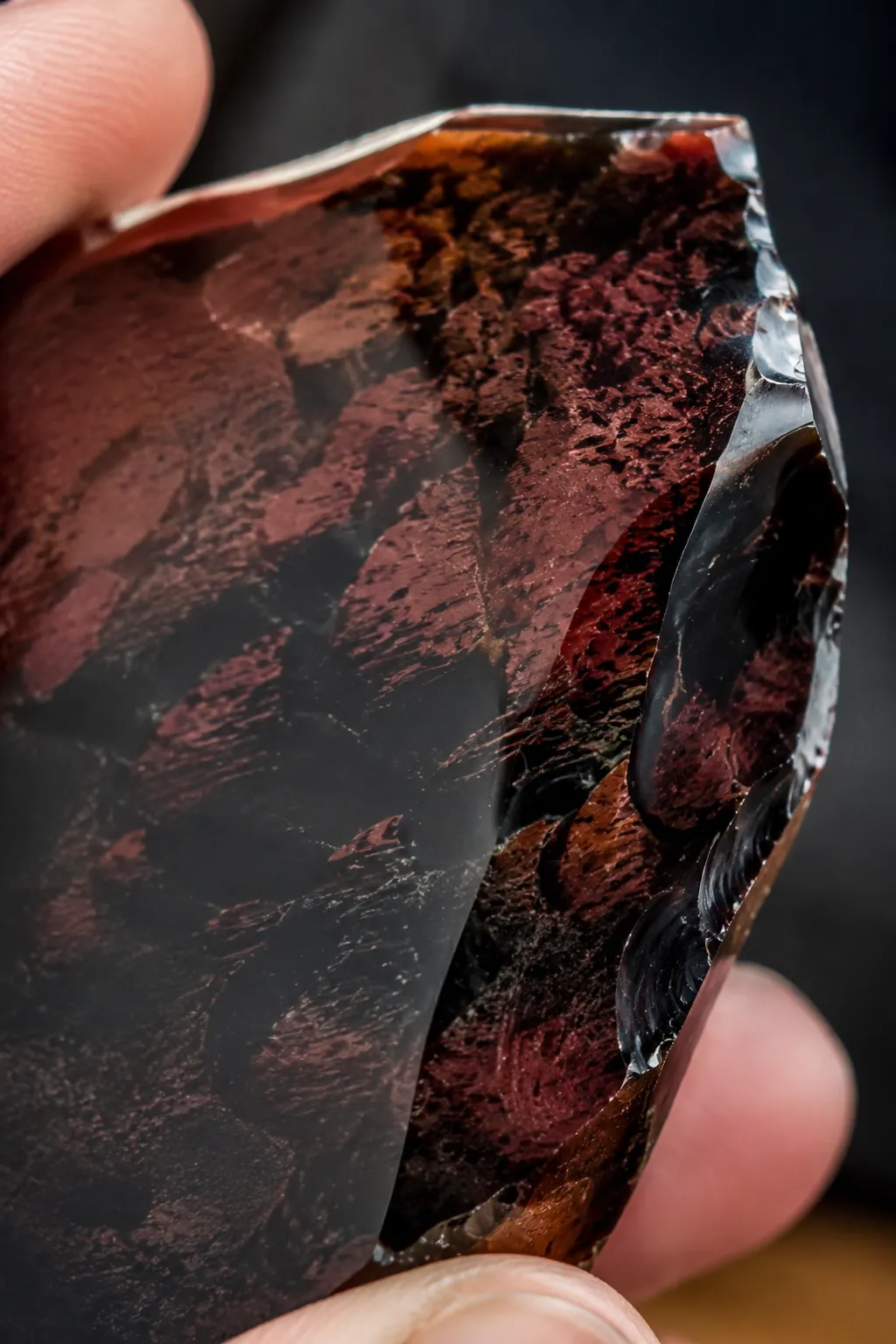
Conchoidal fracture means a curved, shell-like break pattern. It is common in glassy materials, including obsidian, but a small photo of a polished stone may not show fracture at all. If the piece is fully tumbled, drilled, or carved, many rough identification clues have been removed.
A fair visual reading is often: "This has the visible traits commonly sold as mahogany obsidian." A photo alone usually cannot support: "This exact piece has a specific iron composition and locality."
When the Red-Brown Color Raises a Question
Mahogany coloring itself is not suspicious. The question is how the color behaves.
Inspect more carefully if the red-brown areas look flat and opaque like paint, collect only in scratches, rub off, or sit as a crust over a different-looking material. Uneven natural patterning can be normal; an artificial-looking surface layer is a reason to slow down.
"Fake mahogany obsidian color" is a real reader concern, but color alone cannot answer it cleanly. A convincing red-brown pattern does not prove authenticity, and an unusual pattern does not prove the opposite. The narrower question is more useful: does the piece show a glassy obsidian-like body with red-brown variation inside it, or does it look like another material colored on the surface?
If the piece matters for buying, provenance, or a serious collecting decision, ask for more than one flattering photo. Clear images in neutral light, views of multiple sides, close-ups of edges or drilled holes, and a plain description of size and finish can help. A seller's variety label is a starting point, not the final answer.
What the Color Cannot Tell You
The red-brown areas in mahogany obsidian can explain why the variety name was applied. They cannot answer every collector question.
Exact iron chemistry
Available public material supports a careful explanation involving iron-related coloring, trace elements, or inclusions, but it does not support assigning a specific compound or concentration to an individual piece by sight.
Locality
Similar-looking color patterns may appear in different contexts, and a trade name does not automatically carry a verified origin.
Quality
Some collectors prefer bold contrast; others prefer subtle smoky red-brown bands. That is preference, not a universal grading rule.
Symbolic meaning
Some crystal communities attach personal or cultural interpretations to mahogany obsidian, but those meanings are belief language or personal symbolism, not a material result built into the stone.
Identity from a photo alone
A photo can show useful visible traits, especially color distribution and polish, but lighting, editing, surface finish, and image resolution can all change how red-brown patches appear.
The color is a clue. It is not the whole file.
A Practical Reading of Your Piece
If your specimen is dark, glassy, and marked with reddish brown patches or streaks that appear to belong to the material itself, mahogany obsidian is a reasonable collector label. The likely reason for the color is material variation in the volcanic glass, commonly described in terms of iron-related coloring, trace elements, or inclusions.
If the piece is uniformly black, it may sit closer to black obsidian in appearance. If the red-brown tone is only on the surface, looks applied, or does not match the rest of the material, inspect more carefully before relying on the label. If identification affects price, provenance, or an important collecting decision, ask for clearer context.
Mahogany obsidian is red brown because not all obsidian is plain black. Read the glassy luster, the pattern, and the label together; stop where the visible evidence stops.