
Edge color check
Why Some Obsidian Looks Smoky, Gray, or Brown at the Edges
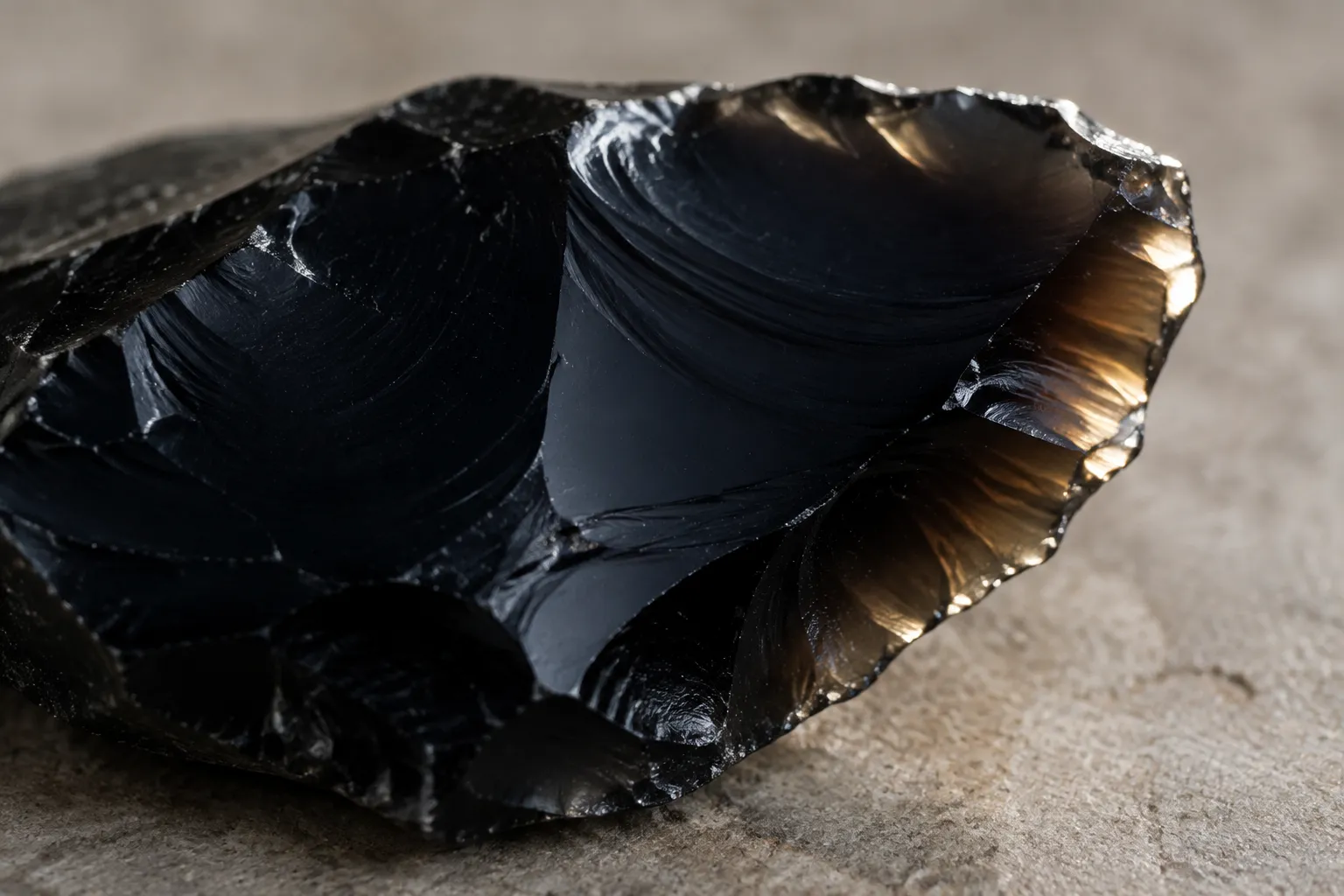
A dark obsidian piece can look smoky, gray, brown, or partly translucent at the edge because that part is often thinner than the main body. When light passes through a thin rim, chip, bead hole, or polished lip, the color can soften from solid black to a gray-brown glow. Smoky gray obsidian edges are usually an edge-and-light observation, not a variety name by themselves.
Start with what you can see: edge thickness, lighting direction, polish, chips, fracture surfaces, and whether the color appears only at thin edges or across the whole piece. That first distinction keeps the label honest.
upward
Read the full overview first
Use the broader guide first if you need the full scope before this page.
First read
- Thin edges can transmit more light than the center.
- Backlight and camera exposure can exaggerate the rim glow.
- Edge color alone should not be treated as origin, value, treatment status, or a formal variety name.
Why Thin Edges Change Color
A thick black-looking piece may block most visible light through its center. At a thin rim, flake scar, carved point, or chipped edge, light has less material to cross. That shorter path can make the edge look gray, smoky, tea-brown, amber-brown, or translucent while the thicker body still reads as black.
That does not mean every gray or brown rim has the same cause. The useful point is narrower: color at thin edges can depend strongly on thickness and lighting. Inspect the edge before treating the color as a named variety, origin clue, or quality claim.
Backlighting makes the effect easier to see. Hold the piece near a bright window or behind a small light source, without staring into glare, and turn it slowly. If the smoky or brown tone fades when light is no longer passing through the edge, the appearance is probably tied to transmitted light and angle.
Photos can exaggerate the same effect. A phone flash, seller photo, bright window, or automatic camera exposure can brighten the rim and make a dark piece look more translucent than it appears on a table. A photo is a clue, not a final identification.
What to Inspect First
Look at the edge before the label. You do not need a laboratory setup for the basic read; you need consistent light and a close look at the surface.
Check the thickness
Thin obsidian edges are the most likely places to show color changes. A sharp flake edge, bead hole, carved point, or tumbled rim may transmit more light than the center. If the color appears only at the thinnest places, thickness is part of the answer.
Check the lighting direction
Obsidian in backlight may look very different from obsidian under overhead room light. A rim that turns gray with light behind it, then returns to black on a neutral surface, is responding to the light path. That observation is still useful; it tells you which condition produced the color.
Check the polish
Obsidian surface polish changes how the eye reads an edge. A smooth rim can reflect light cleanly and make a gray boundary look soft. A dull or abraded edge can scatter light and look cloudier. The edge color may be partly surface condition, not only internal color.
Check chips and fractures
Obsidian chips and fractures can expose very thin, uneven glassy surfaces. A fresh-looking fracture edge may appear clearer or more translucent than a rounded, worn area. Handle chipped pieces carefully; sharp fracture edges can cut skin.
Check whether the color continues into the body
Brown obsidian edges matter more if the brown tone appears through thicker zones, across a broad face, or in repeated bands. If it exists only as a narrow rim at the thinnest edge, it is weaker evidence for a named color variety.
Smoky Gray, Brown, or Translucent
Smoky gray at the edge usually means the black body color is being softened by transmitted or scattered light. The piece may not be “gray obsidian” in a formal sense. It may simply be a black-looking specimen seen where the glass is thin.
Brown at the edge needs a little more caution. Collectors may describe thin-edge color as brown, root-beer, amber, or tea-colored when light passes through it. Those descriptions are useful for notes, but they do not establish source, value, treatment status, or variety name. Check brown obsidian edges under ordinary light, side light, and backlight before treating the color as stable.
A translucent obsidian edge color is also a condition to record, not a complete identification. Translucent means light passes through enough of the edge for the eye to see depth or glow, while details behind the piece are not necessarily clear. “Black body, translucent gray-brown edge in backlight” is more precise than forcing a market name too early.
If the whole piece looks smoky gray, brown, or translucent away from thin edges, the question changes. You may be looking at a different body color, internal variation, inclusions, another glassy material, or a seller label that needs closer checking. Edge color alone cannot settle that.
Common Misunderstandings
A rim color is not automatically a special variety
Variety names in the collector market often depend on visible patterns such as sheen, banding, inclusions, or body color. A narrow edge glow is not enough to carry that label by itself. A piece can have smoky gray obsidian edges and still be described plainly as black obsidian with translucent thin edges.
A brown edge does not prove age, origin, or alteration
Brown seen only at the rim can be a real visual observation, but it should not be stretched into provenance, appraisal, or certainty about how the piece formed.
Photos can make the edge look more dramatic
A dark stone photographed against a bright window may show a dramatic glowing edge. The same specimen on a neutral surface may look nearly black. If you are buying, trading, or cataloging, ask for photos in ordinary front light and in backlight, with at least one image showing the full piece.
Polish can change the read
A high-gloss edge may look deeper and clearer than a scratched edge. A chipped area may look lighter because its rough surface catches light in several directions. Separate those surface effects from body color when you describe the specimen.
The strongest wording is usually modest: “dark body, smoky gray edge in strong light,” or “black-looking piece with brownish translucent thin edges.” That records what is visible without turning a small clue into a larger claim.
A Simple Inspection Routine
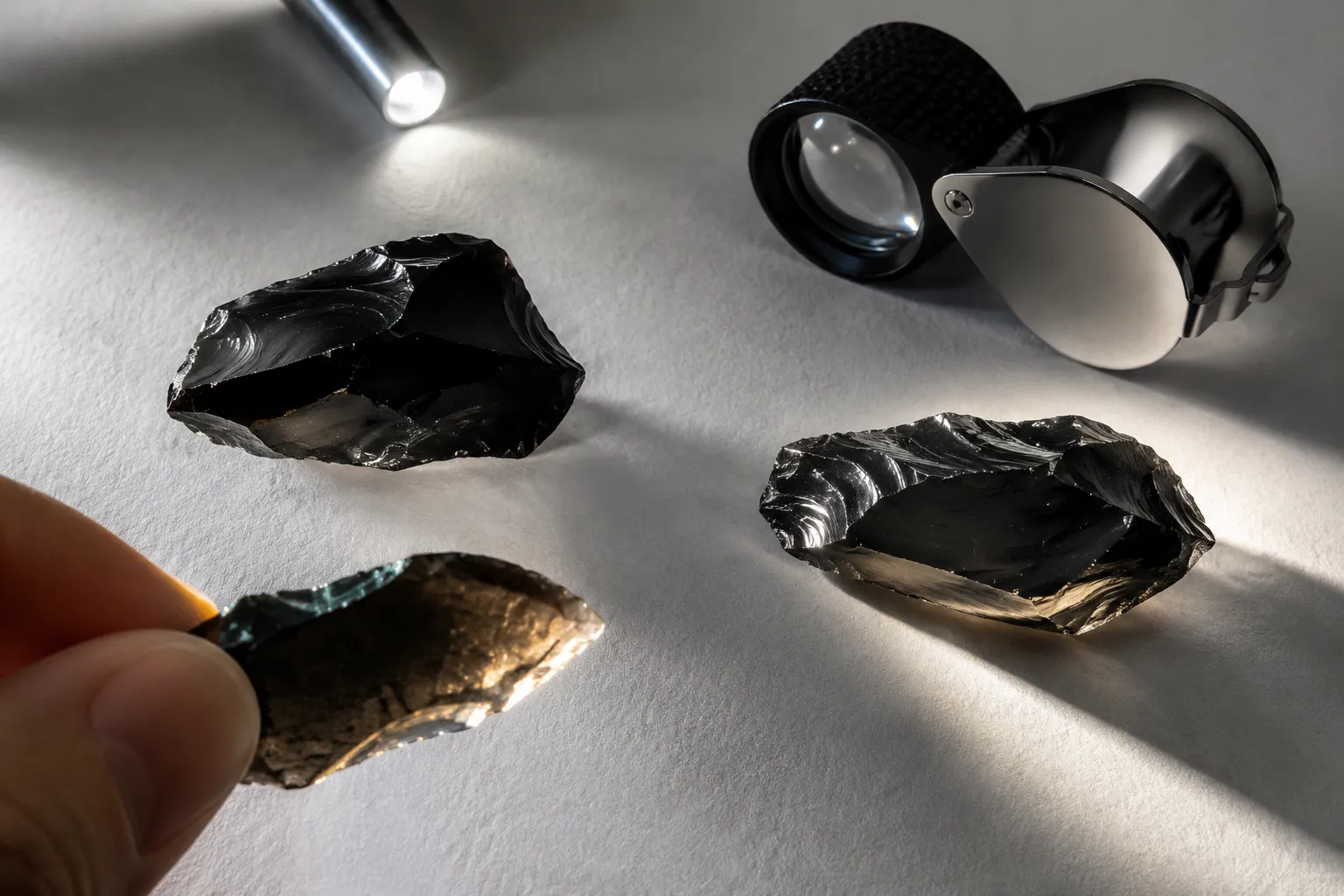
1. Use a white or neutral background first
Place the piece under normal room light and note the body color, edge color, polish, chips, bands, and sheen. Do not start with a flashlight; first see how the stone reads without dramatic lighting.
2. Use side light
Move a small light to the side and watch the rim, chips, bead holes, or carved points. If the gray or brown tone appears only from one angle, write that down. Angle-dependent color is still a useful observation, but it is not the same as color visible in every condition.
3. Try gentle backlight
Put the light behind the edge, not directly into your eyes. Rotate the piece slowly. Thin-edge translucency often appears and disappears as the angle changes. If the glow is strongest at the thinnest places, edge thickness is probably a major factor.
4. Compare several edges on the same piece
If only one chipped point looks brown, that may be a local fracture or thickness effect. If many edges show the same smoky or brown tone, the observation is stronger. If thicker areas also show the color, the piece may deserve a broader identification check.
5. Check for sharp damage
If a chip looks keen or fresh, avoid rubbing it with your fingers. Store the piece so sharp edges do not scrape other stones, soft bags, or skin during handling.
What Edge Color Cannot Tell You
Edge color alone cannot identify origin, establish value, confirm treatment status, or verify a formal variety. It also cannot settle authenticity from a photo. Those questions need more evidence than a smoky or brown rim.
This matters when a listing turns an edge effect into a confident-sounding name. A useful label should match multiple visible traits: body color, translucency, sheen, banding, inclusions if visible, surface finish, and how the color behaves in ordinary light. If the only distinctive feature is color at thin edges, keep the description tied to that condition.
There is also a source limit for this page. No usable public reference links were supplied for display, so the answer stays with cautious visual inspection rather than stronger claims about chemistry, formation, or lapidary testing. The practical task remains clear: inspect thickness, light direction, polish, chips, and whether the color is local or present throughout the piece.
Quick Answers
Is smoky gray at the edge normal for black-looking obsidian?
It can be a normal-looking visual effect when the edge is thin and light passes through it. The key check is whether the smoky color appears mainly at thin edges, chips, or backlit areas.
Do brown obsidian edges mean it is a different variety?
Not by themselves. Brown at thin edges can be a useful visible note, but a variety name needs more than a narrow rim color. Check whether the brown tone appears through thicker parts of the piece and under ordinary light.
Why does my obsidian look more translucent in photos?
Camera lighting, backlight, flash, exposure, and edge angle can all make light through obsidian edges more obvious. Compare photos taken in front light and backlight before relying on the image.
The Collector’s Bottom Line
If an obsidian piece is dark in the body but smoky gray, brown, or translucent at the edge, look first at thinness and light. Then check polish, chips, fracture surfaces, and whether the color remains visible away from the rim. A careful description of the visible edge is stronger than a confident label built from one lighting effect.